The FCNR(B) deposit scheme, operationalised on June 8, 2026, has received an impressive response with $127.3 billion mobilised through FCNR(B) deposits alone, taking total inflows to $136.4 billion when including overseas foreign currency borrowings of $5.3 billion and external commercial borrowings of $3.9 billion. According to The Economic Times, FCNR(B) flows account for around 4.5% of system deposits. The scheme has the Reserve Bank of India bearing the forex-hedging cost, making it more attractive for banks. As per The Economic Times, the forex-hedging cost borne by the RBI makes it more attractive for banks compared to the market's NIM-dilutive view.
India's private banks are beginning to improve their profit margins, recovering from a "deposit war" when they had to pay high interest rates to attract savers. Fresh lending spreads at private banks increased 22 basis points month-on-month to 3.13% in July, nearly double those at public sector banks which stood at 1.58%. According to The Economic Times, the improvement came as private lenders reduced fresh deposit rates by 25 basis points to 5.96%, while lending rates remained relatively sticky. In contrast, fresh spreads at public sector banks narrowed by 5 basis points. The turnaround follows months of intense competition for deposits as credit growth consistently outpaced deposit mobilisation, forcing banks to offer higher rates and tap more expensive market funding.
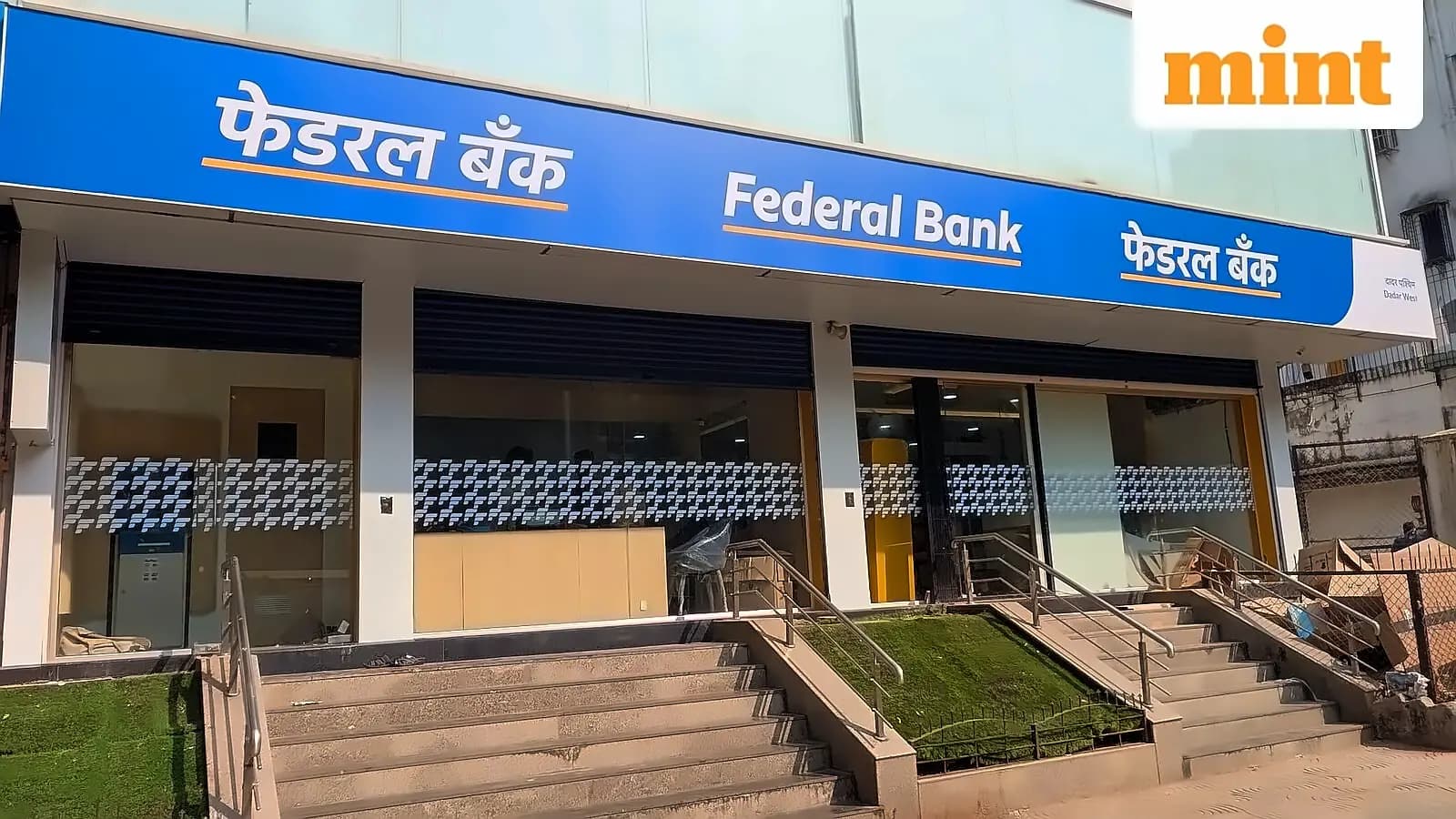
The surge in FCNR(B) deposits has created a disproportionate impact across bank categories, with large private and mid-tier lenders capturing the majority of inflows. ICICI Bank received the most FCNR(B) deposits at ₹1,454 billion, followed by State Bank of India at ₹1,454 billion (though equivalent to only 2.4% of its deposits due to its large balance sheet). HDFC Bank and Axis Bank each mobilised an estimated ₹1,212 billion, with Axis Bank's inflow representing 8.8% of deposits compared to HDFC Bank's 3.8%. Kotak Mahindra Bank secured ₹848 billion, but the amount represented 14.8% of its deposit base—the highest among large private banks. Among mid-tier lenders, IDFC First Bank mobilised ₹341 billion, equal to 10.9% of deposits, while Federal Bank received ₹325 billion and YES Bank attracted ₹327 billion.

FCNR(B) inflows have provided a significant breather to banks' funding costs. CD issuances fell sharply to about ₹95,000 crore in July from ₹1.71 lakh crore in June, as per data from Care Ratings. Higher foreign currency deposits and their conversion into rupees boosted system liquidity and reduced banks' dependence on certificates of deposit and other wholesale funding. Bank credit increased 18.3% year-on-year as of August 15 compared with deposit growth of 14.7%, though the gap between credit and deposit growth narrowed to around 360 basis points from about 500 basis points a month earlier, helped by FCNR(B) mobilisation. At the system level, fresh spreads widened 8 basis points sequentially to 2.62% in July as fresh deposit rates declined 9 basis points to 5.90%, while fresh lending rates were broadly unchanged at 8.52%.
The FCNR(B) deposits are expected to have varying impacts on bank earnings, with mid-tier banks positioned for the strongest gains. IDFC First Bank has an estimated FCNR(B) deposit share of 10.9% and a potential spread of 6.18% on loans funded by those deposits, while YES Bank's FCNR(B) deposits are estimated at 10.4% of deposits, with a potential spread of 2.30%. Nomura expects IDFC First Bank to see the biggest upgrade to fiscal 2028 pretax earnings at 12%, followed by 7% upgrades for YES Bank, 5% for IndusInd Bank and 4% for Federal Bank. Among large private banks, Kotak Mahindra Bank is expected to see a 4% pretax earnings upgrade, while ICICI Bank and Axis Bank could see 3% upgrades each. However, analysts caution that margin compression could occur for two to three quarters as banks carry undeployed deposits at negative spreads, with net interest margins potentially compressing by 10-30 basis points under different deployment scenarios.