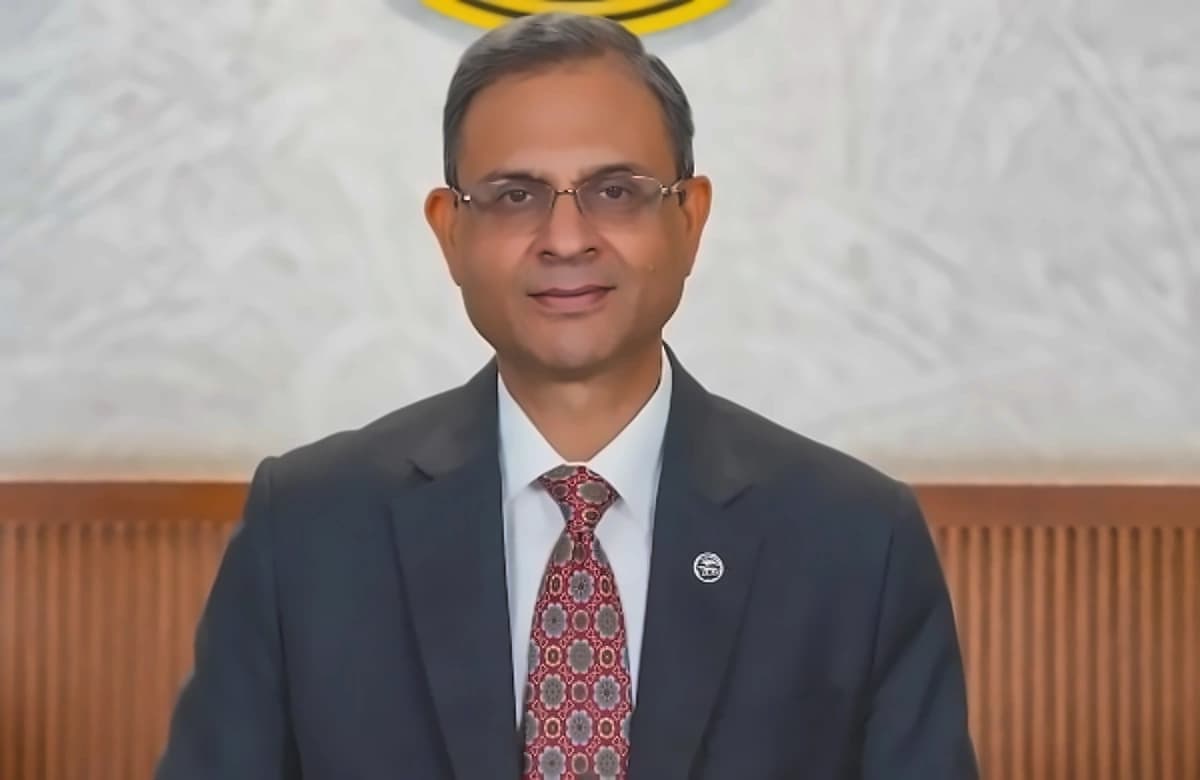
The Reserve Bank of India has kept the policy repo rate unchanged at 5.25% in its first bi-monthly Monetary Policy Statement for FY27, with Governor Sanjay Malhotra delivering the decisions at 10 AM. According to ANI, the Monetary Policy Committee (MPC) unanimously voted to maintain the policy repo rate under the liquidity adjustment facility at 5.25%, citing rising global uncertainties and geopolitical tensions. As per Crisil's Dipti Deshpande, the apex bank is pursuing a wait-and-watch approach and will be cautious in its policy stance. The MPC meeting was held on April 6, 7 and 8 to assess the evolving macroeconomic and financial conditions before arriving at the decision. The committee has been deliberating on interest rates, inflation outlook, and growth projections since Monday, with most experts suggesting the central bank will prioritize stability amid global economic volatility and shifting energy prices.
Governor Sanjay Malhotra announced that real GDP growth for the current year is projected at 6.9%, representing a downward revision from earlier estimates. The growth trajectory shows a steady pattern across all four quarters: 6.8% in Q1, 6.7% in Q2, 7% in Q3, and 7.2% in Q4. Under the new GDP series, growth for the 2026 fiscal year was estimated at 7.6%. Headline inflation for January and February stayed below the target at 2.7% and 3.7% respectively, with Malhotra stating that "Inflation in fuel terms remained modest during this period. For the full year, the Consumer Price Index inflation is projected at 4.6%". The quarterly inflation outlook places the first quarter at 4% and the second quarter at 4.4%, with price pressures expected to rise to 5.2% in the third quarter before moderating to 4.7% in the final quarter. The Governor warned that elevated energy and other commodity prices are likely to impact growth this year, particularly as imported crude oil prices could push inflation higher.
According to Crisil Ratings, bank credit is likely to grow by around 13% in FY27, driven by healthy growth in the micro, small and medium enterprise (MSME) and retail sectors. The growth will be marginally slower than the estimate of about 14% for FY26, as reported by Upstox. The increased working capital intensity of India Inc is likely to support bank credit growth, even as a revival in capital expenditure (capex) of the private sector could be delayed. Corporates continue to prefer bank credit over bond issuance amid the prevailing interest rate differential. Newer options such as acquisition financing, now allowed for banks by the RBI, should also support credit growth. This growth projection comes alongside a structural shift in India's credit landscape, with women borrowers now accounting for ₹76 lakh crore of credit, representing 26% of total system credit in 2025, marking a near five-fold increase since 2017.
Recent developments reveal rising early-stage delinquencies in MSME loan books across NBFC portfolios, signaling potential asset quality deterioration. According to Nomura, MSME-focused NBFCs are among the first to feel geopolitical impact, with industry estimates showing credit costs rising 25-75 basis points in some sectors. The stress drivers include crude oil and raw material cost spikes squeezing MSME margins, input shortages forcing partial shutdowns across industrial clusters, and cash flow mismatches in auto components, garments and export-oriented goods. In Tamil Nadu specifically, nearly 30% of MSMEs in certain regions have shut operations due to these pressures. Rising costs from larger buyers are reducing MSMEs' effective repayment capacity, creating a classic early-cycle signal that typically precedes broader asset quality deterioration.
As reported by Crisil Ratings, corporate sector credit growth is likely to grow by 9-10% in FY27, accounting for about 36% of domestic bank credit. The MSME segment, which accounts for around 19% of domestic bank credit, is likely to remain the fastest-growing portfolio for the banking sector in FY27, though growth will moderate from the 24-25% level seen in FY26 as the country's economic growth tempers. Growth in FY2027 should still be upwards of 22% in the base case for two key reasons: government initiatives such as the three-tier stimulus for MSMEs announced in the Union Budget and doubling of collateral-free loan limits should enhance funding access, liquidity, and transaction settlement for MSMEs. Further, strengthening the operational infrastructure and digital ecosystem associated with MSHEs is enabling better data access, which, in turn, enhances the ability of banks to assess risk and cater to this segment. However, heightened caution by banks in lending to export-oriented MSMEs focused on West Asia, or those dependent on crude oil/liquefied natural gas (LNG), could temper growth in the near term.
According to a joint report by TransUnion Cibil, Niti Aayog's Women Entrepreneurship Platform (WEP), and MicroSave Consulting, women are increasingly transitioning from passive beneficiaries to active drivers of credit demand. The number of women accessing formal credit grew at a compounded annual growth rate (CAGR) of 9% between 2017 and 2025, while outstanding credit for women rose 4.8 times during the same period, compared with a 2.9 times increase in overall credit. Women's share in retail loan originations increased to 27% in 2025 from 24% in 2022, reflecting broad-based growth across segments. The report emphasised that the growth of digital infrastructure in recent years has enabled easier onboarding, faster loan processing, and improved access to information, thereby strengthening women's participation in the financial system. Additionally, the share of new-to-credit women borrowers in retail credit rose by 10 percentage points to 38% in 2025, signalling expansion into previously unserved segments. The number of women with active business-purpose loans grew at a CAGR of 31% over the past three years, showing a clear shift towards enterprise-led economic activity among women.
According to Crisil Ratings, deposit growth, a crucial support for credit growth, bears watching. The gap between credit growth and deposit growth, which had been eliminated in the first quarter of fiscal 2026, has again been widening with accelerating credit growth, standing at 300 bps as on March 15, 2026. Vani Ojasvi, associate director at Crisil Ratings, noted that regulatory measures such as the phased reduction in the cash reserve ratio have released liquidity for banks, providing support during the recent muted deposit growth. Banks are also utilising their excess statutory liquidity ratio buffers and tapping certificates of deposit (CDs) to fund credit growth. Notably, against overall deposit growth of 10.8% year-on-year as on March 15, 2026, growth in CDs was ₹27%, albeit on a much smaller base. However, this comes at a higher cost, and reducing levels of excess SLR will constrain the flexibility of banks. Going forward, making deposit growth is even more crucial, as competition for deposits will remain high, keeping deposit rates elevated, and banks could increasingly turn to alternative funding avenues such as bonds and securitisation.