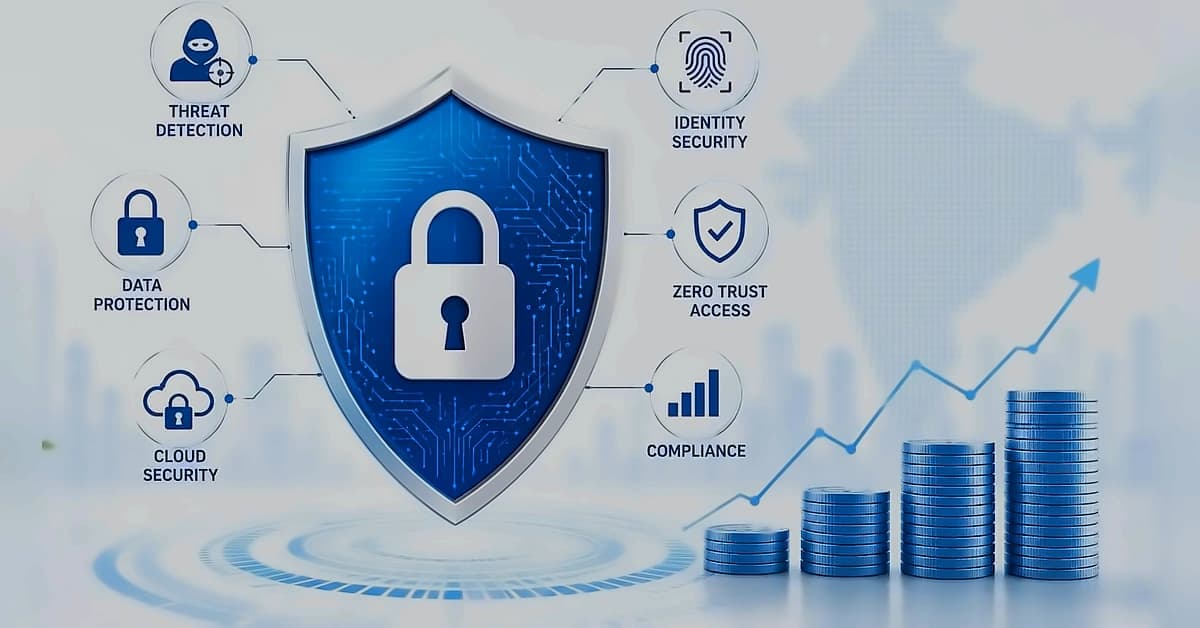
India's cybersecurity market has reached a significant milestone, reaching ₹90,000 crore (USD 11.34 billion) in 2025 and is projected to grow to ₹3,76,000 crore (USD 44.04 billion) by 2034, representing a compound annual growth rate (CAGR) of 15.46% during 2026-2034. According to IMARC Group, this growth is driven by escalating cyber threats, rapid digital adoption, and increasing regulatory compliance requirements. The widespread digitalization of the country, exemplified by India processing over 15 billion UPI transactions monthly in 2025, has significantly expanded the digital attack surface, necessitating expanded procurement of identity security, network access control, and zero-trust network access platforms across large enterprise and regulated industry segments. Investor interest has strengthened significantly with funding nearly doubling to $89 million in H1 2026 from $47 million in H1 2025, according to Venture Intelligence. There were 17 funding rounds in H1 2026, compared with only three in H1 2025, indicating a dramatic shift in deal-making activity.

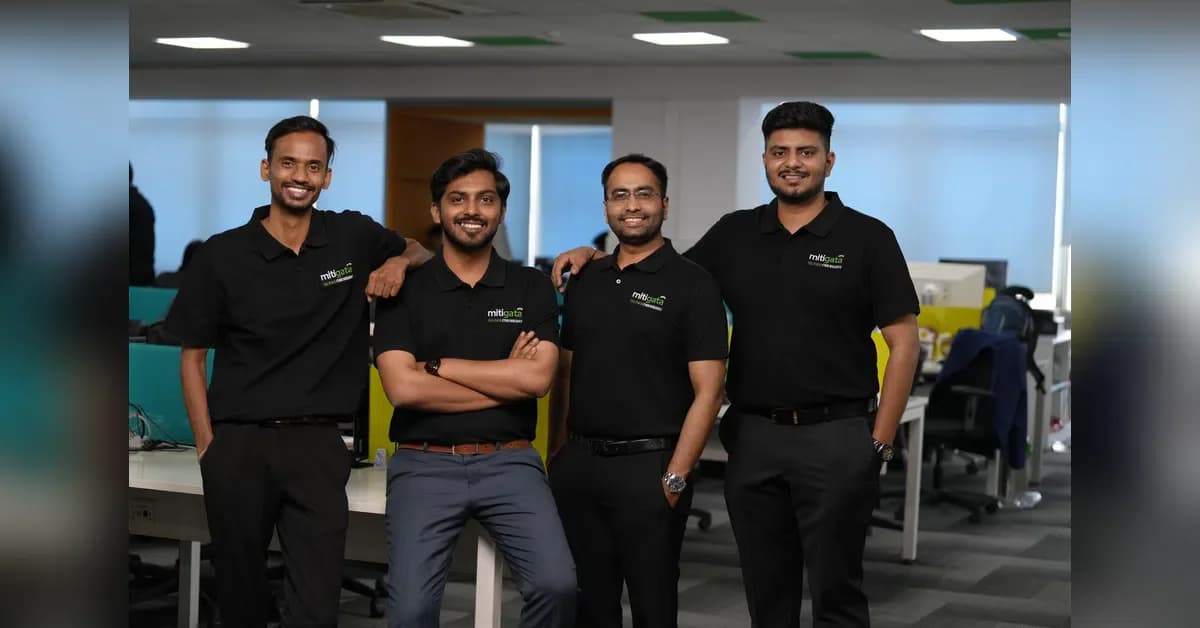
Cybersecurity startups are experiencing unprecedented growth as AI-driven cyberattacks become more sophisticated. Mitigata, which raised $15 million in a Series B round led by Bessemer Venture Partners, expects its revenue to grow to ₹300 crore in FY27 from ₹30 crore in FY26. As per Mitigata's co-founder Mohit Anand, "AI has made cyberattacks faster, cheaper and more scalable, which is driving demand for cybersecurity." SecureBlink reported a 45% demand growth since July last year, with their AI-powered platform scanning web applications and APIs for security vulnerabilities. Experts note that generative AI has dramatically reduced the cost and complexity of cyberattacks by automating phishing campaigns, discovering software vulnerabilities, and creating convincing deepfakes at scale. A March SANS Institute study found only 21% of 1,000 organizations polled have a comprehensive AI security framework, while 7% have no AI policy at all, creating significant business opportunities for cybersecurity startups.
Recent cyber incidents in India reflect this evolving threat landscape. In July 2025, cryptocurrency exchange CoinDCX suffered a cyberattack that led to losses of around ₹380 crore after attackers compromised an internal operational account. Additionally, New India Cooperative Bank faced a cyber incident that disrupted UPI and internet banking services for several days, highlighting how attacks increasingly affect critical financial infrastructure. Global breaches have become increasingly common as companies deploy AI without proper security measures. In February, Codeway's Chat & Ask AI app leaked 300 million messages from 25 million users due to back-end misconfiguration, while Meta experienced an internal AI agent leak to employees. In June, ransomware group World Leaks allegedly leaked over 200,000 files from Tata Electronics, including purported confidential documents related to Apple and Tesla, after the company acknowledged a cybersecurity incident.
Zero Trust security frameworks are becoming the dominant enterprise security architecture as perimeter-based models prove inadequate for cloud-first and hybrid work environments. Indian IT services majors and BFSI enterprises are deploying identity-centric Zero Trust frameworks integrating multi-factor authentication, microsegmentation, and continuous verification. This architectural shift is driving expanded procurement of identity security, network access control, and zero-trust network access platforms across large enterprise and regulated industry segments. According to IMARC Group, investors focusing on AI-integrated unified vulnerability management and localized managed security services will capture the highest long-term yields, with allocating capital into scalable, compliance-driven enterprise protection models remaining an indispensable strategic imperative.
The government is actively strengthening India's cybersecurity capabilities to counter AI-driven threats. On 13 July, ministry of electronics and information technology secretary S. Krishnan stressed the need to build indigenous AI and cybersecurity infrastructure. The government has asked Indian large language model companies Sarvam and BharatGen to develop cybersecurity models akin to Anthropic's Mythos, which can autonomously find software vulnerabilities. Anthropic's Project Glasswing announced in April provides vetted organizations access to the latest Mythos model to patch zero-day vulnerabilities. Regulatory tightening is boosting investor sentiment, with the operationalization of the Digital Personal Data Protection Act, SEBI's Cybersecurity and Cyber Resilience Framework, and RBI's push for tighter cybersecurity measures all seen as tailwinds. As per Bessemer Venture Partners's Pankaj Mitra, "More talent is being created, enterprises are more willing to pay, regulation is creating demand."