Zoox has already launched public robotaxi services in San Francisco and Las Vegas, with Austin and Miami listed as expansion locations. According to reports from The Wall Street Journal, the company is the first to charge for rides in its autonomous vehicle without a steering wheel, dashboard or pedals, marking a significant milestone in autonomous transportation. In San Francisco, public riders can request rides through the service, while in Las Vegas, riders can access the service through designated locations. Tesla's current Robotaxi deployment operates with Model Y vehicles rather than the Cybercab, with the company offering autonomous rides in Austin, Dallas, Houston, Miami, Orlando, and Tampa. As reported by Reuters, Tesla is preparing to begin Cybercab rollout in Austin, Texas, as soon as August, initially offering rides to employees on public roads before adding the vehicles to its Robotaxi service.
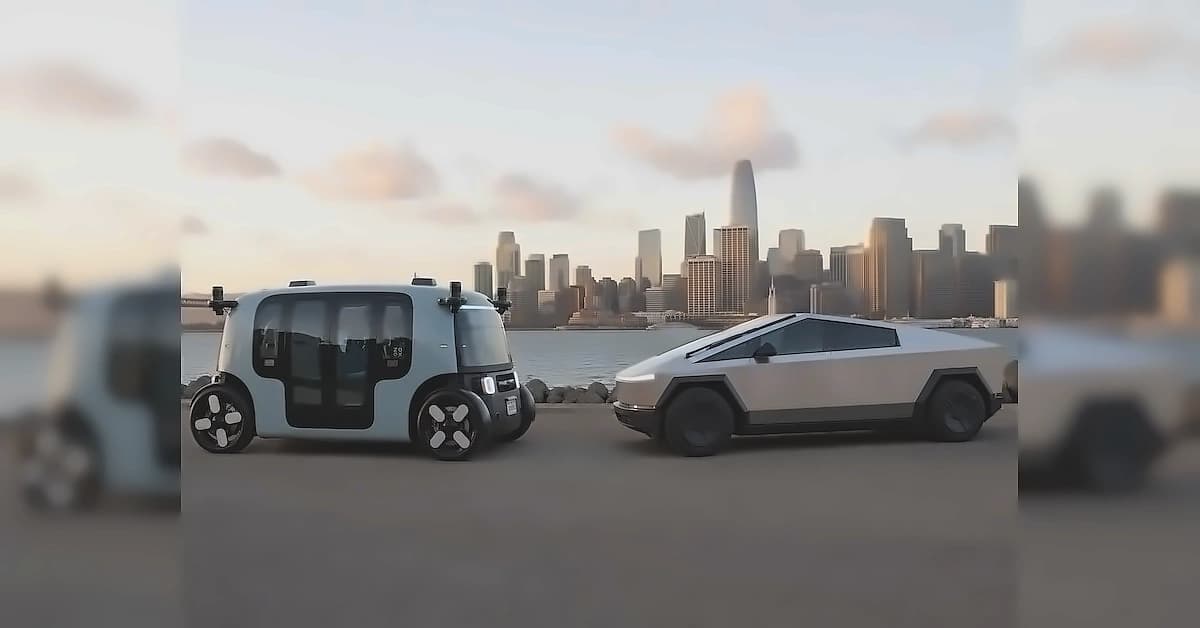
Zoox's robotaxi features a distinctive 'toaster-shaped' design with no steering wheel or pedals, seating four passengers in two rows facing each other. According to reports from The Wall Street Journal, the vehicle is bidirectional with four-wheel steering and active suspension system. Zoox manufactures its vehicles at a dedicated 220,000-square-foot facility in Hayward, California, with an annual capacity of about 10,000 vehicles. The company produces approximately 100 vehicles in its fleet and uses a modular assembly approach with automated transport systems and robots for specific tasks. Tesla's Cybercab, unveiled in October 2024, is a two-seat vehicle without conventional driving controls and uses Tesla's 'Unboxed' manufacturing process, building five to six major modules in parallel before final assembly. The first production Cybercab rolled off the line at Gigafactory Texas on February 17, 2026, with volume production targeted from April.
Zoox has completed regulatory approval processes for operating up to 5,000 vehicles under specified road and weather conditions, according to reports from The Wall Street Journal. Tesla's current Robotaxi deployment faces regulatory requirements for human supervisors or drivers to be available when necessary, as reported by The Standard citing AFP. Zoox CEO Aicha Evans recently stated on Fox Business that the company agrees with regulators and needs oversight, responding to NHTSA's warnings about unsafe interactions with emergency vehicles. Zoox's senior director of policy and regulatory affairs Ron Thaniel confirmed the company establishes lines of communication with local and state officials and conducts hands-on engagement with first responders before launching in new cities. The Autonomous Vehicle Industry Association reports that only about half of US states have passed laws allowing vehicles to operate without humans, highlighting the regulatory challenges facing the industry.
Despite political attention, robotaxis remain a tiny share of the US ridehailing market with significant economic implications. While Waymo now provides more than 500,000 paid rides per week across 11 US cities, Uber handles about 40 million trips per day globally. As reported by The Verge, Waymo has expanded to more than 3,500 vehicles publicly and recently received approval from the California Public Utilities Commission to expand driverless passenger service across parts of 18 counties, including Sacramento and San Diego. Uber reported that 10.2 million drivers and couriers earned money on its platform during the second quarter, highlighting the potential economic disruption from autonomous vehicles. Peter Finn from the Teamsters called autonomous vehicles an 'existential threat' to labor, pointing to potential job displacement beyond rideshare drivers including truckers and delivery drivers. However, Waymo argues that automation will eliminate some tasks while creating others, including fleet technicians, mechanics, and remote support workers.
The robotaxi industry faces intensifying regulatory battles across multiple states as deployment expands. In New York, Gov. Kathy Hochul withdrew a proposal earlier this year that would have opened the door to driverless robotaxis outside New York City after taxi drivers and unions opposed it. In Washington, DC, labor unions are fighting legislation that would legalize commercial robotaxis, with a July City Council hearing stretching for 10 hours. Sen. Ed Markey (D-MA) has pushed for greater federal oversight, introducing legislation requiring AV companies to regularly report safety data. SAVE-US advocates for multi-stage testing and commercial-deployment permits, requiring companies to demonstrate vehicles can operate safely with small fleets before adding more cars. Waymo supports a 15-cent-per-mile fee for autonomous vehicles to fund transit upgrades and aid workers displaced by autonomous vehicles, though the company objects to permanent caps on fleet size. The Trump administration's NHTSA recently warned autonomous-vehicle companies that vehicles unable to safely interact with police, firefighters, and other first responders pose a danger to the public, intensifying regulatory scrutiny across the industry.