Elon Musk celebrated a new partnership between SpaceX and NVIDIA on Monday, confirming plans to launch an optimized Vera Rubin system into orbit as early as 2027. The announcement came via Musk's X platform, where he reshared NVIDIA's post highlighting SpaceX's plans to deploy its artificial intelligence technology in space. "SpaceX, in partnership with NVIDIA, has designed a space-optimized Vera Rubin NVL72 system for launch to orbit in Q4 next year, with significant scale in 2028," Musk wrote on X. Despite his enthusiasm, both companies' stocks fell on the day of the announcement. SpaceX shares traded in green during Monday's session, advancing 0.38% to $137.49 following the announcement of its strategic partnership with NVIDIA. However, NVIDIA shares fell 2.91% to $208.48, extending a rough week that left the stock down 5.95% over five sessions, according to TradingView data. The joint decline suggests Musk's endorsement was not enough to offset broader pressure on both names, with SpaceX stock declining 1.44% to $135 before slipping further in after-hours trading to $134.70.
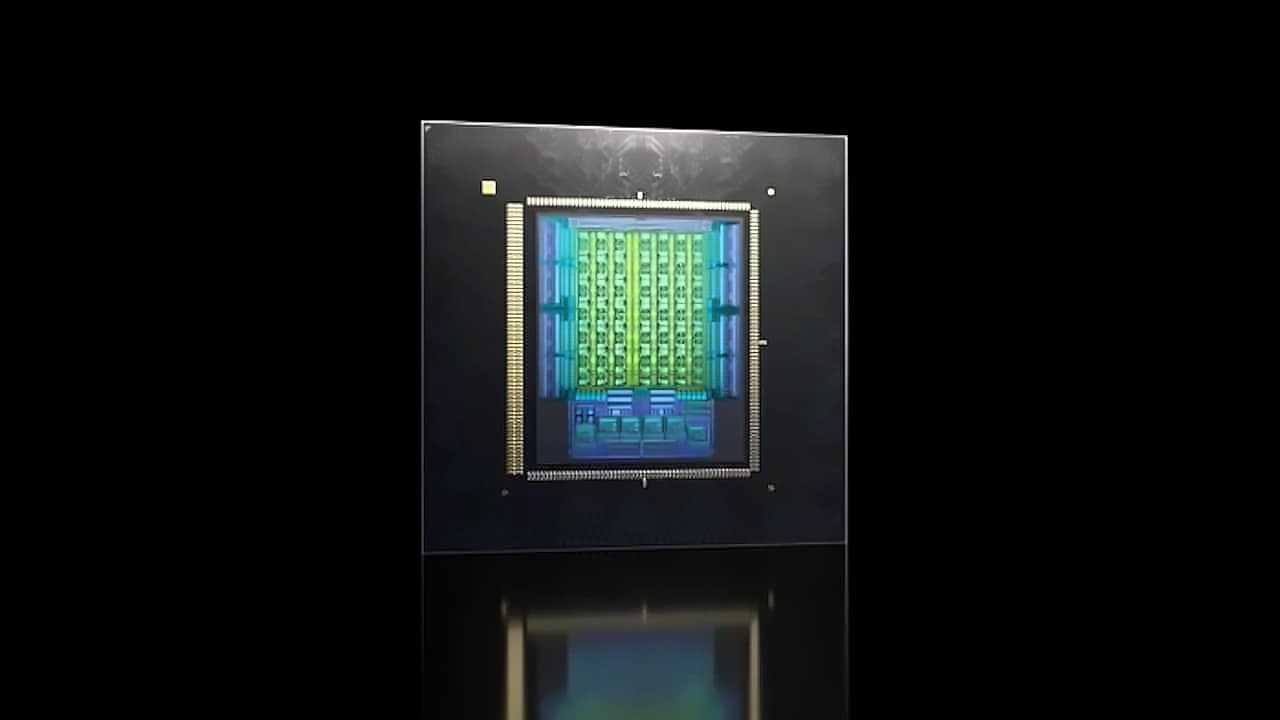
NVIDIA announced that SpaceXAI will deploy its new Vera CPU to power the next generation of agentic AI workloads, extending the chipmaker's architecture from Earth-based data centers into orbital computing infrastructure. Musk responded directly on X, describing Vera as the first CPU built for agents, saying it would accelerate the orchestration, code execution, and data processing that keep SpaceX's AI agents acting fast. "Our design is significantly simpler, lower cost, denser and lighter than a traditional rack," Musk said on X. Vera Rubin NVL72 is a rack-scale AI supercomputer that combines 72 Rubin GPUs, 36 Vera CPUs, ConnectX-9 SuperNICs, and BlueField-4 DPUs in a single integrated system. The CPU itself packs 88 NVIDIA-designed Olympus cores and up to 1.2 TB/s of memory bandwidth, claiming task completion times up to 1.8 times faster than comparable x86 processors. The platform will be paired with NVIDIA's broader Vera Rubin platform to scale infrastructure behind Grok toward gigawatt-level computing capacity.
SpaceX has filed for approval with the Federal Communications Commission (FCC) to launch a network of roughly one million satellites to conduct complex computing for AI. According to Bloomberg, the company had earlier indicated that its orbital data centres could be launched as soon as 2028, but following the first quarter's earnings report, Musk reportedly brought the timeline forward, stating that they could be launched as soon as next year. Musk-led SpaceX, which launched its IPO in June, has highlighted plans for pioneering space-based data centres, a satellite network designed to perform computing in orbit as a cheaper and more environmentally friendly alternative to data centres on Earth. The company's orbital data centres are positioned as a significant advancement in space-based computing infrastructure, representing a major shift toward off-world AI processing capabilities.
NVIDIA is in early talks with South Korean AI chip startup Rebellions regarding a potential collaboration, according to Bloomberg. NVIDIA CEO Jensen Huang recently met with Rebellions co-founder and CEO Sunghyun Park at NVIDIA's headquarters in Santa Clara, California, to discuss a potential tie-up. However, Bloomberg notes that talks between the companies are preliminary and may not result in a transaction. This development continues Huang's extensive investment push as NVIDIA works to maintain its central position in the AI industry, following recent deals with high-profile startups including the $20 billion arrangement with U.S. AI company Groq in late 2025.
The partnership extends beyond terrestrial AI applications to orbital computing in space satellites such as SpaceXAI's planned first-generation Starmind AI satellite. According to NVIDIA, the Starmind AI satellite will be based on the optimized NVIDIA Vera Rubin NVL72 rack-scale system, extending the same accelerated computing architecture powering next-generation AI factories on Earth into space. Mike Nicolls, president of SpaceXAI, stated that Vera provides the CPU performance and memory bandwidth to run enormous amounts of orchestration, code and data processing while keeping GPUs doing what they do best. "That means higher-performance AI agents and more useful work from every watt of compute," he added. The optimized Vera Rubin system will be launched into orbit as early as 2027, marking a significant milestone in space-based AI computing.
The integrated architecture combines NVIDIA's accelerated computing, NVLink interconnect technology, Spectrum-X Ethernet networking and BlueField data processing to create high performance and energy efficiency at scale while reducing cost per token. As reported by NVIDIA, the Vera platform uses 88 NVIDIA-designed Olympus cores, NVIDIA Spatial Multithreading technology and high-bandwidth LPDDR5X memory, which can provide up to 1.2TB/s of bandwidth. The platform facilitates 1.8 times faster task completion compared to x86 CPUs for agentic AI, reinforcement learning and data processing. Ian Buck, vice president of hyperscale and high-performance computing at NVIDIA, emphasized that agentic AI requires a new kind of computing system built not only to generate answers but to take action.
As reported by NVIDIA, the company's Groq 3 LPX interactive AI inference accelerator, an extension of the Vera Rubin platform, has entered full production, hitting 3,400 output tokens per second. This development represents the extension of accelerated computing architecture from massive AI factories on Earth into space computing. The Vera platform is specifically geared around managing and speeding up CPU-intensive work with regards to model inference, covering processes from tool use and code execution to data processing, orchestration and simulation. The partnership positions SpaceXAI to leverage AI agentic computing technology for real-time execution of code, data processing and coordination of complex tasks in orbital environments.
NVIDIA continues to dominate AI development with revenue rising 85% year over year in Q1 of fiscal 2027, topping guidance and expectations. The company is highly profitable and tends to beat on earnings, with NVIDIA stock trading at under 33.3 times trailing 12-month earnings, just off a 5-year low. However, on a price-to-sales basis, it trades at 21 times trailing 12-month sales, which remains fairly expensive. The company sits at the center of AI development, benefiting from expected $1 trillion in global AI spending from hyperscalers like Amazon, Alphabet, and Microsoft in 2026 alone, according to Goldman Sachs. NVIDIA has constructed a long-term moat through complete AI development systems and high barriers to entry for competitors, though the market remains concerned about rapid AI changes that could disrupt the current landscape.