The smart home market is evolving beyond individual devices to become a critical interface between AI agents and the physical world. According to reports from Business Standard, Google, Amazon, Samsung and Apple are connecting AI agents with smart home devices, fundamentally changing how AI interacts with the physical environment. The competition is no longer about which company makes the best smart speaker or appliance, but rather who becomes the control layer for an AI-powered home. This control layer determines which devices an agent can see, which information it can access, and which actions it can take. The latest developments show Google has announced a major upgrade by opening its smart home ecosystem to third-party AI agents, allowing tools like Claude and OpenClaw to control and monitor connected devices securely.
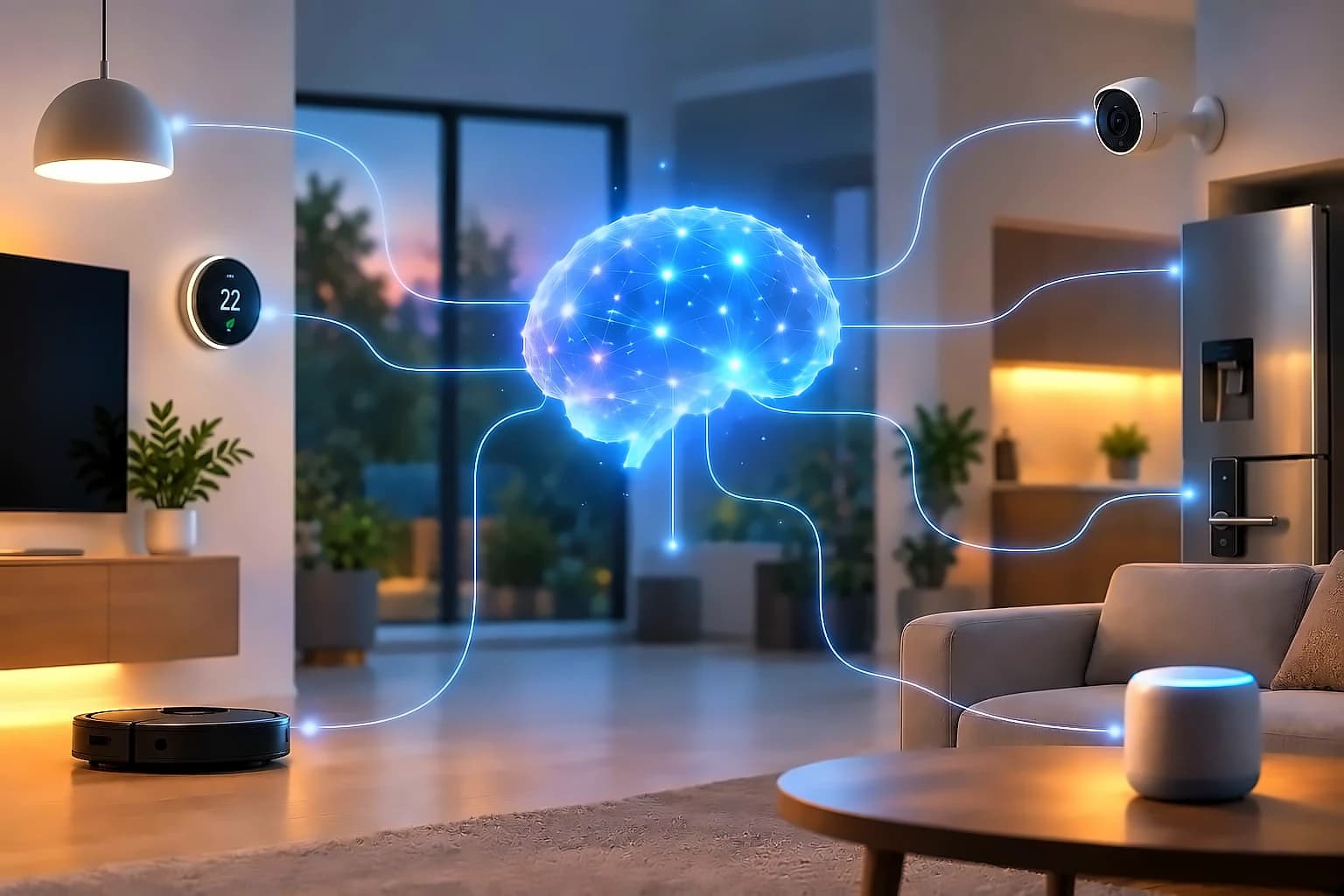
Google's position stands out as it pursues both building its own AI agent and becoming infrastructure for other agents. As reported by Business Standard, Google's Home MCP (Model Context Protocol) lets compatible agents such as Claude, ChatGPT and others access a Google Home setup, inspect connected devices, monitor their states, look at historical events and execute supported controls. The company already has Gemini for Home, its AI-powered home assistant, and is expanding its role across the home. This creates two separate paths into the same home - Gemini can reach devices directly through Google Home, while other AI agents can reach the same devices through Home MCP and then Google Home. The latest development shows Google has announced a major upgrade by opening its smart home ecosystem to third-party AI agents, allowing tools like Claude and OpenClaw to control and monitor connected devices securely.
The new Home MCP integration enables advanced features including cross-camera analysis and device state history usage for tasks like tracking laundry loads or light usage. According to the latest announcement, the integration enables voice interaction with the AI agent, which can send audio messages via your Google Home speaker after completing a task. Notably, the new integration doesn't replace Google's existing Gemini for Home assistant - instead, it adds another layer of control by letting third-party AI agents interact directly with devices connected to Google Home through their own interfaces. This means users can still use their preferred AI agent while benefiting from the advanced capabilities offered by the Home MCP integration.
Samsung's approach centers on SmartThings and its own connected appliances through the Bespoke AI range, connecting categories of appliances ranging from ACs and TVs to refrigerator and washing machines. As reported by Business Standard, the platform can learn habits, automate tasks and connect appliances across the home. The company is combining AI with information from its wider ecosystem, where SmartThings can connect appliance controls and monitoring, while Samsung's appliances can use information such as food items and sleep patterns to adjust their behavior. This creates intelligence spread across appliances, Bixby, SmartThings and Samsung's wider ecosystem.
The control layer is becoming the real competition, with each company implementing different approaches. According to Business Standard, Google's Gemini for Home and external AI agents both work through Google Home to reach connected devices, while Amazon makes Alexa+ the primary agent through which its services and connected-home ecosystem get coordinated. Samsung's approach involves AI and Bixby working through SmartThings to reach Samsung appliances and connected devices, and Apple's Apple Intelligence and Siri work through Apple Home and the wider device ecosystem. The latest Google development is currently available only to Google Home Premium Advanced users in the US, with access rolling out in coming weeks. By allowing AI agents to analyze and act on data generated by connected devices, Google is taking a major step toward making homes more intelligent and responsive.