OpenAI announced on Friday that it will end its partnership with Cursor due to trust issues following SpaceX's acquisition of the AI-coding agent. According to reports from Reuters, the ChatGPT maker blamed trust issues for winding down their contract and said that it was not confident that SpaceX would use its technology within their terms of service. With a proposed shutoff date of November 12, 2026, Cursor received 76 days of notice following which its direct model access will be withdrawn. In their official blog post, OpenAI stated 'We are making this choice because we cannot be confident that SpaceX will use our technology within our terms of service, based on our experience with Elon Musk's companies violating contracts.' The company framed the decision as risk management rather than retaliation, citing two prior incidents where Musk admitted under oath that xAI had violated OpenAI's terms of service and after Musk acquired Twitter (now folded into SpaceX), the company broke the terms of their contract. OpenAI invoked a limited time window clause in its custom contract with Cursor that allows cancellation upon a change of control, with the company stating it will give the maximum notice period required by the contract but will not supply future models, including its upcoming model Astra, to Cursor.
According to Reuters, the coding-tool company now owned by Elon Musk's SpaceX will no longer receive any of OpenAI's future model contracts. OpenAI acknowledged their 4-year relationship with Cursor and stressed that this move will adversely impact developers who rely on OpenAI models in Cursor. The company noted that they tried to hold the contract cancellation to the latest date possible. Cursor offers Grok models developed with SpaceXAI among its first-party models, while also allowing users to access frontier models from OpenAI, Anthropic and Google, according to its website. For Cursor's paying users, the practical question is what happens to their workflow after November 12, as losing direct OpenAI access doesn't break the product outright but means the startup loses one of its most important model suppliers. Cursor reached roughly $4 billion in annualized revenue in under four years, of which approximately $2.6 billion comes from enterprise B2B customers, before SpaceX doubled that figure with its buyout. OpenAI has stated it is 'ready to go above and beyond to support' affected developers during this transition, though specific migration tools or API subsidies have yet to be detailed.
As reported by Bloomberg and TechCrunch, SpaceX closed its all-stock deal to acquire Cursor on August 14, valuing the coding startup at $60 billion. The acquisition was completed 14 days after the OpenAI partnership termination, with the transaction officially closing on August 14, completing a process that began with an April model-training partnership. The economics were staggering even by AI standards, with SpaceX paying approximately 15 times revenue for the startup, one of the largest multiples ever attached to an AI software company. According to a US Securities and Exchange Commission filing cited by Outlook Business, Anysphere will become a wholly owned subsidiary of SpaceX, while Cursor shareholders will receive SpaceX Class A stock based on the deal's implied $60 billion equity value. The companies had also been working on a new AI model expected to have applications across Cursor and Grok, the AI chatbot developed by Musk's xAI. Cursor now sits inside SpaceXAI, the division formed when SpaceX acquired xAI in February, which houses Grok, Colossus-scale training infrastructure, and the most popular AI-native IDE on the market.
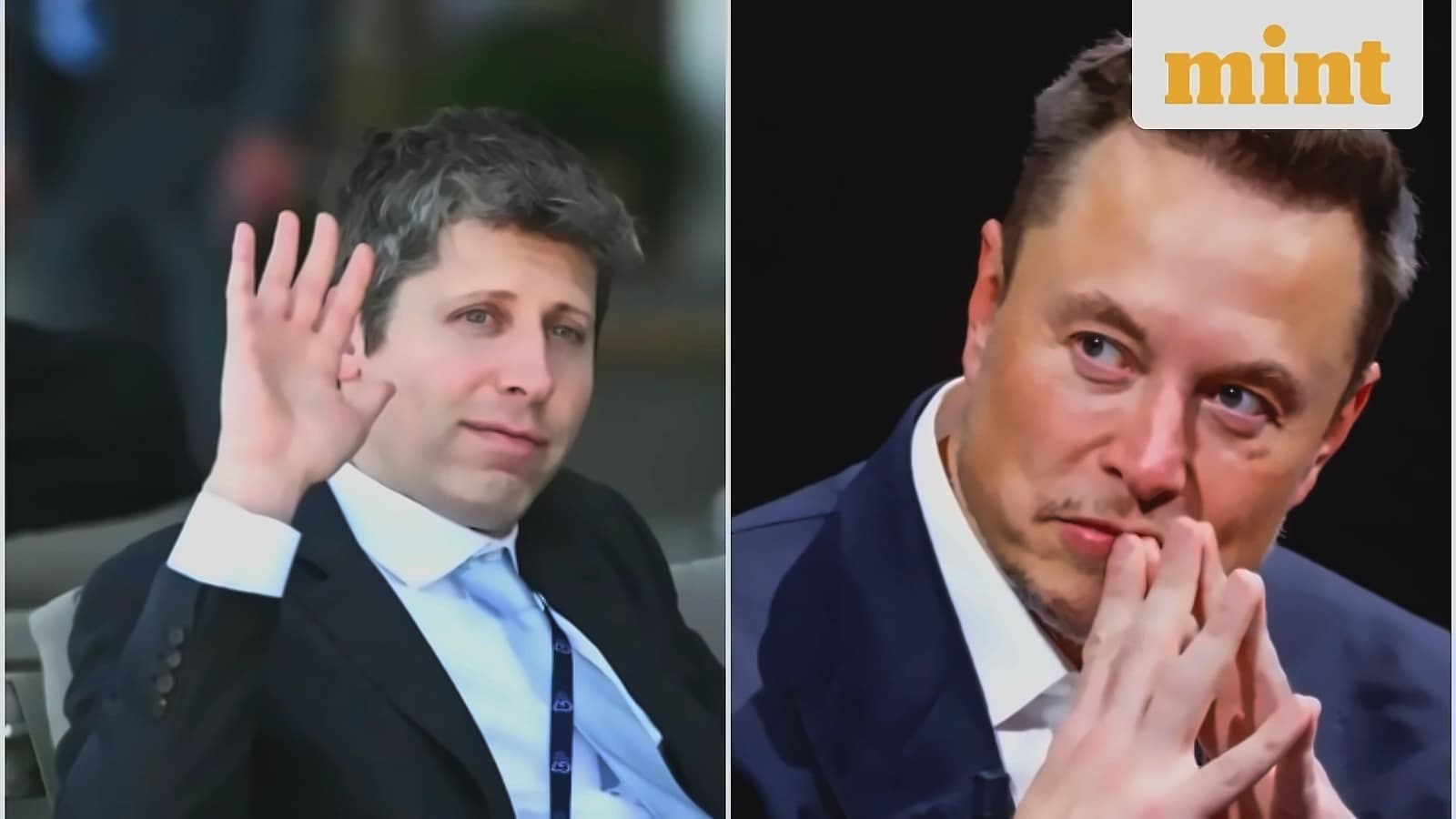
This development represents a further escalation in the bitter rivalry between OpenAI CEO Sam Altman and Elon Musk, the world's richest person. The feud culminated in a trial where Musk's lawyer claimed that Musk and other witnesses had testified that Altman was a liar, while OpenAI argued that Musk had sought control of the company. Musk had sued OpenAI for $150 billion, accusing the company and Altman of 'stealing a charity' by betraying its original nonprofit mission for their own enrichment. A federal jury ruled against Musk earlier this year, finding that he had filed the case too late. In its blog post, OpenAI specifically cited X, formerly known as Twitter and now part of SpaceX, as having breached the terms of its contract with OpenAI after Musk acquired the platform. OpenAI stated that 'To work with a large partner like SpaceX, we typically rely on custom contracts to ensure compliance with our terms of service and that the integration provides for safety at scale.'
The Cursor situation has created a mixed response across the AI industry, with some companies moving to fill the gap while others maintain their distance. Anthropic co-founder Tom Brown announced that the company will increase compute support for Claude models inside Cursor, stating 'Cursor has been a trusted partner of Anthropic since Sonnet 3.5. We'll continue to increase compute to support Claude models in Cursor and are excited for what comes next with them at SpaceX.' However, Musk has taken a defiant stance, calling the situation 'personal' and stating he 'couldn't care less' about the outcome. Cursor co-founder Michael Truell has characterized the impact as roughly 5% of user traffic, with talks with OpenAI still ongoing. The startup has already begun routing users to SpaceXAI's alternative models, including Grok, Claude and Gemini, as reported by Reuters. This development is part of a broader industry trend where model makers are drawing tighter lines around who gets to resell or embed their intelligence, with Cursor having reached a $29.3 billion valuation in late 2025 and generating more than $1 billion in annualized revenue before SpaceX doubled that figure with its buyout. The acquisition has transformed Cursor's founders into some of the technology industry's youngest billionaires, with each co-founder holding approximately 4.5% stake worth $2.7 billion at the deal's $60 billion valuation.