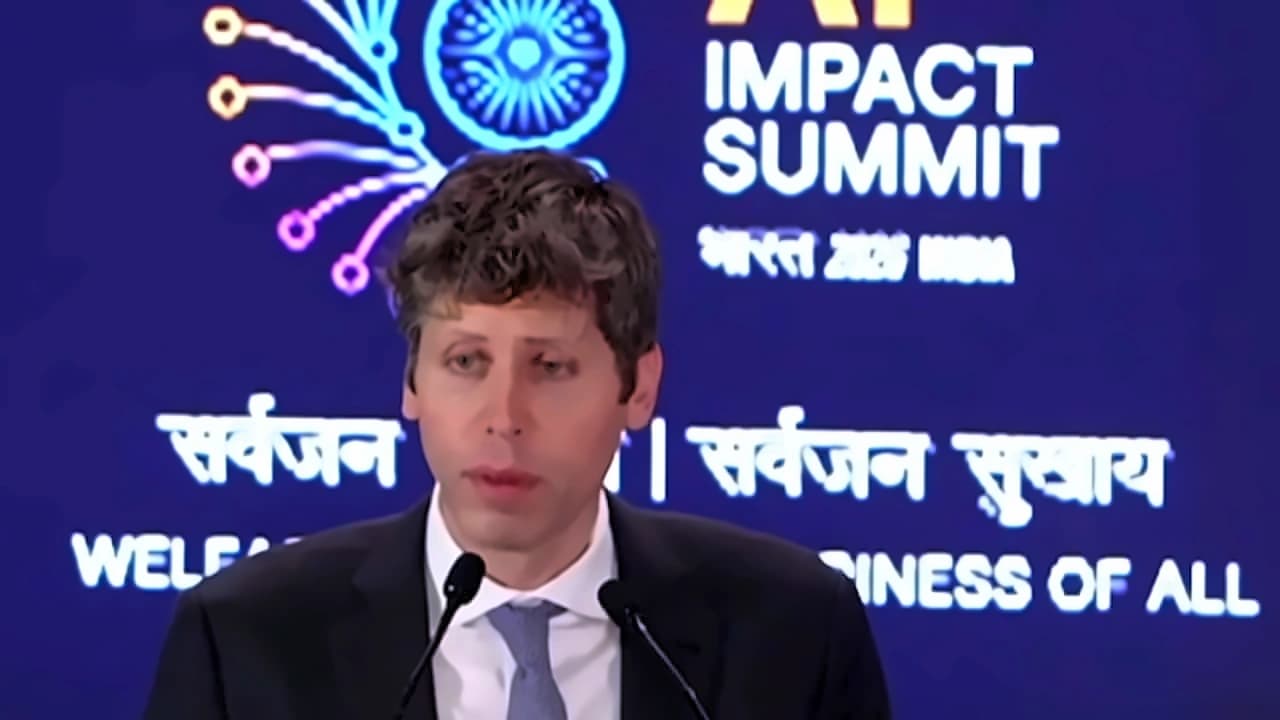
OpenAI CEO Sam Altman will brief the United Nations Security Council on artificial intelligence safety measures next week, according to reports from Reuters. The briefing will take place during the UN General Assembly's annual gathering of world leaders in New York, with the 15-member Security Council holding a public meeting on AI and international security on Wednesday, January 23rd. As reported by Reuters, an OpenAI spokesperson confirmed that Altman will present the briefing in person, marking an unusual appearance as world leaders gather in New York for the UN General Assembly. The Security Council meeting has been convened by France, which is the president of the body for September, and will be chaired by French Minister for Europe and Foreign Affairs Jean-Noël Barrot. According to Reuters, Altman's remarks are expected to focus on the need for international coordination and shared safety standards, and OpenAI's efforts to ensure people globally benefit from the technology.
In a significant development, US Treasury Secretary Scott Bessent announced over the weekend that both China and the US have agreed to create a "US-China AI dialogue" intended to develop a common understanding of the technology's benefits and threats. As reported by Moneycontrol, Washington also proposed a notification mechanism covering AI incidents with national security implications. In response to mounting concerns about AI safety, OpenAI is urging the US to lead an effort with other countries to set global standards for cutting-edge artificial intelligence. In a blog post Monday, the company emphasized that international technical standards are needed to develop AI safely, particularly to help define what kinds of incidents involving AI models should be reported, determine how countries can work together on AI advancement, and improve access to compute capacity to develop such technology. OpenAI suggested this could be done via existing AI safety institutes, including the US's Center for AI Standards and Innovation (CAISI) within the US Commerce Department.
OpenAI has unveiled a comprehensive policy proposal calling on the United States to lead an international effort to establish technical safety standards for frontier artificial intelligence, including systems capable of recursive self-improvement. According to the company's latest policy document, AI safety cannot be addressed by individual countries or companies alone because frontier AI development and deployment are increasingly global. The proposal addresses the critical challenge of recursive self-improvement (RSI), where AI systems could increasingly perform research needed to develop successive generations of AI. OpenAI stated that fully autonomous RSI is not happening today and should not be pursued unless it can be carried out safely while preserving meaningful human control. The company proposed a framework combining national and international standards, with AI safety institutes and other technical bodies working together on common benchmarks and risk assessments.
OpenAI's proposed framework would leverage existing international networks involving countries including India, Japan, the UK, Canada, France, Germany, Singapore and South Korea. The proposed standards would cover AI capability measurement, evaluation of RSI-related progress, human oversight of automated research and incident reporting, including common severity levels and reporting thresholds. Importantly, OpenAI clarified that these standards would not automatically create licensing, mandatory pre-release reviews, or approval requirements for AI models. The company also called for secure communication channels between governments and critical infrastructure operators to exchange information on emerging vulnerabilities and national-security risks, addressing the need for coordinated responses to AI threats that cross borders.