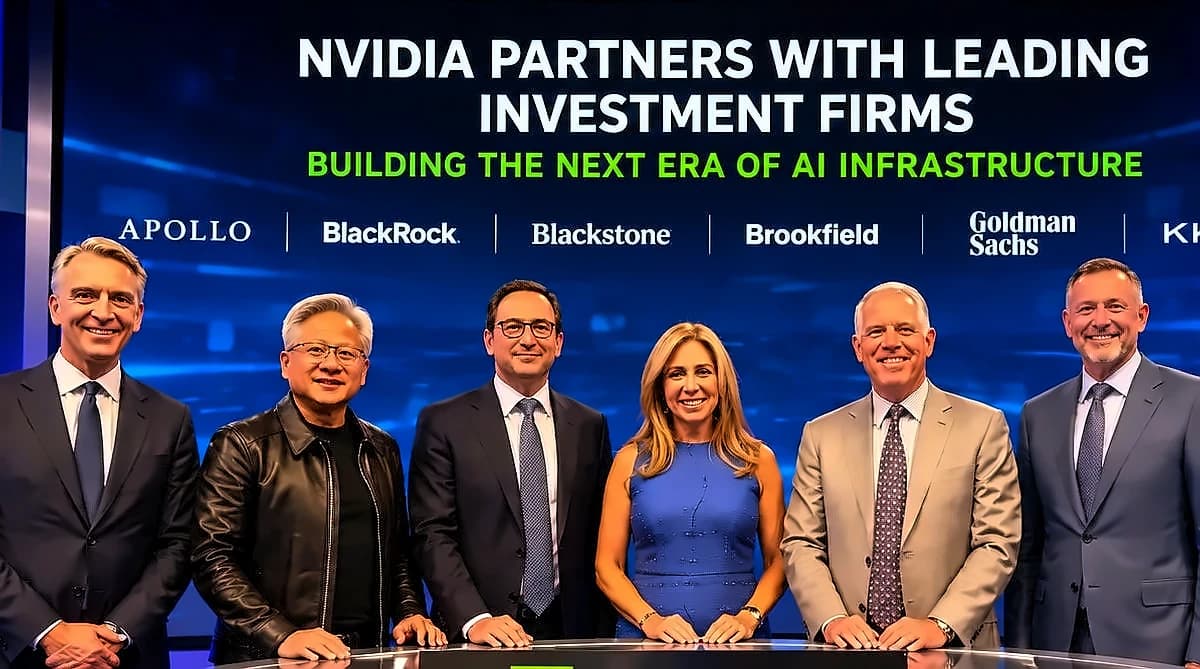
Nvidia CEO Jensen Huang believes the current semiconductor boom is fundamentally different from previous cycles, driven by industrial rather than consumer demand. Speaking during an Axios interview, Huang argued that "This is industrially driven, meaning the fundamental technology of computers is changing." He compares AI to infrastructure layers like energy, the internet, roads, and railroads - requiring massive chip capacity. Huang projects that the semiconductor industry needs to grow five to 10 times larger than its current size, representing a significant bullish signal for AI stocks. This assessment comes as recent chipmaker earnings, including from Nvidia and Intel, show continued significant compute demand, with Intel delivering 25% year-over-year revenue growth in Q2 2026, marking its strongest growth in over 15 years.
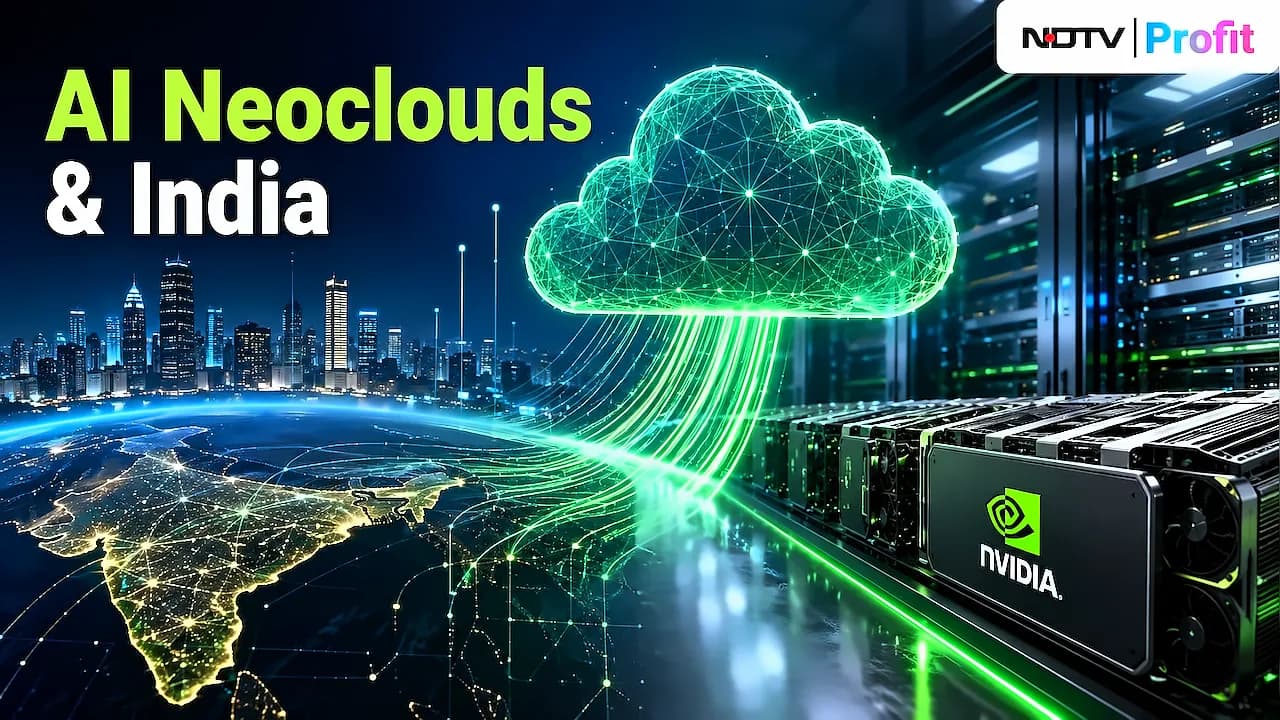
Nvidia has introduced a groundbreaking revenue-sharing model that guarantees minimum revenue on GPU capacity sold to neoclouds, fundamentally reshaping how AI infrastructure gets funded. According to a Goldman Sachs research note dated 31 July 2026, this backstop model allows neoclouds to rent GPU compute for AI training and inference at scale, often to a small number of large customers rather than broad enterprises. The model represents a significant departure from traditional cloud computing, where firms like Amazon Web Services, Microsoft Azure, or Google Cloud dominate the market. A new category of cloud company has emerged at the centre of the AI infrastructure buildout: the neocloud. Unlike legacy hyperscalers such as Amazon Web Services, Microsoft Azure or Google Cloud, neoclouds are built from the ground up to do one thing — rent out GPU compute for AI training and inference, at scale, and often to a small number of large customers rather than a broad enterprise base.
Goldman Sachs analysts Katherine Murphy and Michael Ng identified Firmus and Sharon AI as two of the earliest partners in Nvidia's revenue-sharing arrangement. Firmus has partnered with Nvidia to build a 360-megawatt AI factory campus in Batam, Indonesia, housing 170,000 Nvidia accelerators spanning multiple chip generations including the Grace-Blackwell, Vera-Rubin and Vera chip generations. Under the arrangement, Firmus sells Nvidia-powered cloud services to end customers, while Nvidia earns both standard product revenue on the chips and a share of the cloud revenue generated from the supported capacity. The campus is expected to come online between 2027 and 2028. Sharon AI, an Australian neocloud, has signed a five-year, $1.32 billion cloud computing contract with an undisclosed AI lab, deploying its first AI Factory across New Zealand with 132 megawatts of total capacity and more than 62,000 Nvidia GPUs expected by mid-2027. The build includes up to 40,000 Grace Blackwell GPUs and a 600 petabyte storage agreement with Vast Data, with revenue expected to begin flowing in the first half of 2027.
The technical reality of migrating between neoclouds reveals significant infrastructure barriers that extend beyond simple data transfer. NCCL, NVIDIA's communication library for multi-GPU and multi-node training, auto-detects network topology across PCIe, NVLink, NVSwitch, InfiniBand, and RoCE to pick the fastest collective communication path - but only works across NVIDIA fabrics. A provider switch that changes GPU vendor (NVIDIA to AMD, for instance) requires rewriting the communication layer against RCCL, creating a meaningfully bigger lift than a same-vendor neocloud swap. Beyond the network layer, pinned CUDA driver and toolkit versions that don't match the new provider's node images, orchestration APIs, and reserved-capacity contracts tie workloads to specific providers. GPU generations turn over roughly every 18-24 months, making multi-year reservations with no exit path a bigger bet than it appears on term sheets. However, providers like CoreWeave and Lambda Labs charge zero or near-zero egress for most workloads versus $0.05-$0.12/GB on AWS, GCP, and Azure, with CoreWeave's Zero Egress Migration program covering egress fees at petabyte scale, potentially saving up to $1 million on typical hyperscaler migrations.
While Huang's optimistic projections support the AI infrastructure boom narrative, significant concerns remain about market sustainability. Alphabet's free cash flow turned negative for the first time in Q2 2026 due to $44.9 billion in capital expenditures, highlighting investor concerns about the long-term viability of hyperscaler spending. However, recent compute demand supports Huang's expectations, with Nvidia consistently exceeding expectations and raising revenue guidance each quarter. The best way to evaluate the semiconductor industry's trajectory is through monitoring earnings releases from hyperscalers and chipmakers - if hyperscalers maintain or raise capex and chipmaker earnings continue to rise, both would indicate the industry remains in a boom period. The technical solutions for portable AI workloads are strengthened by safetensors files, which load directly across PyTorch, TensorFlow, JAX, Flax, and NumPy with zero-copy access and no arbitrary code execution risk, making them the single highest-leverage step toward portable AI workloads.