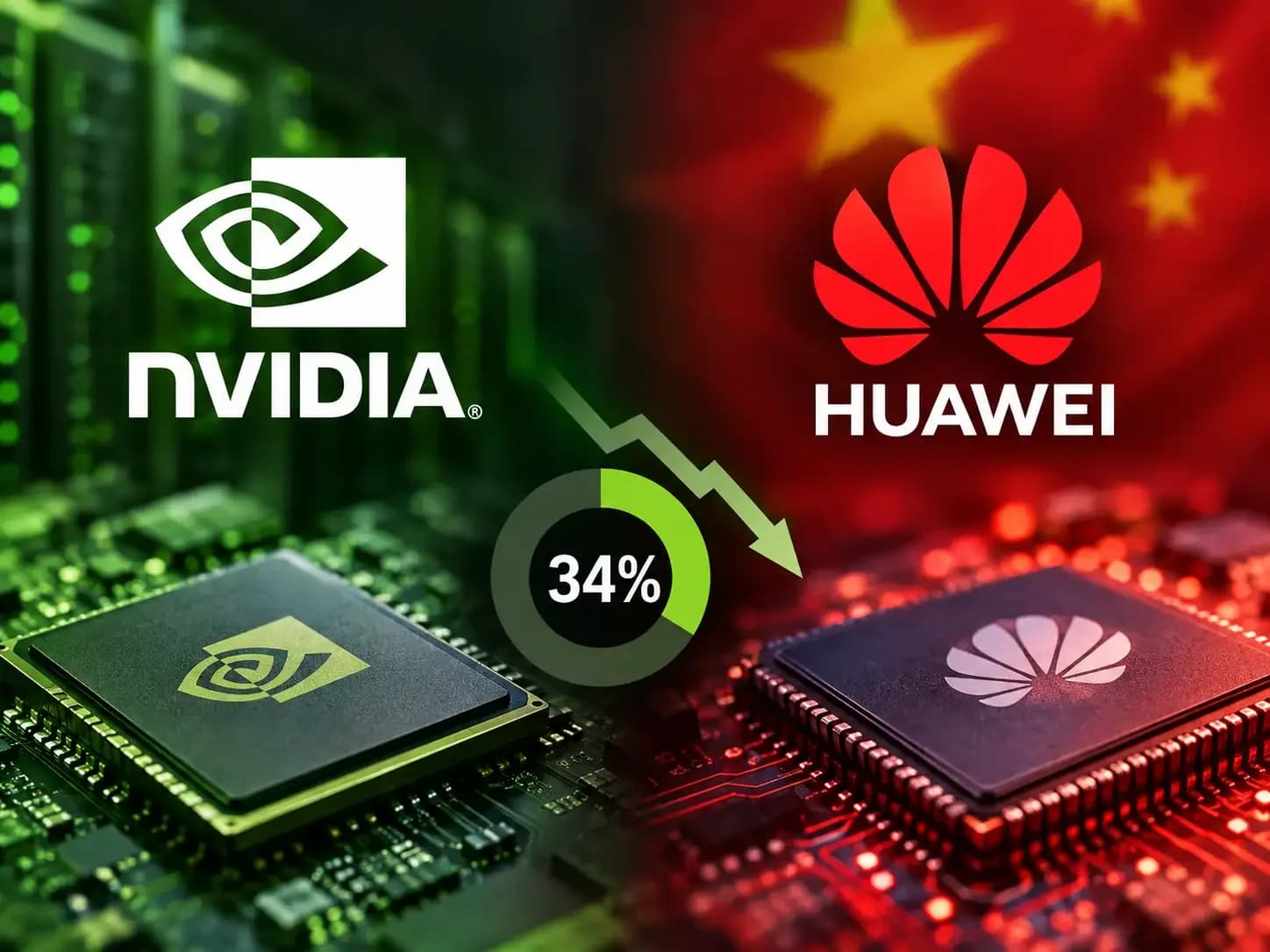
US GDP growth has been underestimated by approximately 0.3 percentage points due to a fundamental accounting gap around Nvidia's economic contribution. According to Epoch AI analysis, this measurement issue could widen to 2 percentage points by 2028 as Nvidia's influence in the AI infrastructure market continues to expand. The conventional explanation that much of AI investment is spent on imported technology goods proves incomplete, as GDP statistics have a blind spot around the value American firms create by designing AI chips manufactured abroad. This represents what analysts describe as the largest measurement issue attributable to a single firm within the current range of national account measurement issues.
Nvidia Corp. delivered impressive second-quarter results, with analysts projecting ₹92,000 crore in sales compared to a forecast of ₹78,000 crore at the start of the year. As reported by The Financial Exchange, this represents monster growth driven by the AI boom. The company remains the world's most valuable business with ₹7.6 lakh crore in revenue and maintains approximately 90% market share in AI accelerators. Despite facing mounting pressure as the AI chip market is poised to cross $1 trillion in revenue, Nvidia continues to demonstrate its market leadership through consistent quarterly performance. Between January 2025 and January 2026 alone, Nvidia made around ₹1.2 lakh crore in pre-tax income in the US, highlighting the scale of its domestic economic contribution that remains unrecorded in official GDP statistics.

Longstanding competitors are making significant inroads into Nvidia's territory. According to Bloomberg reports, AMD's data center revenue more than doubled last quarter to ₹54,000 crore, with CEO Lisa Su expecting the total AI accelerator market to reach ₹1.2 lakh crore by 2030. Intel Corp. has benefited from the broader AI spending spree, fueling a resurgence in its sales and share price. Broadcom and Marvell are helping major cloud providers develop customized components, with Broadcom expecting to sell ₹4.4 lakh crore worth of AI products this year. These companies are using application-specific integrated circuits (ASICs) to fill roles traditionally held by Nvidia's GPUs. AMD's data center revenue more than doubled last quarter to ₹6.7 billion, with CEO Lisa Su expecting the total AI accelerator market to reach ₹1.4 trillion by 2030.
The fundamental challenge lies in Nvidia's fabless manufacturing model, where the company designs chips but outsources production to contractors like Taiwan Semiconductor Manufacturing Co. (TSMC). As Epoch AI explains, Nvidia's value-add is not captured as IP exports because the company does not sell or license its designs to contractors - instead, it pays TSMC to manufacture chips. The money flows only one way: Nvidia pays TSMC, not the other way around. This creates a gap where finished chip servers enter the US at a price that includes Nvidia's value-add, and this value is subtracted from GDP as an import rather than recorded as domestic spending. The process involves approximately ₹30,000 in value per chip added by Nvidia's design work, but this value-add is currently left out of GDP calculations due to the complex international supply chain structure.
The measurement gap's significance extends beyond current estimates, with potential for further underestimation as AI infrastructure investment continues exponential growth. Epoch AI analysis suggests that if this measurement issue persists, GDP growth estimates could be underestimated by almost 2 percentage points by the end of 2028. This represents a substantial revision to current growth projections, as last quarter's US GDP growth rate was estimated at 1.5%. The AI boom has driven US investment in computing equipment to roughly ₹3.2 lakh crore per year, nearly triple its 2023 level, yet the measured impact on GDP growth has remained modest due to these accounting challenges. The new BPM-7 guidelines released by the IMF in 2025 recommend more explicitly that factoryless goods producers like Nvidia be classified as US manufacturers, even if manufacturing occurs abroad, potentially addressing some of these measurement gaps in future economic reporting.