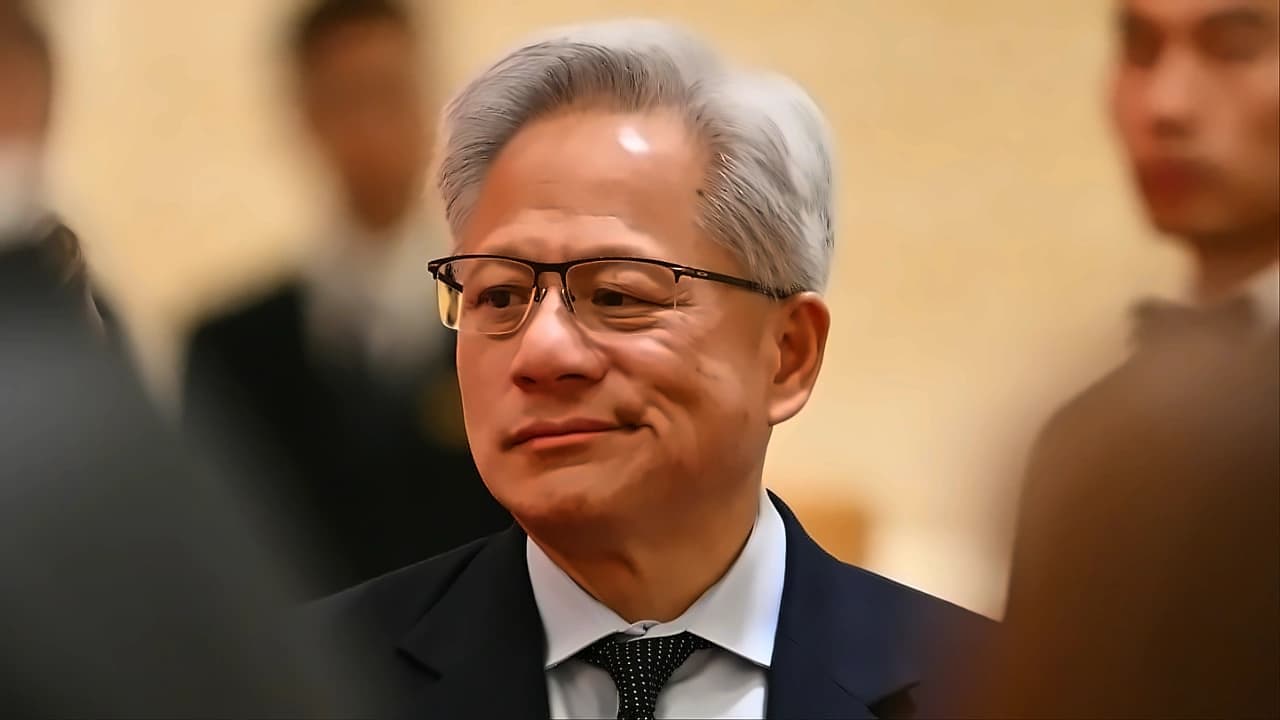
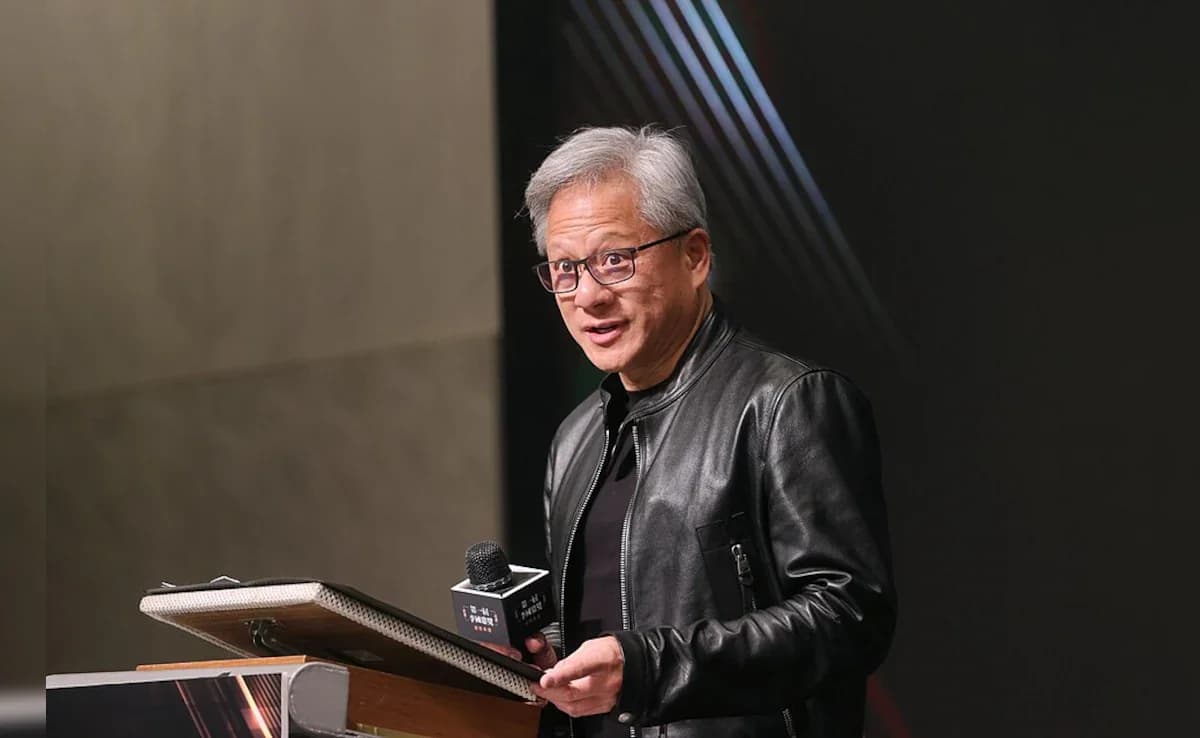
Nvidia CEO Jensen Huang has forcefully rejected concerns about artificial intelligence eliminating software engineering jobs, calling such fears 'complete nonsense' during his speech at the Computex conference in Taipei. According to reports from NDTV Profit, Huang stated that AI is actually 'increasing hiring' by boosting worker productivity, with the number of software engineers actually increasing rather than decreasing as some predict. The CEO emphasized that AI has become 'useful' and agentic, now functioning as both a profit generator and GDP generator for businesses. Speaking at the ServiceNow Knowledge 2026 conference, Huang expanded on this position, stating that 'AI is doing nothing but create jobs' and that AI doomsayers confuse a job's task with its purpose, noting that 'We need a trillion lines of code written' with unpredictable demand for coding skills. In a recent interview with Business Standard, Huang reinforced his commitment to worker compensation, stating 'I think people should be paid as much as possible' and emphasizing that 'I pay my employees as much as I can'.
Huang highlighted Nvidia's significant market expansion during his Computex presentation, revealing that the company's new Vera central processing unit has opened access to a $200 billion market. As reported by NDTV Profit, early adopters of the Vera CPUs include major companies such as OpenAI, Anthropic, and SpaceX. The CEO also announced plans to invest over $150 billion annually in Taiwan, describing it as the center of the AI revolution. Huang made these statements while discussing Nvidia's latest AI products at the Taipei Music Hall. According to NDTV Profit, the Vera CPUs are Nvidia's 'new major growth driver' specifically designed for AI agents.
Huang's optimistic employment stance extends beyond immediate concerns, with the CEO projecting that AI could bring back between 30 and 40 million workers to the economy. According to NDTV Profit reports, he previously stated at the Milken Institute Global Conference in 2025 that while every job would be impacted right away, workers would lose positions to those who use AI rather than to AI itself. The CEO has consistently argued that AI will fundamentally change work rather than eliminate it, stating that 100% of everybody's jobs will be changed but that some jobs would be lost while many would be created. Speaking to CNN's Fareed Zakaria, Huang emphasized that 'I am certain 100% of everybody's jobs will be changed' and hoped productivity gains across industries would lift society.
Huang's position contrasts sharply with warnings from other AI industry leaders, particularly Anthropic CEO Dario Amodei, who has cautioned that within five years, AI may eliminate up to 50% of all entry-level white-collar professions. As reported by NDTV Profit, Huang rejected Amodei's concerns at the 2025 VivaTech conference in Paris, stating that Amodei thinks AI is 'so scary, but only they should do it.' The CEO has consistently questioned predictions of widespread unemployment, arguing that AI is unlikely to result in significant job losses unless 'the world runs out of ideas.' Huang has also claimed that AI could perform some tasks 1,000 times better than humans, while stating that 'As we speak, AI has no possibility of doing what we do.'
The AI infrastructure boom is creating growing pressure on prime beneficiaries to share profits more equitably. From South Korea to Taiwan, companies are facing mounting scrutiny over employee compensation. Samsung Electronics recently agreed to deliver bonuses of up to $400,000 to chip engineers, while Taiwan Semiconductor Manufacturing Co. has sought to calm profit-sharing concerns. TSMC's CEO C.C. Wei hosted a town hall to reassure workers that their incentive-based program will grow faster this year than last. Workers across the industry are also concerned about potential replacement by AI, but Huang's optimistic stance suggests that AI will drive revenue and profit growth rather than eliminate jobs.