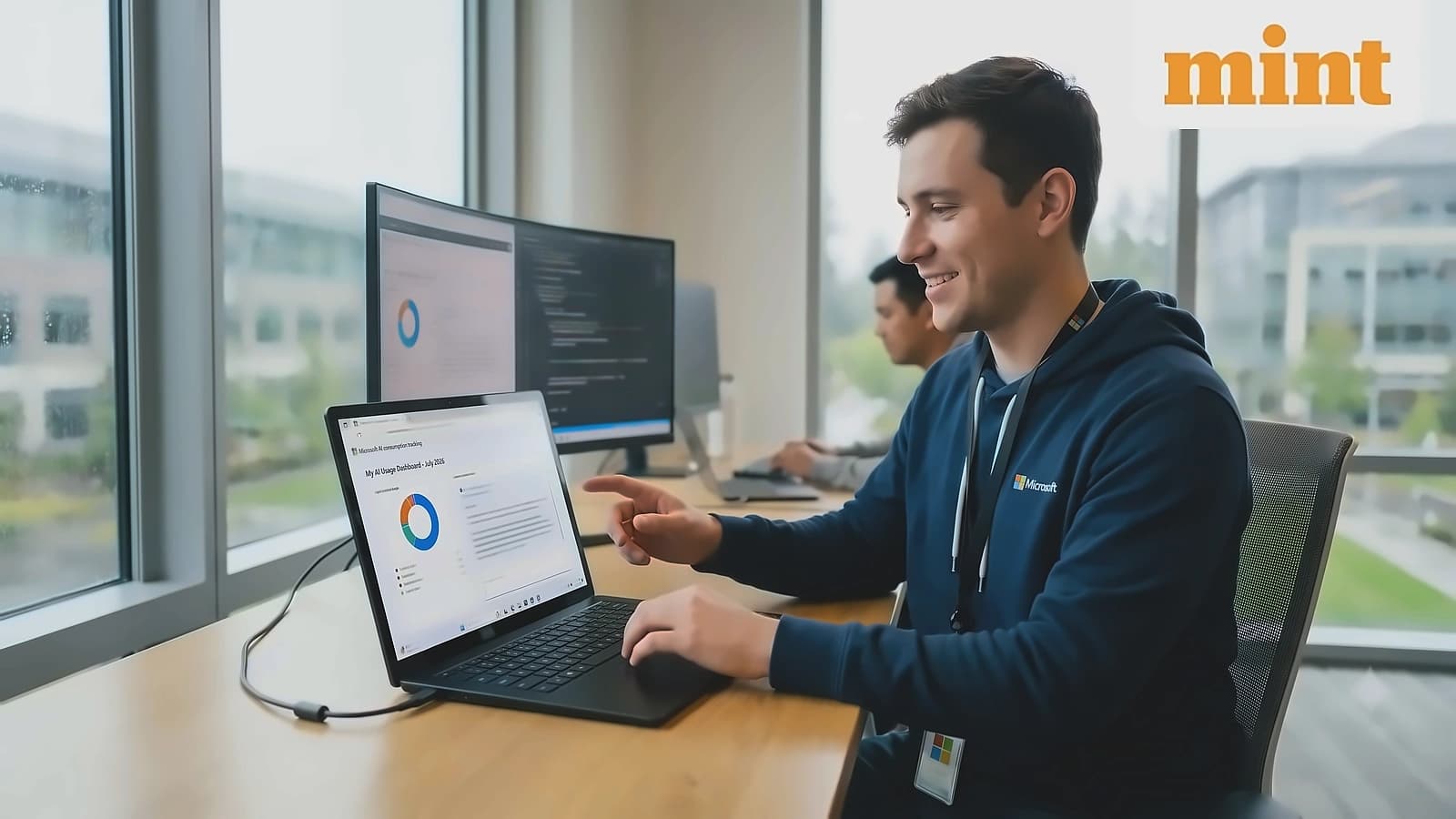
Microsoft has announced a significant expansion of its artificial intelligence capabilities, investing $2.5 billion in a new division dedicated to helping clients with AI installations. According to reports from CNBC, the software giant is positioning itself as the latest Big Tech firm to devote substantial resources to supporting businesses in comprehending and embracing future AI technology. As reported by AI Chat Daily, the company is committing to a new operating business called Microsoft Frontier company, a dedicated unit that will send engineers into enterprise customers to make AI deployments actually land. Microsoft Frontier Company launched on Thursday, marking the official start of operations for this transformative AI deployment initiative.
The company announced that 6,000 staff will be embedded with clients through the new company, Microsoft Frontier Co. As reported by AI Chat Daily, at 6,000 engineers, Microsoft Frontier would be roughly six times the size of Palantir's entire FDE organization at the time it went public, and the $2.5 billion outlay is comfortably above Anthropic's and OpenAI's disclosed deployment arms. The division will be led by Rodrigo Kede Lima, who has been in charge of Microsoft's Asia division. According to CNBC, the unit delivers what Microsoft calls Frontier Transformation, where experts embed with customers to co-design, deploy, and continuously improve AI systems at scale. The venture will field 6,000 industry and engineering experts and will lean on Microsoft's existing AI tools, with the company stressing that customers keep control of their own intelligence and pledging that client data will not be used to train models in ways that erode a customer's competitive edge.
Microsoft has secured early customers including the London Stock Exchange Group, Unilever, Land O'Lakes and Accenture for its Frontier deployment services. As reported by AI Chat Daily, the London Stock Exchange Group represents a data-and-analytics account where AI can be pointed at market data workflows, while Unilever and Land O'Lakes are consumer-goods and agriculture customers where the value case is supply chain and marketing automation. Accenture is a partner rather than a customer — a systems integrator that will resell and extend Frontier's work, which lets Microsoft scale beyond the 6,000 headcount by leveraging Accenture's own consulting bench.
The announcement comes just two days after cloud competitor Amazon announced it would invest $1 billion in an FDE program to support rapid AI engagements. According to CNBC, leading AI laboratories Anthropic and OpenAI formed FDE groups in May, collaborating with banks, consultancy firms, and private equity firms. The competitive landscape has intensified with the OpenAI Deployment Company backed by more than $4 billion in funding, while Anthropic teamed up with Goldman Sachs, Blackstone, and Hellman & Friedman on a $1.5 billion venture to deploy Anthropic's Claude AI model directly inside businesses. As reported by AI Chat Daily, the differentiator is now whether the vendor can get the model into production against a specific business problem within a reasonable timeframe.
Microsoft's investment in forward-deployed engineering represents what is now known as forward-deployed engineering, where the software giant is embedding technical expertise directly with client organizations. As reported by AI Chat Daily, the company already has engineers embedded across much of the Fortune 500 through Azure, Dynamics and the Microsoft 365 estate, and Frontier can graft AI deployment work onto relationships that are already generating revenue. However, the commercial model for Frontier has not been disclosed — whether the engineering hours are billed, bundled into Azure commitments, or written off as a customer-success investment. The platform also maintains model-diversity, allowing customers to run models from OpenAI, Anthropic, Microsoft, open source, or specialized industry options for each task, positioning Microsoft as the largest, most capable, outcome-driven engineering organization in the industry according to Judson Althoff, CEO of Microsoft's Commercial Business.