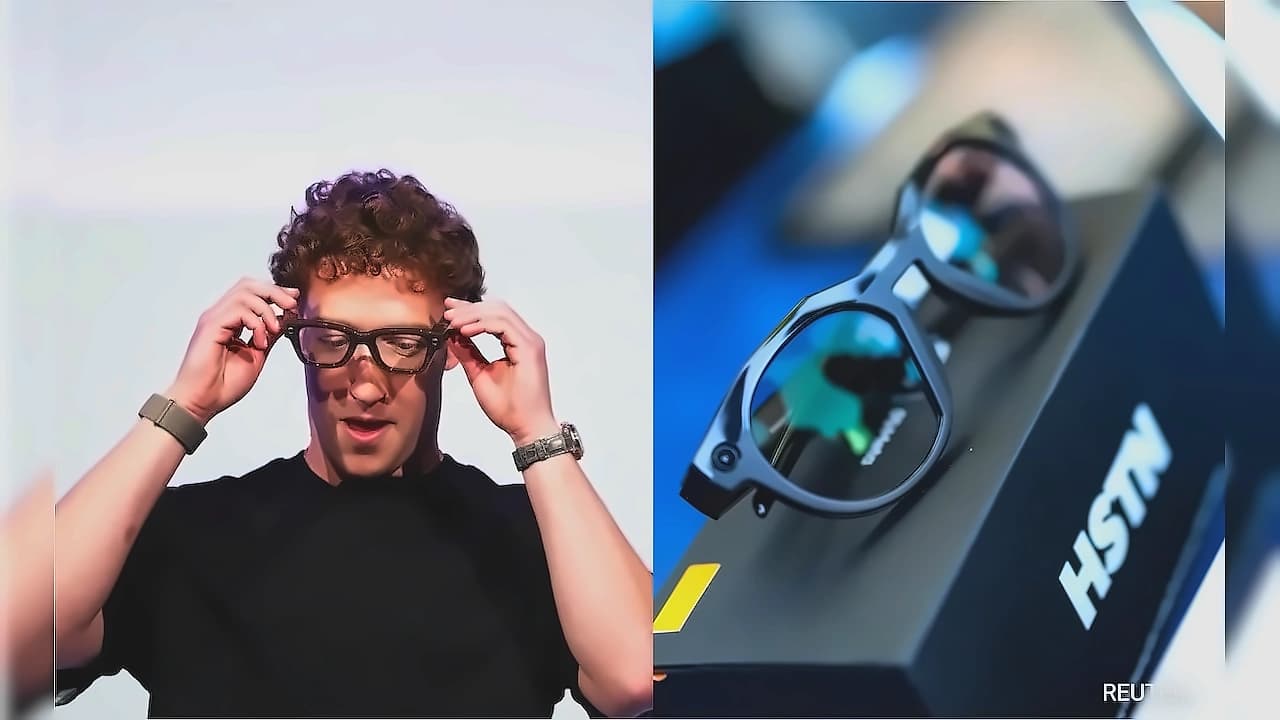
According to reports from The Information and Reuters, Meta is reportedly developing a new pair of smart glasses without a camera, internally codenamed 'Luna'. The glasses are expected to launch in fall 2026, with an October shipment target, though Meta has not publicly confirmed the product, its name, specifications or launch date. The reported launch window aligns with Meta's annual Connect developer conference scheduled for September 23-24, where the company could potentially unveil the new glasses. As per The Information, Meta is hoping the camera-free design will attract new customers amid privacy concerns over current models. The decision to develop camera-free glasses arrives at a moment when smart eyewear is facing unprecedented backlash, with the move representing a notable departure from the Ray-Ban Meta lineup that has sold roughly 7 million units.
According to The Information, Luna will reportedly come in two distinct styles: one called Clubmaster and another named Burbank. The glasses are expected to feature six built-in microphones and speakers that point towards the user's ears, which will give users a way to talk to Meta's AI chatbot. The device will include a side button to quickly activate Meta's AI chatbot and Muse, the company's newly launched consumer AI agent. The glasses will have slimmer temples that will make them look like ordinary eyewear, marking a departure from the current bulky design. The six-microphone design suggests the company sees voice interaction as the primary interface for this particular product.
The reported camera-free design comes as Meta's camera-equipped smart glasses face intensifying scrutiny over privacy concerns, with a BBC investigation in January tracing dozens of accounts that posted content of women filmed in public by Meta glasses without their consent. One video featuring a 21-year-old woman's face and phone number racked up more than 1.3 million views. In July, Meta announced it would push a software update to detect when an LED has been "physically tampered with or destroyed" and block filming through those cameras. The current glasses are designed to prevent users from bypassing the indicator, with covering or disabling the LED automatically switching off the camera. Privacy concerns have grown as camera-equipped smart glasses become more common, with the move towards AI capabilities making the privacy equation even more complex. The Information Commissioner's Office in the UK has previously warned that immersive technologies such as smart glasses can deliberately or inadvertently monitor people close to the device, highlighting the expanding privacy implications beyond the person wearing the device.
As AI wearables gain the ability to listen, see and interpret their surroundings, privacy questions are expanding beyond the person wearing the device to everyone within its reach. According to Business Standard, the person wearing the device may know that the device is listening, but the person sitting across the table may not. This creates what could be described as bystander privacy, where the wearable belongs to one person but its sensors operate in an environment occupied by several people. Dhananjay Yadav, co-founder and CEO of Indian AI wearable startup NeoSapien, emphasizes that "The person buying a wearable is not the only person affected by it." He argues that consent should be separated by purpose, noting that someone could agree to a meeting being transcribed but object to their emotional state being analyzed or their words being used to train an AI model. The privacy discussion around smart glasses has largely focused on cameras, but a microphone can pick up a conversation without creating a visual record, with AI then turning that audio into searchable text or extracting names and identifying decisions.
Despite Meta's glasses having sold well, the company is getting criticism over concerns that the devices can be used to creep on women and secretly record people. Privacy concerns have led to tools like ZuckOff, a free mobile app built by 30-year-old Polish developer Pawel Szydlowski, which uses Bluetooth detection to identify whether smart glasses are in the vicinity. Since its August launch, the app has been downloaded more than 5,000 times on Apple's App Store and 1,000 times on Google Play. The app reads signal strength to provide rough proximity information, though it cannot determine whether a pair of glasses is actively recording or who is wearing them. A Pro version available for $25 adds history logging, CSV data export, a homescreen widget, and continuous background monitoring that can scan for glasses and send alerts even when the screen is off. Yadav from NeoSapien suggests that companies should provide practical ways for bystanders to raise concerns or request removal without requiring them to become customers, emphasizing that safeguards should cover "what is captured, what is inferred, where it is processed, how long it is retained and who can access it."