India's pharmaceutical industry faces a significant funding disparity in artificial intelligence adoption despite its position as the world's third-largest pharmaceutical producer by volume. According to reports from NDTV Profit, the global market for AI in pharmaceutical and biotechnology sectors is estimated at $8.54 billion in 2026 and projected to reach $154 billion by 2034. However, India's market is estimated at just $0.17 billion in 2026, representing approximately 2% of the global total. China has committed more than RMB 10 billion (about $1.4 billion) to AI-pharma initiatives in 2026 alone, while India has no comparable government programme.
Despite the funding gap, Indian pharmaceutical companies are actively adopting AI across multiple business functions. As reported by NDTV Profit, 40% of respondents in India reported significant or full AI adoption in Deloitte's 2026 enterprise survey of 3,235 business leaders across 24 countries, compared with a global average of 28%. The Indian pharmaceutical market is expected to expand from approximately $55 billion in 2025 to $120-$130 billion by 2030, according to an ASSOCHAM outlook, with most growth anticipated from generics, biosimilars and exports rather than AI-developed medicines. According to an EY-Parthenon and OPPI report, the Indian pharmaceutical market could reach $450 billion by 2047 from about $55 billion today.
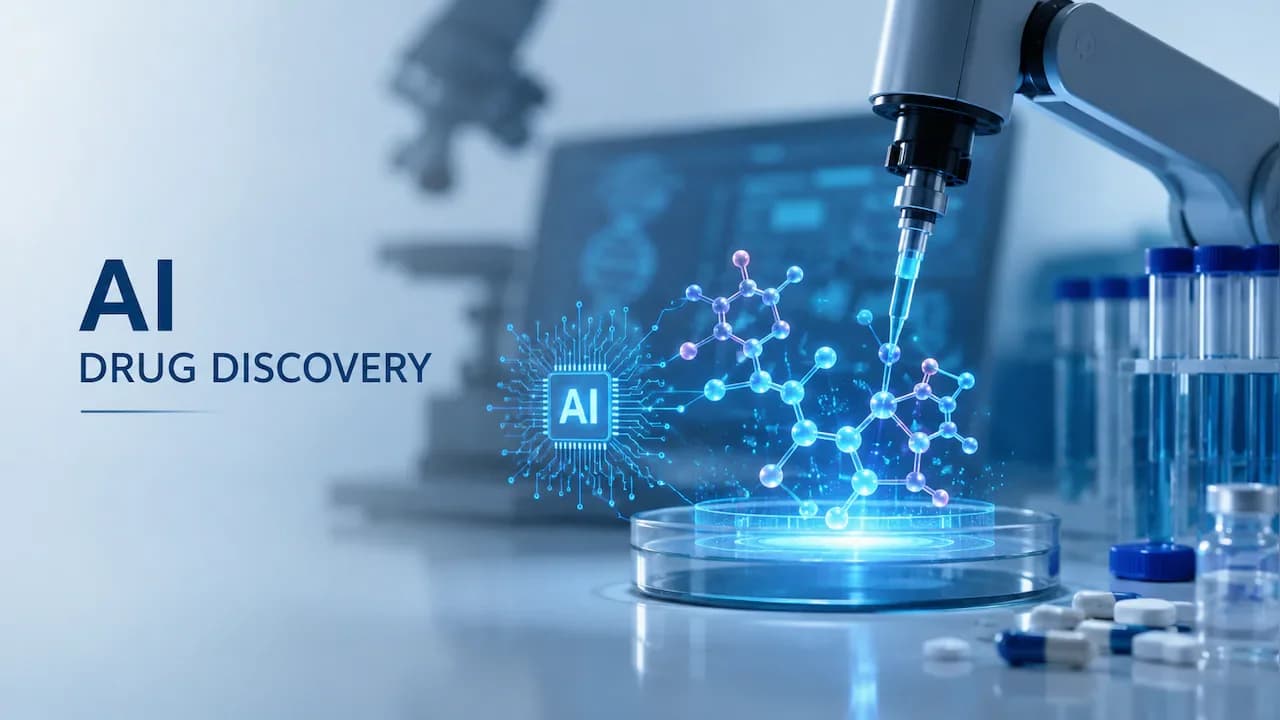
Major Indian pharmaceutical companies are implementing AI across various business functions. Sun Pharma, India's largest drugmaker by revenue, has focused on manufacturing quality and supply chain optimization rather than drug discovery, while Cipla has integrated AI into smart inhalers and diagnostics. Biocon is investing in protein modelling and genomics-based cancer therapies through its Syngene subsidiary, and Glenmark is using AI for tumour profiling. Lupin operates an R&D centre near Pune with more than 1,400 scientists working on AI-assisted discovery and manufacturing. Dr. Reddy's-owned Aurigene, employing about 1,200 scientists, has outlined plans to invest nearly $100 million in infrastructure covering biologics and AI-driven drug discovery.
The global pharmaceutical industry is expanding collaborations with AI companies, with Novartis CEO Vas Narasimhan recently joining Anthropic's board, while Eli Lilly and NVIDIA announced a joint AI laboratory in January. According to reports from NDTV Profit, more than $2 billion was invested in AI drug discovery startups in 2025, alongside 168 new strategic partnerships between AI and pharmaceutical companies. However, Indian pharmaceutical companies have yet to announce partnerships of a similar scale with major AI firms. The global AI drug discovery market, estimated at $8-$10 billion this year compared with $5-$7 billion in 2025, still represents a small share of the pharmaceutical industry's overall research and development spending.
Despite growing investment, several AI drug discovery startups have faced challenges, with some reducing staff or shutting down after Phase II clinical failures in 2025. As reported by NDTV Profit, no AI-designed drug has yet reached the market anywhere in the world. However, India continues to benefit from its manufacturing base, expertise in chemical synthesis and expanding Global Capability Centre workforce. The global pharma Global Capability Centres in India are evolving from support centers into AI-driven innovation hubs supporting research, clinical and commercial functions, with half of the world's leading life sciences companies having established Global Capability Centres in India.