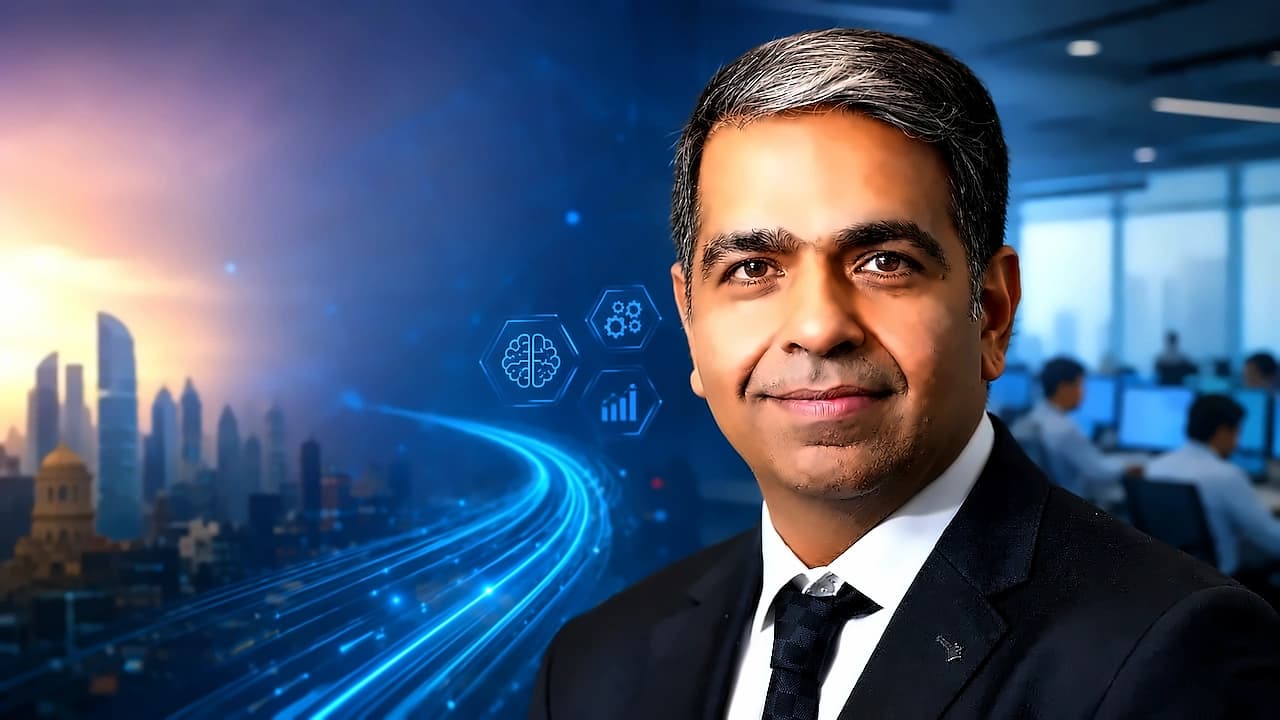
Vinod Khosla, Silicon Valley venture capitalist and early-stage investor in OpenAI, warns that India's IT and BPO sectors may face major disruption from artificial intelligence unless companies rapidly adapt their business models. Speaking on the SparX podcast, Khosla stated that India's IT services and business process outsourcing sectors, which have long been a major source of foreign income for the country, are at risk of being displaced by AI-driven technologies. The billionaire investor emphasized that very few companies are doing large-scale AI deployment today, but if they do, they'll be in good shape. If they don't, they'll be in very bad shape. Khosla noted that only a limited number of companies are currently focusing on large-scale AI deployment, creating an opportunity for early adopters to gain competitive advantage.
The Indian IT services industry is facing an immediate threat from AI agents that automate the modernization work these firms have billed for decades. At *TCS'*s 31st annual general meeting on June 9, N. Chandrasekaran, chairman of Tata Sons, predicted that TCS will run as many AI agents as it employs people within three years, with the company's workforce near 600,000 people. However, the optimism masks a more immediate challenge - Amazon's AWS Transform deploys AI agents that handle code analysis, dependency mapping, refactoring and test generation at no additional charge, eliminating the core modernization work that Indian IT firms have billed by the hour for two decades. The threat is particularly significant as enterprise customers gain leverage from this transition, moving modernization from effort-based pricing toward outcome-based pricing and asking vendors about the governance layer that hyperscalers cannot replicate.
The AI agent threat is already manifesting in significant workforce reductions across Indian IT majors. TCS cut more than 23,000 jobs across the fiscal year that ended in March 2026, with net headcount falling by over 23,000, and the company cut more than 12,000 jobs in July 2025 alone, about 2% of staff. Cognizant has signaled plans to remove 12,000 to 15,000 roles in an AI-led restructuring that falls hardest on its India workforce. Revenue pressures are mounting, with Wipro's IT services revenue flat in constant currency for the year even as large deal bookings rose, and Infosys guiding FY27 growth to between 1.5% and 3.5% while naming AI productivity compression as a force working against it. Analysts model 2% to 3% annual deflation across the application services base as agents change the pricing model for application work, while the visa environment adds another layer with H-1B approvals for the six biggest firms down about 40% year over year.
Despite the disruption risks, Khosla believes the disruption will also create new opportunities for India, particularly in deploying AI-powered solutions at scale across industries. He suggested that India has an advantage in learning how to deploy AI and noted that only a limited number of companies are currently focusing on large-scale AI deployment. Khosla emphasized that India should focus on demonstrating the benefits of AI to its population through practical applications, citing examples such as free AI-powered doctors, teachers, and agronomists that could help improve productivity and reduce costs across the economy. The billionaire investor argued that it is very important for a country like India to show the benefits of AI to people first — free doctors, free teachers, free agronomists. These comments come at a time when India's technology services sector is increasingly investing in artificial intelligence capabilities as clients worldwide seek automation, productivity gains, and AI-led transformation projects.
Despite the AI agent threat, one in two Indian companies plan to adopt artificial intelligence (AI)-powered payroll systems over the next 12 months, according to a report by payroll and workforce management company ADP. As reported by Business Standard, employers are increasingly using automation and predictive analytics to manage workforce costs, compliance and compensation decisions. The survey, based on 344 senior human resource (HR), finance and payroll executives, comes at a time when companies are grappling with uneven labour markets, evolving regulations and the growing impact of AI on jobs and skills. However, the implementation of the Digital Personal Data Protection (DPDP) Act, 2023, will require organisations to strengthen data governance, cybersecurity safeguards and transparency around AI-generated insights.
More than 43 per cent of respondents identified workforce planning as a key challenge, highlighting the growing reliance on payroll data for hiring, retention and cost-management decisions. As reported by Business Standard, compliance emerged as another major concern, with 45 per cent of organisations citing payroll compliance across regions as a significant challenge. Taxation, statutory benefits and wage regulations were identified as some of the most difficult compliance areas, particularly amid changing labour regulations and preparations for the labour codes. The shift toward AI agents threatens to accelerate these challenges as traditional services-led transformation programs give way to cloud-acquisition motions where hyperscalers monetize the destination while Indian IT firms monetize the journey.