The Indian Cyber Crime Coordination Centre (I4C) has ordered GitHub to remove or disable access to links related to the decentralised messaging application Bitchat within three hours. According to reports from Business Standard, the ministry issued the directive late on Thursday night under Section 79(3)(b) of the IT Act and Rule 3(1)(d) of the IT Rules, 2021, ordering GitHub to disable access to three URLs hosting the application's source code, Android version and software releases. The order specifically cited the app's potential to "significantly impede lawful interception, attribution, and investigation by law enforcement agencies" and warned that such platforms are "capable of being exploited for coordinating unlawful assemblies, violent protests, dissemination of misinformation, radicalisation, criminal conspiracies, and other activities prejudicial to the sovereignty and integrity of India, defence of India, security of the State, public order." The notice, shared by former Twitter CEO Jack Dorsey on X, describes Bitchat as "a communication platform capable of establishing decentralized peer-to-peer messaging over Bluetooth mesh networks without relying on mobile networks, internet connectivity, or centralized servers." However, it remains unclear whether GitHub complied within the three-hour deadline, as the app remained available on major app stores as of Friday afternoon. The Microsoft-owned platform has removed repositories under Indian legal orders before, and open-source projects are typically mirrored across other hosts, meaning a takedown rarely erases the code entirely.
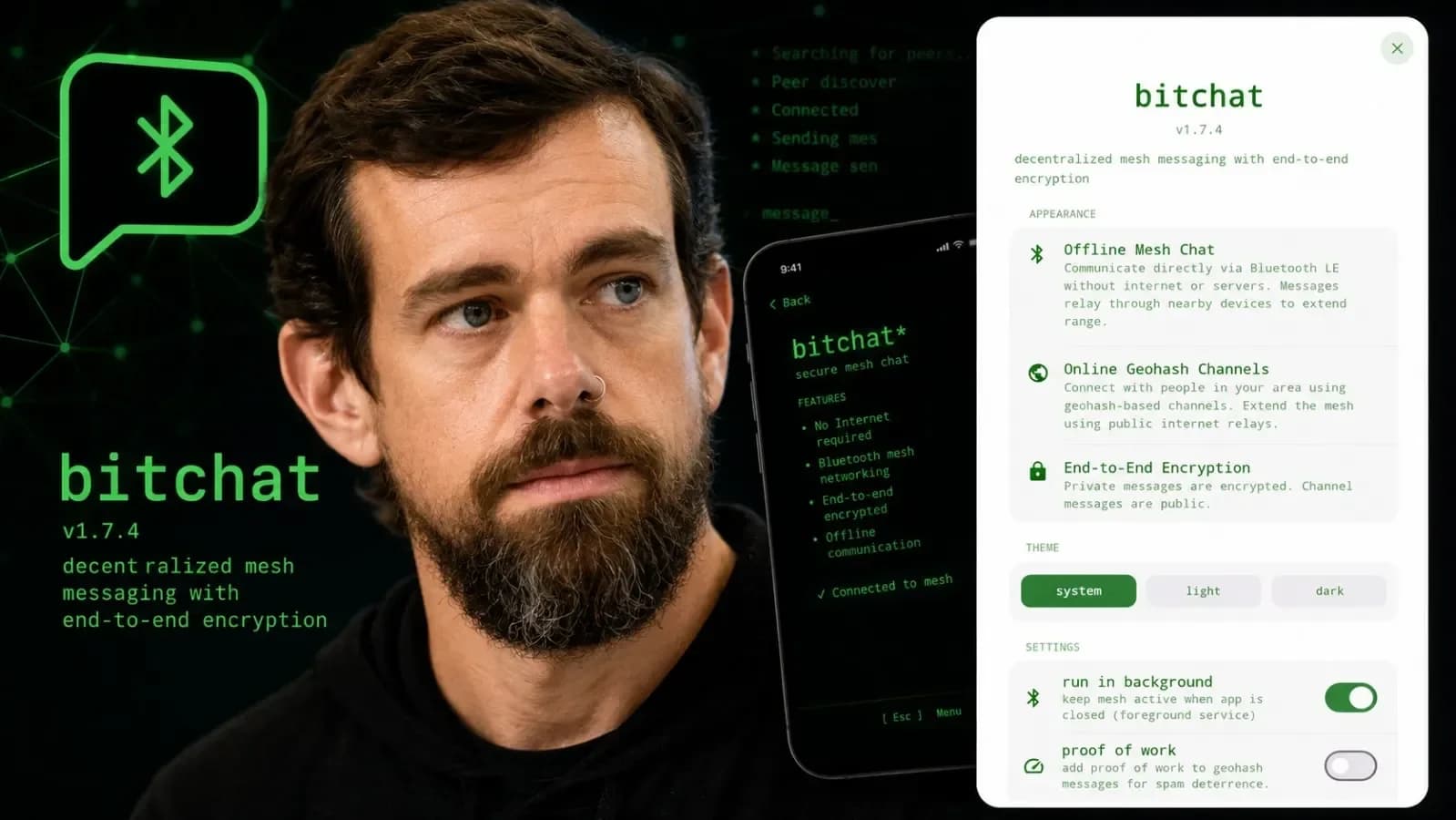
Bitchat, launched by former Twitter CEO Jack Dorsey as an experimental messaging platform, operates over Bluetooth mesh networks without requiring internet connectivity, servers or phone numbers. As reported by Moneycontrol, Upstox News Desk, CoinDesk, Mathrubhumi, and India Today Tech, the platform allows anonymous communication as it does not require user registration or phone number verification. According to the project's white paper, messages are end-to-end encrypted and stored only in device memory by default. The platform is built to relay bitcoin transactions offline, passing them phone to phone through the mesh until a device with connectivity broadcasts them to the network, a design meant to keep payments alive during blackouts, disasters or state-imposed shutdowns. Dorsey released it as open-source software in July 2025, making it available for widespread adoption. What makes Bitchat different from apps like WhatsApp or Telegram is that it does not use the internet, mobile networks, or central servers; communication on the app happens via Bluetooth mesh networking to let nearby devices send messages, making it harder for law enforcement to monitor communications or identify users. The platform uses Bluetooth Low Energy (BLE) to create a mesh network, allowing nearby smartphones running the app to relay encrypted messages from one device to another, with messages traveling farther as more users join the network without passing through telecom networks or central servers.
The ministry identified several security concerns with the platform's design. According to Business Standard, Moneycontrol, Upstox News Desk, CoinDesk, Mathrubhumi, and India Today Tech, the application's decentralised structure creates substantial risk of misuse by anti-national elements, terrorist organisations, organised criminal groups and cybercriminals. The notice reviewed by CoinDesk specifically states that the app's architecture "significantly impedes lawful interception, attribution, and investigation by law enforcement agencies" as it enables anonymous communication without registration, phone numbers or centralized logging. The platform could be misused to evade lawful surveillance and help users bypass restrictions imposed during riots, public disorder, terrorism, organised crime or internet shutdowns. Intelligence inputs suggest such platforms could be exploited to coordinate unlawful assemblies, violent protests, spread misinformation, promote radicalisation and facilitate criminal conspiracies. The government described Bitchat as "A communication platform capable of establishing decentralized peer-to-peer messaging over Bluetooth mesh networks without relying on mobile networks, internet connectivity, or centralized servers." The notice further states that "since communications can occur directly between nearby devices through a decentralised mesh network, the platform can be misused to evade lawful surveillance, facilitate anonymous coordination, and circumvent lawful restrictions imposed by authorities" during various security situations.
The order comes as 'Cockroach Janta Party' protesters in Delhi use mesh-network tools to communicate through internet shutdowns during the largest demonstrations in years. Since July 20, cities across India have seen some of their largest demonstrations as student protesters rally against a national exam scandal and are met with tear gas and baton charges. The government has ordered repeated internet suspensions around the protest sites in New Delhi, with mobile internet services suspended within a 1.5-km radius of Jantar Mantar. During the protests, the government ordered to temporarily shut down mobile internet services in parts of central Delhi as a public order measure. Researchers have documented demonstrators turning to Bluetooth mesh apps, Bitchat among them, to keep coordinating once the connection drops. The takedown order targets one of the tools that made the shutdowns easier to circumvent, as protesters increasingly rely on decentralised communication platforms to maintain coordination during internet restrictions. However, authorities have not confirmed that Bitchat itself was used by protesters, with Delhi Police reportedly examining whether alternative communication applications were used during the demonstrations as part of their broader investigation. According to India Today Tech, Delhi Police are now reportedly examining whether Bluetooth-based messaging apps were used during the CJP protests after mobile internet services were suspended. Investigators are looking at multiple avenues, including seeking information from app providers where possible, analysing CCTV footage and examining other digital evidence.