Google has announced the biggest Search redesign in 25 years at its annual developer conference, Google I/O 2026, introducing AI agents, conversational search, and personalized assistance. According to reports from NDTV Profit, the tech giant is revamping its Search experience with new conversational capabilities, AI-powered agents, shopping tools and multimodal search features. The updated Search experience aims to go beyond traditional keyword-based queries by understanding context, intent and conversational nuances more effectively, building on existing AI Summary and AI Mode features. Over a billion people already use AI Mode each month, demonstrating the seriousness of Google's commitment to changing how users interact with information online. As announced at Google I/O 2026, the new Search experience will be more intuitive than ever, dynamically expanding to give you space to describe exactly what you need, with users able to drop in text, images, files, video, or Chrome tabs for AI-powered suggestions that go beyond autocomplete.
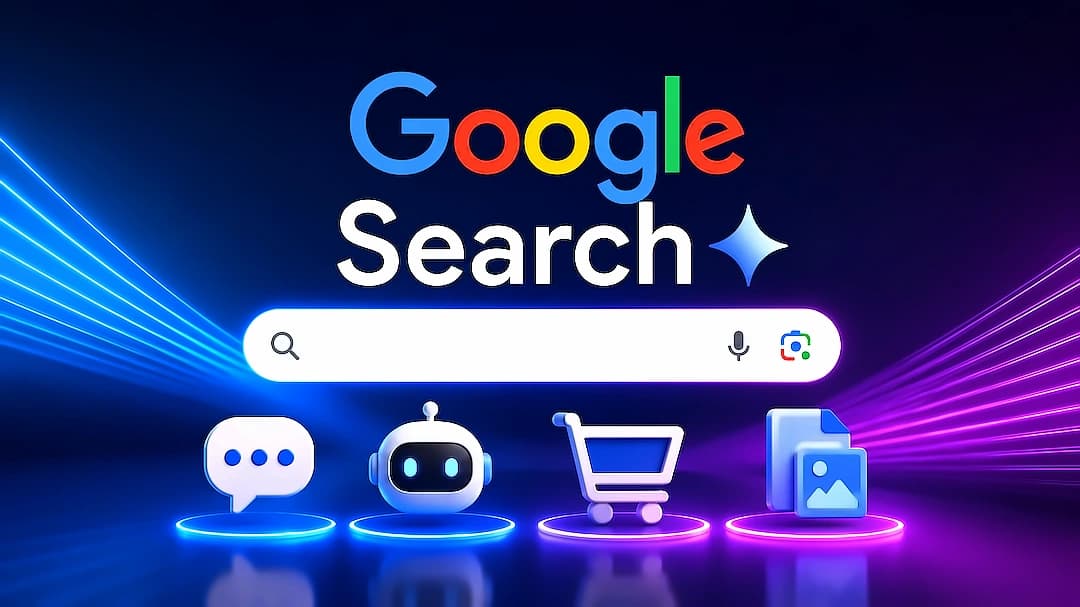
A key addition to the new Search experience is AI agent functionality integrated within Google Search, now powered by Gemini 3.5 Flash. As reported by NDTV Profit, these AI agents can continuously monitor the web for updates on specific topics and send alerts or relevant information to users automatically. The agents represent a significant enhancement to Google's existing AI capabilities, allowing the platform to provide real-time, personalized information delivery without requiring manual user intervention. Users can now chat with Google, ask follow-up questions, use natural language, add images, videos, files, and even your Chrome tabs through the new intelligent Search box. Additionally, Google has introduced Gemini notebooks - self-contained databases full of sources on a particular topic that users can continue to add to. These notebooks sync directly with Google's AI research assistant NotebookLM, allowing users to create video overviews, charts and other outputs while Gemini uses the notebook for context without starting over with information sources.
Google is introducing information agents that will do the searching for you, working in the background 24-7 to find exactly what you need at exactly the right moment. As reported by NDTV Profit, these agents will peruse blogs, news sites, social media posts, and real-time data like finance and sports results to alert users to anything new with specific queries. The agents will provide intelligent, synthesized updates that users can act on, with Google using the example of apartment hunting where users can "brain dump" all their requirements, and your agent will continuously scan for you, notifying you when listings meet your needs. For now, this advanced agent service will be rolling out first this summer for Google AI Pro and Ultra subscribers, while the broader AI Mode enhancements are available to all users. The company emphasizes that this represents the biggest upgrade to our Search box in over 25 years.
Despite the majority of new AI tools launching behind paywalls, Google I/O 2026 featured several free tools available immediately for all users. The biggest free launch is Gemini 3.5 Flash, now the default model for the Gemini app and Google Search, which is faster than other models and can better handle complex agentic tasks while using tokens more efficiently. Additionally, Gemini Omni Flash is now available for YouTube Shorts and the YouTube Create app, allowing users to create videos using text, images, videos, or audio as the basis for creation. Google has also introduced SynthID technology to detect AI-generated content, enabling users to right-click on images or use Circle to Search and determine if any part of an image was made with AI. The company also unveiled Google Pics, a Canva-like tool for creating images, flyers, and visual presentations powered by Google AI, along with a new visual design language for Gemini featuring vibrant colors, haptic feedback, and fluid animations.
Google is set to reveal significant hardware advancements at I/O 2026, including Android XR smart glasses that have been in development for several years. The glasses represent Google's second attempt at wearable technology, building on lessons learned from the controversial Google Glass launch in 2013. Unlike the original Glass, which was met with privacy concerns and user backlash, Android XR glasses will feature heads-up notifications, live translation, and Gemini Live capabilities. The glasses will be available in multiple price ranges through various partners, potentially offering both entry-level and high-end options. Additionally, Google will unveil the Googlebook platform, a new laptop that merges Android and ChromeOS operating systems. The Googlebook allows users to run Android apps natively on the device without requiring a connected phone, along with a new Magic Pointer feature that's both AI-powered and contextually aware for enhanced productivity.