Google has announced a new Tactile Sensing Researcher position at DeepMind with a salary range of $212,000-$230,000 USD plus 15% bonus target. According to the job posting, this role requires Bachelor's degree in Materials Science, Robotics, Electrical Engineering, or a relevant technical field or equivalent practical experience, along with 4 years of experience working on tactile sensing or flexible electronics. The position also requires a PhD in Materials Science, Robotics, Electrical Engineering, or a relevant technical field with 8 years of experience and published contributions to the field of tactile sensing or flexible electronics. As a first-principles researcher, the role involves inventing, designing, and validating novel transduction methods while bridging the gap between material science and sensing to create thin, conformal sensing arrays adaptable to various robot embodiments.
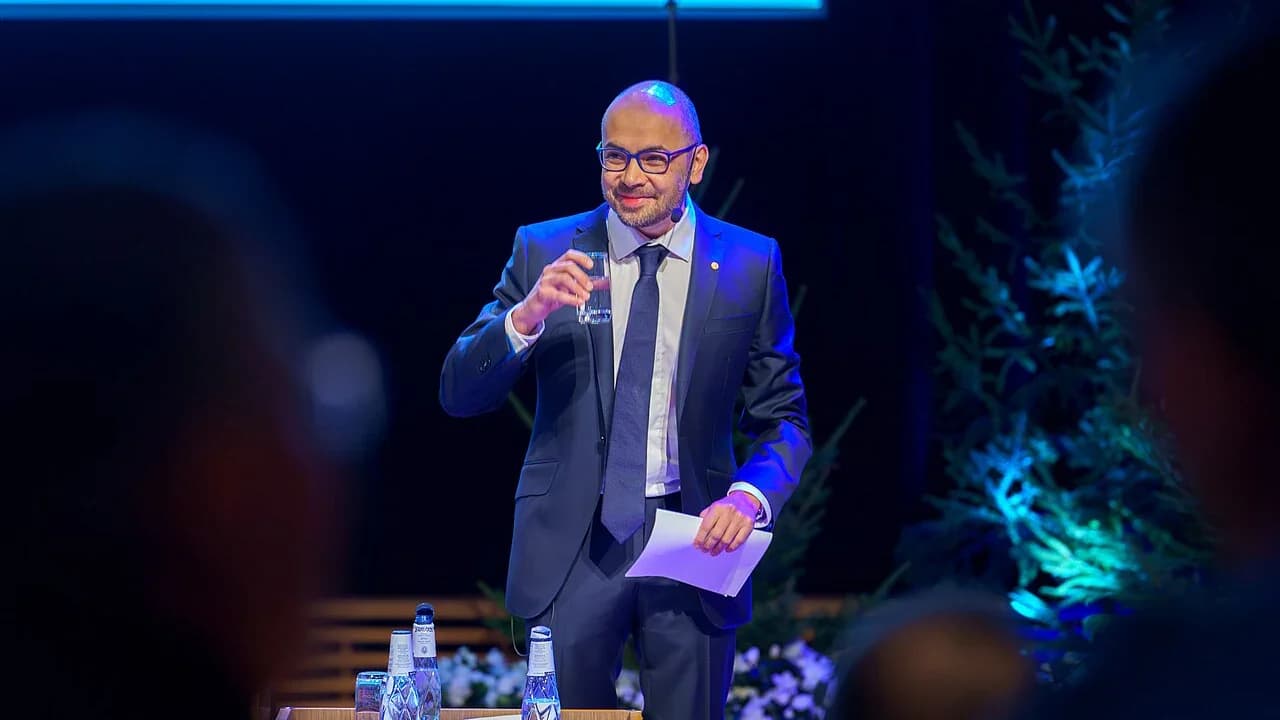
Google and Alphabet CEO Sundar Pichai announced significant leadership changes at Google DeepMind during a recent team meeting. Demis Hassabis is stepping down from his day-to-day operational responsibilities at GDM to focus on strategic and global AGI matters, while taking on a new strategic role as Chair of GDM and Chief Scientist of Alphabet. Koray Kavukcuoglu will assume the role of SVP of Google DeepMind, in addition to his existing role as Chief AI Architect of Google, with the two having worked together for over 13 years since the early days of DeepMind. As reported by Google, Hassabis will continue advising Koray and the GDM leadership team from their new London Platform 37 offices, while also focusing on his role at Isomorphic, where they are making rapid progress in AI-driven healthcare applications.
Google's DeepMind AGI Safety and Alignment Team has issued a warning to job candidates about the company's AI-powered hiring systems. According to a document viewed by Bloomberg, the team is encouraging candidates for open roles to fill out a special form alongside their application to ensure their CVs reach human reviewers. The document contains the disclaimer 'PLEASE DO NOT SHARE THIS DOC WIDELY' and states that the company's applications system has 'a non-trivial probability your CV will be screened out incorrectly or take too long to reach us'. This warning comes as the broader job market faces significant challenges, with hiring rates falling approximately 24% according to new workforce data from Visier, suggesting companies are becoming more selective about when and where they add employees.
The warning comes as AI hiring systems have become increasingly prevalent across industries, with new research from Visier based on more than 3.6 million employee records revealing complex workforce changes. According to Visier, hiring rates have dropped 24% while occupations including educators, lawyers, architects and security professionals emerge among the jobs that remain difficult to replace. The research shows that Data and Analytics increased its share of organizational headcount by 49% during the period studied, while Product Management increased 39%, but HR's share declined 3% and Finance dropped 4%. However, AI is also creating new opportunities for job seekers, with Indeed reporting that 70% of sponsored applications on their platform now come from recommendations their algorithm surfaces to candidates, rather than from direct searching and applying. As Indeed CIO Anthony Moisant explained, 'Humans, he argues, simply can't spot every opportunity'.
According to Google's latest announcement, the company has achieved extraordinary progress in delivering its full AI stack, with Gemini models in high demand among developers and businesses and the Gemini app reaching 950M+ monthly users. The company's AI research continues to drive field-defining breakthroughs, including last week's Gemini Robotics advances, with Google emphasizing the need to accelerate all this work and stay focused on the AI frontier. The company positions itself as the only organization with the full stack capabilities from infrastructure to cloud to frontier models to AI-first applications, with world-class compute and products that bring AI to more people than any other company. As Google CEO Sundar Pichai stated, 'We have to accelerate all this work and stay focused on the AI frontier' while acknowledging 'there's never been a more important moment to shape the future of AGI and science'.
The Google DeepMind team has implemented additional measures to address potential gaming of their AI filters, with the form including an advisory stating 'A real human will read these. These humans get really tired of reading LLM answers, because they all sound very samey'. According to Visier's research, the future of work may not be about AI replacing entire professions, but rather 'a massive reorganization taking place beneath the surface of companies'. The most important career question in the AI era becomes 'What can I do that becomes more valuable because AI is here?' rather than whether AI will replace specific roles. Workers can protect their careers by focusing on capabilities that AI cannot replicate, including judgment, creativity, empathy, leadership, communication, accountability, relationships and specialized expertise. The research shows that experience suddenly matters differently when AI can supply information, as machines can retrieve facts quickly but lack the 15-20 years of experience recognizing when those facts don't fit the situation.
New research from Visier reveals an unexpected shift in hiring patterns, with employees between 35 and 50 increasing their share of new hires, potentially overtaking younger workers if current trends continue. The study analyzed workforce changes between 2022 and 2026 across more than 155 enterprise organizations and 30 job domains. According to Dr. Andrea Derler, who led the Visier research, 'As AI becomes embedded in day-to-day work, organizations are shifting where they need skills, roles and tasks are evolving'. This trend suggests that the workforce will increasingly need to adapt alongside the technology, making it critical for business leaders to understand what is actually changing within jobs before making important workforce decisions. The research shows that traditional annual workforce planning can miss these rapid changes because by the time organizations see major shifts in headcount reports, the transformation may already be well underway.