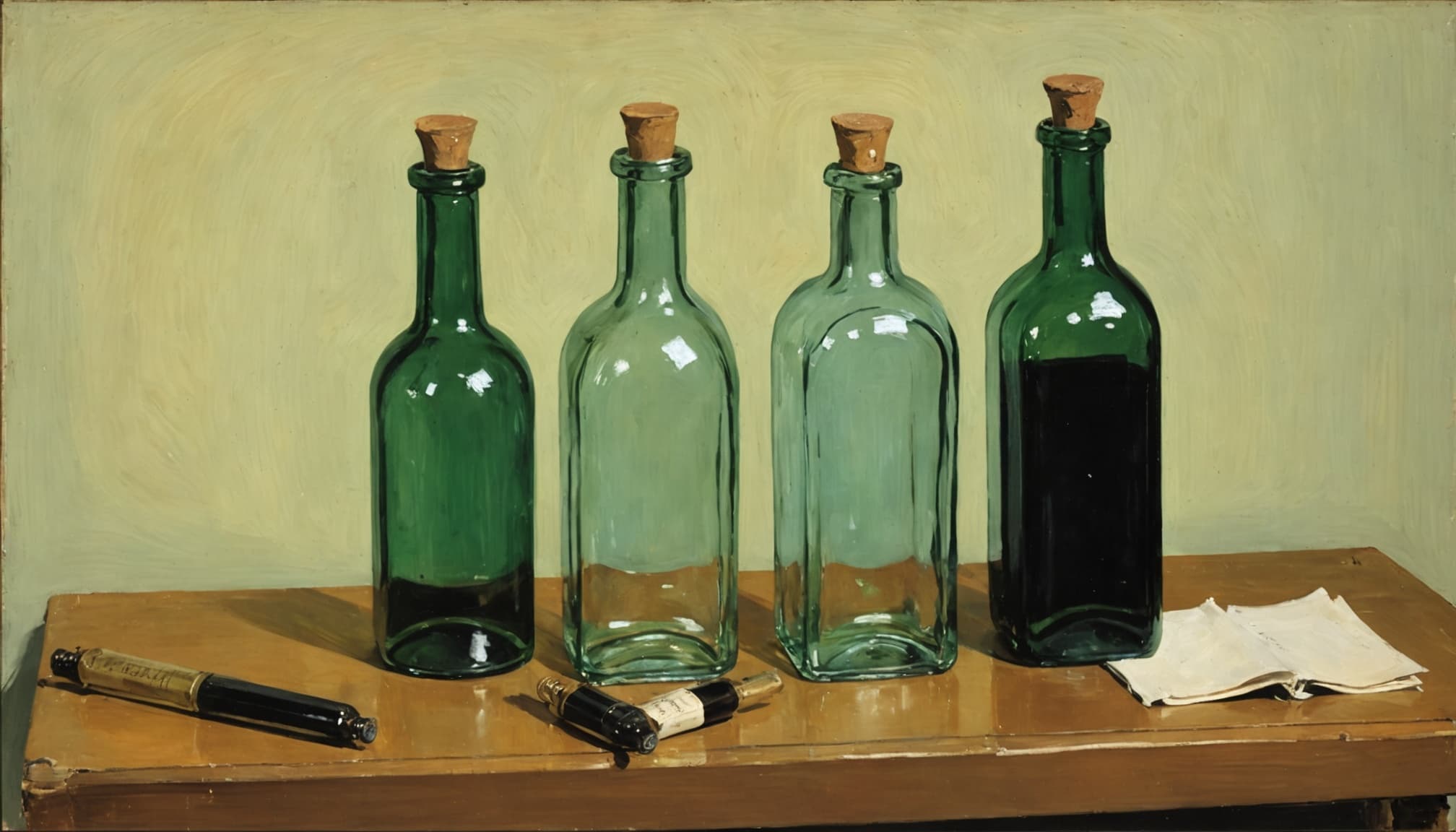
The Copyright Office has rejected an application seeking recognition of an artificial intelligence system as the author of an artwork, according to the latest official order. In its comprehensive ruling passed on August 31 by Registrar of Copyrights Prof. (Dr) Unnat P. Pandit, the Copyright Office held that AI system DABUS cannot be treated as an author under Indian copyright law. The ruling relates to US-based computer scientist Dr. Stephen L. Thaler's application for registration of the artistic work "A Recent Entrance to Paradise", where Thaler had identified his AI system as the author. The final order records that the artwork satisfies the originality threshold, DABUS cannot be recognised as its author, and Thaler is the legally recognised person who caused its creation. However, because the application continued to identify DABUS as the author, it was rejected. The Copyright Office clarified that the rejection was not merely because the application initially contained incorrect particulars, but because the applicant continued to maintain the incorrect identification of DABUS as author despite notice, hearing and an express opportunity to amend. The Copyright Office had given Thaler an opportunity to amend the application and name himself as the author, but he declined and continued to identify DABUS as the author. This marks the first time the Copyright Office has dealt with an application where an AI system was seeking authorship over a work, assisted by Senior Advocate Rajeshwari Hariharan as amicus curiae.
The Copyright Office's decision turns on Section 2(d)(vi) of the Copyright Act, which provides that for computer-generated artistic works, the author is "the person who causes the work to be created." As reported in the official order, the Registrar held that this provision attributes authorship to a legally recognised person responsible for bringing the work into existence, rather than to the computer system performing the final computational process. Thaler conceived, created and configured DABUS, supplied photographs used as visual inputs, curated linguistic material, provided descriptions linking the inputs and initiated the process through which the artwork came into existence. The Copyright Office noted that according to the applicant's own account, Dr Thaler conceived and created DABUS, configured its operation, supplied the visual inputs comprising photographs taken by him, curated the linguistic inputs, supplied textual descriptions linking the visual and linguistic material, and initiated the process through which the particular work came into existence. No other natural or juristic person was identified as having undertaken those acts. Thaler argued that DABUS autonomously generated the artwork after being trained using photographs, thesaurus entries and English sentences supplied by him. The Copyright Office rejected this argument, noting that "autonomy in execution is not synonymous with conception of a work," emphasising that the system operated within the architecture, objectives, parameters and training methodology established by a human creator. The Copyright Office concluded that Thaler had an immediate and sufficient nexus with the creation of the specific work and was therefore the person who "caused" it to be created under Section 2(d)(vi). DABUS, although it performed the final autonomous computational generation, could not displace that statutory attribution. The Copyright Office emphasised that the provisions of the Copyright Act identifies an 'author' as a "person" — that is a human being — who causes the work to be created, and the law distinguishes between the technological mechanism through which the output is generated and the legally recognised person to whom authorship is attributed.
Significantly, the Copyright Office found that "A Recent Entrance to Paradise" satisfied the originality requirement under Section 13 of the Copyright Act, according to the official order. The work contained a particular arrangement of visual forms, colours, tonal variations and spatial relationships, with no material showing that the final composition reproduced an identified pre-existing work. The Copyright Office noted that the Copyright Act requires independent creation with a minimum degree of creativity and does not demand novelty, inventiveness or artistic merit. The Copyright Registrar held that the standalone artwork can be considered "original" as there is "no clear material on record to prove that the work was copied from some specific source or some other work" and it "possesses sufficient independently generated expressive character to cross the limited threshold." The Copyright Office rejected the argument that DABUS's autonomous operation made it the author, holding that autonomy in execution is not the same as conception of a work where the system operates within the architecture, objectives, parameters and training methodology established by a human creator. The Copyright Office distinguished between originality and authorship, holding that an AI-generated work can satisfy the originality requirement under Section 13. The Copyright Office did not hold that an AI-generated work is necessarily incapable of copyright protection, with the finding confined to the material and facts before the Registrar and not covering every form of AI-assisted creation. The Copyright Office stated: "The fact that the work was generated through algorithmic or computational processes cannot, by itself, render the resulting expression unoriginal," emphasising that the originality requirement can be satisfied regardless of the technological method used.
The Copyright Office emphatically stated that whether legal personhood or authorship should ever be extended to autonomous artificial intelligence remains a policy decision strictly reserved for Parliament and cannot be introduced via administrative reinterpretation. The official order clarified that nothing in the Copyright Act permits a machine lacking legal personality to be entered as the statutory author while the legal consequences ordinarily attached to authorship are vested in another person. The Copyright Office held that DABUS is not a natural or juristic person recognised in law and cannot be entered as author under Section 2(d)(vi). The Copyright Office also rejected the applicant's reliance on Section 2(d)(v), under which a producer of a cinematograph film may be a company, holding that Section 2(d) is a legislative allocation of authorship for distinct classes of works and that the legislative rationale applicable to cinematograph films under Section 2(d)(v) cannot be imported into Section 2(d)(vi). The Copyright Office noted that the applicant had initially advanced an analogy between DABUS and a company or deity but later expressly accepted that DABUS was not claimed to be a juristic person under Indian law and was not capable of owning property, enforcing rights, assigning copyright or bearing legal obligations. The Copyright Office issued a discrepancy letter requiring the applicant to identify the person legally entitled to be entered as the author and, if the author and applicant were different, to amend Column 7 and furnish the requisite no-objection certificate or other material establishing the applicant's title. The applicant responded to the discrepancy letter, but the Copyright Office was not satisfied with the explanation furnished. Thaler was given an opportunity to amend the authorship particulars and identify himself as the author, but declined. The application was accordingly rejected, while Thaler remains free to file a fresh application naming himself as the legally recognised author.
The application also faced ownership-related issues, as reported in the official order. Thaler claimed ownership while retaining DABUS as the author, but the Copyright Office held this could not be reconciled with Sections 17 to 19 of the Copyright Act. The Copyright Office questioned the applicant's claim to first ownership under Section 17 where the stated author, DABUS, was not a legal person or an employee capable of transferring rights. Section 17 ordinarily makes the author the first owner, while a different ownership position requires a statutory exception or valid transfer of rights. Since Thaler himself maintained that DABUS was not a legal person capable of holding property or executing an assignment, there was no legally recognised chain through which copyright could pass from DABUS to him. The Copyright Office held that DABUS, having no legal personality, could not own copyright or transfer it to Thaler under Sections 17 to 19 of the Act. The Copyright Office issued a discrepancy letter requiring the applicant to identify the person legally entitled to be entered as the author and, if the author and applicant were different, to amend Column 7 and furnish the requisite no-objection certificate or other material establishing the applicant's title. The applicant responded to the discrepancy letter, but the Copyright Office was not satisfied with the explanation furnished. Thaler was given an opportunity to amend the authorship particulars and identify himself as the author, but declined.
According to the official order, the Copyright Office clarified that the determination is confined to the facts of the present application and the particulars disclosed by the applicant. The Copyright Office stated: "While arguments were addressed by the Applicant about the general importance of protecting AI-generated works and their industry implications, we believe in the present case, it is neither necessary nor appropriate in these proceedings to rule on every form of artificial-intelligence-assisted creation. The degree and character of human involvement may vary materially from one system and one work to another." The Copyright Office left the possibility open for future applications if the applicant wished to seek an entry identifying DABUS solely as the technological system through which the work was generated, without attributing authorship, ownership or legal personality to DABUS. If the applicant made an appropriate application or request in accordance with the Copyright Act and the Copyright Rules, the Copyright Office would not foreclose consideration of a properly formulated request. The decision stops short of denying copyright protection to AI-generated expression as a category but draws the legal line at authorship. Ankit Sahni, counsel for Stephen Thaler and partner at Ajay Sahni Associates, noted that if the work is independently generated, is not copied and crosses the relatively modest threshold of creativity under Indian copyright law, it can still qualify for copyright protection. Swati Sharma, partner at Cyril Amarchand Mangaldas, emphasized that originality and authorship are treated as separate legal questions under Indian law, not two sides of the same test. According to Sahni, the Indian Copyright Office's stance has more clarity than other jurisdictions so far, since it is acknowledging that AI can create "original" work. "It will have a huge impact on all creative sectors – media, entertainment, music, publishing, broadcasting, games etc., — as almost all large entities are using AI extensively to produce content," he said. In other countries such as the United Kingdom and Ireland, authorship is clearly associated with the human persona, or with the person who made the necessary arrangements for a computer-generated work. In 2019, a Chinese court ruled in favour of Tencent's ownership over content written by its AI-writing assistant Dreamwriter, and in 2023, another Chinese court held that "as long as the AI-generated images can reflect people's original intellectual investment, they should be recognised as works and protected by the Copyright Law."