China's latest AI breakthrough, GLM 5.2, has emerged as a significant challenge to US AI market dominance, with Z.ai's Beijing-based model offering frontier-adjacent capability at dramatically lower costs. According to UBS analysis, Chinese frontier models have moved from roughly 60% of leading US model intelligence in 2023 toward around 90% today, representing a structural compression of the capability gap. The model, built using domestic Huawei Ascend accelerators rather than Nvidia hardware, challenges assumptions embedded across the Western AI stack and suggests China is developing an alternative domestic AI infrastructure. JPMorgan estimates GLM 5.2's API price is around 13% above GLM 5.1's blended price, even while the model remains within the same broad 744-billion-parameter family, demonstrating improved output quality and realized pricing without materially lifting underlying costs.
Chinese artificial intelligence models have significantly outpaced their US counterparts in token consumption since the start of the year, according to OpenRouter data. The aggregation platform revealed that only one US company, Anthropic, made it into the top five for token usage, highlighting China's new competitive edge in the AI market. As reported by Financial Times, cheaper energy costs and more efficient models have enabled China's AI labs to charge less than leading US companies for tokens, fundamentally altering the global AI landscape. The commercial case for AI investment is beginning to emerge as model capability improves and enterprise adoption moves from experimentation into live workflows, with token utilisation increasingly rapidly as organisations embed AI into productivity-critical use cases such as software development, customer support, document analysis, financial modelling and workflow automation.
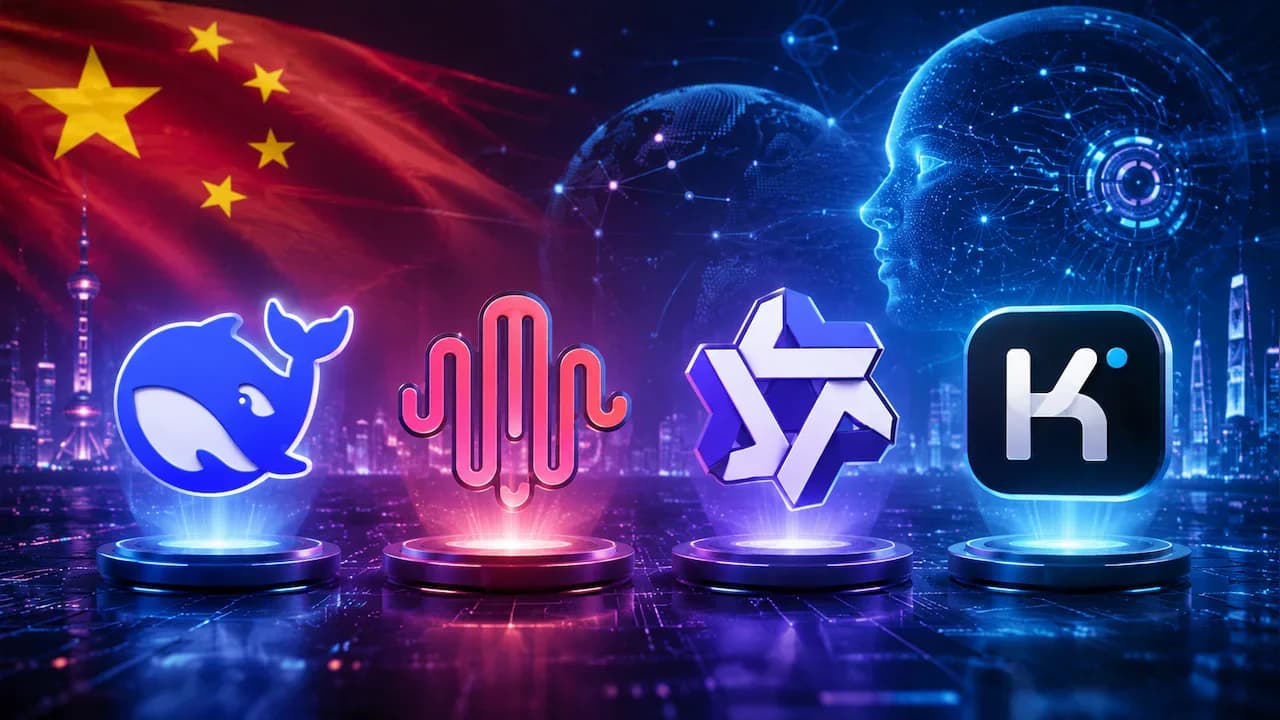
The most popular AI models globally include DeepSeek V4 Flash with 4.63 trillion tokens, followed by MiniMax M3 with 4.13 trillion tokens and Xiaomi's MiMo-V2.5 with 3.8 trillion tokens, according to OpenRouter data. Tencent's Hy3, Anthropic's Claude Opus 4.7, DeepSeek V4 Pro, Owl Alpha, Claude Sonnet 4.6 and Claude Opus 4 round out the top 10. Notably, Google's Gemini 3 and OpenAI's GPT 5.5 rank in 12th and 13th positions respectively, demonstrating the significant gap between Chinese and US market leadership. The widespread adoption of AI applications is increasingly translating into tangible value in early use cases, alongside the initial monetisation of AI platforms, with paid enterprise demand showing credible commercial models where AI is moving beyond experimentation to embedded adoption.
Weekly token usage reached 47.1 trillion tokens in the week ending June 15, compared to 44.6 trillion in the previous week, as reported by OpenRouter. DeepSeek emerged as the biggest contributor to global token usage in terms of specific AI models, reflecting the platform's dominant position in the Chinese market. The substantial increase in weekly usage indicates accelerating AI adoption across global enterprises, with token demand continuing to expand at a faster rate despite ongoing improvements in compute efficiency. Over the past six years, the volume of tokens produced by large language models has been enabled by improvements in compute efficiency of approximately 60 times, alongside a roughly 150 times increase in energy consumption. Inference now accounts for 60-70% of total AI energy consumption and is growing as models scale and adoption deepens.
Major US companies including Amazon, Cisco, Uber, Walmart and Meta have introduced caps or pushed employees toward cheaper AI models to control AI spending costs, according to Financial Times. The shift from flat subscription to token-based billing has exposed corporate clients more directly to AI tool costs, prompting companies to rein in AI mandates as deployment costs test corporate budgets. Goldman Sachs predicted that by 2030, AI agent usage would lead to a 24-fold increase in token consumption, potentially exacerbating chip shortages over the next 12 to 18 months. Uber's Q1 2026 earnings call confirmed that AI investment had already surpassed its original full-year budget shortly after the first quarter, describing AI as an accelerator of spending on tools and infrastructure. Similar patterns are emerging across corporates, with usage controls being introduced to manage costs, but with little change to underlying strategic direction as organisations continue to prioritise AI deployment.
The surge in AI token usage is creating a reinforcing investment dynamic across data centre infrastructure, with current market forecasts projecting hyperscaler AI capital expenditure of US$670 billion for 2026, expected to grow toward US$1.1 trillion in 2027. Data centre electricity consumption is increasing to 945TWh by 2030 from 415TWh in 2024, while incremental global IT load demand from data centres is rising to 219GW by 2030. China is reported to prepare spending around US$295 billion over the next five years on a nationwide network of AI data centre hubs, reflecting a broad shift toward geographically diversified infrastructure deployment. The widespread adoption of AI applications is increasingly translating into tangible value, with Microsoft reporting rapid growth in Copilot enterprise adoption (>20 million seats) and OpenAI reported to have reached approximately US$25 billion of annualised revenue by early 2026. The market focus on AI has raised awareness of the scale of capital investment required in the infrastructure underpinning compute demand, with increased token usage providing greater visibility on the structural challenge of powering AI at scale.