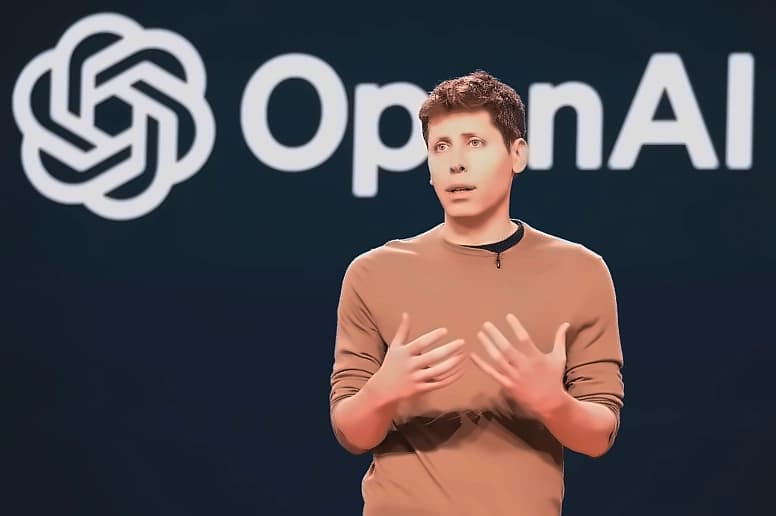
OpenAI and Anthropic are working together in Washington to shape a federal review system for advanced AI models, despite competing for customers, funding, and technological leadership. According to The Information, the companies are urging the Trump administration to adopt a consistent review process for AI models with advanced cybersecurity or national security capabilities. Their cooperation comes before an August 1 deadline for federal agencies to define which systems should qualify as 'covered frontier models'. The proposed process would allow developers to provide federal evaluators with up to 30 days of access before releasing models to other trusted partners, with the framework applying across the entire AI industry rather than just cooperating developers.
Anthropic PBC CEO Dario Amodei has firmly rejected claims that his company supports a ban on open-weight artificial intelligence models, according to a blog post released Monday, July 27, 2026. As reported by Capital Brief, Amodei sought to dispel these allegations, stating clearly that Anthropic has never advocated for a ban on open-weight models. He qualified this stance by noting that these models pose risks because it is difficult to apply guardrails or monitor their usage. The CEO's statement comes as the Trump administration and Congress grapple with how to respond to a new open-weight model from Chinese startup Moonshot AI called Kimi K3, which has challenged US leadership in AI technology. In his Monday blog, Amodei emphasized that "Protectionist bans would not address my most serious national security concerns," making clear his opposition to blanket restrictions on open-weight models.
Dozens of tech companies, including Anthropic's main competitor OpenAI, have banded together to urge Washington to avoid curbs on open-source models, according to reports from Business Standard. In a missive signed on Friday, tech industry leaders, including Nvidia's Jensen Huang and Microsoft's Satya Nadella, stated that open systems help make advanced AI more accessible, adaptable and widely available. However, Anthropic has not signed this letter, leading some observers to suggest the company is lobbying to hamstring Chinese competitors. In Monday's blog, Amodei denied this allegation and defended Anthropic's decision, saying he disagrees with the coalition's assertion that open-weight models make it easier to develop safeguards. The Friday letter was signed by Nvidia, Microsoft, Meta, and Palantir, with OpenAI signing on after the letter was published, while Anthropic remained absent from the coalition. As of Monday, the letter listed over 130 companies including OpenAI, Nvidia, Microsoft, and Google as signers, with the coalition arguing that "Our AI leadership will be judged not by one frontier AI model, but by whether the United States builds a strong, open ecosystem that diffuses into every sector."

President Donald Trump ordered federal agencies to establish a classified benchmarking process through Executive Order 14409 on June 2, directing the National Security Agency, Cybersecurity and Infrastructure Security Agency, Treasury Department, and other federal bodies to determine when an AI model has capabilities strong enough to warrant additional review. According to The Information, the order requires federal agencies to develop the framework by August 1 and directs developers to ask whether a model meets the covered frontier model threshold. The process requires safeguards for intellectual property, confidential information, cybersecurity, and insider threats during evaluation, but expressly states that it cannot create mandatory federal licensing, preclearance, or permitting rules for developing or releasing AI models. Companies would therefore participate voluntarily unless separate laws or government powers apply.
The discussions mark a rare policy alignment between OpenAI and Anthropic, both companies selling general-purpose AI systems and competing for enterprise contracts, researchers, computing capacity, and investment. As reported by The Information, neither company has publicly released the full terms they want included in the final framework. Nvidia, Meta, and Microsoft separately warned against sweeping controls on open-weight AI models, joining 22 other organizations in an open letter arguing that such restrictions could weaken US leadership as competition with China intensifies. The letter, signed by IBM, Palantir, Mistral, Hugging Face, Mozilla, Andreessen Horowitz, and the Linux Foundation, called for targeted legal and commercial measures against misuse instead of restrictions covering technologies with legitimate research and business applications. Elon Musk also supported the letter in a reply to Nvidia's Jensen Huang, although his AI company, xAI, was not listed among the 25 reported signatories. The two efforts address different parts of the policy debate, with OpenAI and Anthropic seeking consistent federal evaluations for models crossing national security thresholds, while the open letter argues against restrictions based mainly on model distribution.