
The India AI Impact Summit 2026, inaugurated by Prime Minister Narendra Modi on February 16, 2026, marked a pivotal moment for India's AI transformation. As reported by Jitendra Vaswani, the summit was the fourth in a series of global AI summits, following events in the UK, Seoul, and France — and the first to be hosted in the developing world. PM Modi introduced India's vision for AI through the M.A.N.A.V. acronym: Moral and Ethical Systems, Accountable Governance, National Sovereignty, Accessible and Inclusive, and Valid and Legitimate. The Prime Minister made it abundantly clear that India does not see fear in AI — India sees fortune in AI, with Modi comparing AI to GPS — suggesting a route, but the final decision of direction is always yours. This validated the approach of companies like DigiExe, which uses AI as a co-pilot while maintaining human creativity and judgment at the center.
The summit revealed unprecedented AI investment commitments that position India as a global AI superpower. Adani Group pledged ₹100 billion to build AI data centers in India using renewable energy by 2035, which is expected to attract an additional ₹150 billion in related investment. India's government earmarked ₹1.1 billion for a state-backed venture capital fund specifically targeting AI and advanced manufacturing startups. Google announced a ₹15 billion investment to build foundational AI infrastructure in India, while India is targeting over ₹200 billion in AI infrastructure investment by 2028. These commitments demonstrate the world's massive bet on India as an AI superpower, with the summit serving as a signal that AI is not a distant technology for large corporations — it is available today, it is affordable, and it is for everyone.
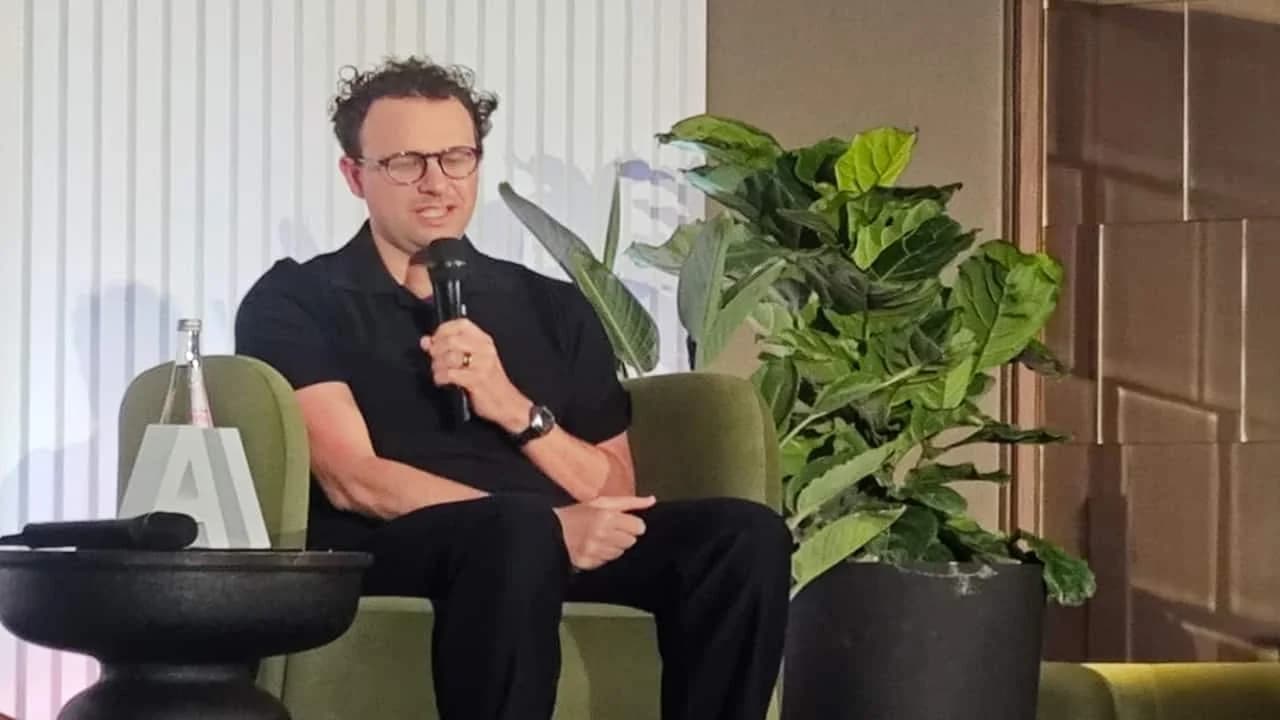
According to reports from Moneycontrol News, Anthropic CEO Dario Amodei warned that artificial intelligence is advancing toward human-level capability far faster than most people realize, with society currently underprepared for the transformation ahead. Speaking on Zerodha co-founder Nikhil Kamath's podcast WTF Is, Amodei likened the current moment to 'standing on the shore while a massive wave gathers in the distance', describing a transformation that could reshape industries, careers and education pathways. Meanwhile, OpenAI CEO Sam Altman delivered a blunt warning at IIT-Delhi, stating that 'the traditional Indian way for a successful career may not help young people survive in the AI era'. As reported by TOI Tech Desk, Altman told the packed hall that 'listening to old people is the biggest mistake young people make' when preparing for AI.
The summit showcased remarkable progress in Indian-built AI models and solutions. Sarvam AI, a Bengaluru-based startup, launched two major open-source large language models — Sarvam 30B and Sarvam 105B — trained entirely in India. Sarvam also announced a partnership with Qualcomm, HMD, and Bosch to deploy its models across smartphones, laptops, cars, and smart glasses. BharatGen, a government-backed AI consortium, launched Param 2, a 17-billion-parameter model that works across all 22 scheduled Indian languages. Voice AI startup Gnani launched Vachana, a zero-shot voice cloning text-to-speech model supporting 12 languages. PM Modi himself mentioned that three Indian companies launched their own AI models and apps during the summit — something he called a proud reflection of India's youth and technical depth. This demonstrates that India is no longer just consuming AI — India is now building it.
The summit emphasized the urgent need for skilling, reskilling, and lifelong learning as the future of work is about elevation rather than replacement. As reported by Moneycontrol News, when asked about what skills young Indians should focus on, Amodei emphasized 'thinking about tasks that are human-centred, tasks that involve relating to people'. The OpenAI CEO reinforced this message, noting that 'traditional career advice is probably not going to work as well' and advising young people to 'quickly develop their own intuitions and trust them'. Vinod Khosla's statement particularly resonated, suggesting that IT services and BPO companies could 'almost completely disappear within five years' because of AI, while 250 million young Indians should instead be selling AI-based products and services to the rest of the world. For businesses like DigiExe, this means Indian-language AI tools are going to become more accessible, more accurate, and more affordable in the coming months, enabling companies to compete on a global stage.
The summit provided clarity and confidence for businesses embracing AI transformation. As reported by Jitendra Vaswani, he came to the summit with the question 'am I on the right track by going all-in on AI at DigiExe?' and left with a 'crystal clear answer — absolutely yes'. The biggest personal takeaway was that AI is not replacing human-centric work — it is multiplying it. This validates the approach of companies using AI as a co-pilot while maintaining human creativity and judgment at the center. The summit's 'Three Sutras' (guiding principles) and 'Seven Chakras' (interconnected domains of action) covered areas like Human Capital development, Safe and Trusted AI, Inclusion for Social Empowerment, and AI for Economic Growth. The GPAI Council Meeting emphasized that the global AI divide is widening, with a small number of countries concentrating AI capabilities, limiting the rest of the world's ability to build AI solutions. However, India is now chairing conversations at the GPAI level, pushing for AI to be treated as a Global Common Good — open, shared, and accessible — ensuring Indian entrepreneurs will have increasing access to tools, infrastructure, and policy support to compete on a global stage.