Retail investors are increasingly harnessing artificial intelligence to facilitate their trading endeavors, marking a revolutionary shift in the investment landscape. According to The Economic Times, emerging platforms enable users to seamlessly integrate AI-driven models into their trading strategies through straightforward commands. The trend represents a new era in retail investing, where traders believe that AI-powered tools can produce better investment outcomes, with anything still done manually considered a process waiting for improvement.
Large language models, which are trained on vast amounts of financial advice and risk management literature, tend to avoid risk-taking behavior. As reported by The Economic Times, this conservative default is baked into the technology, as these models absorb the consensus view of what responsible investing looks like. The problem becomes evident when traders deploy agents on top of these models, fighting against the default conservatism to coax risk-taking out of a system trained to avoid it. Jake Nesler, a 29-year-old software engineer in Scranton, Pennsylvania, encountered this recurring problem with his agent, which kept defaulting to responsible behavior and gravitating toward blue chips and S&P 500 stocks.
Nesler spent two and a half weeks teaching his AI agent how he thought about risk, entry signals and position sizing, then set it loose on a simulated brokerage account on Alpaca with $100,000 in fake money. After five days of trading, the agent posted a 7% return over 30 days, outpacing the S&P 500's roughly 4.5% gain over the same stretch. However, the bot experienced drawdowns of as much as 22% during this period, demonstrating significant volatility in its performance. Nesler's agent also made one critical decision right in its first week, ignoring the chase when Nvidia's earnings sent the stock surging, potentially saving him an estimated $10,000 loss that week.
Despite some success stories, many traders remain cautious about AI-powered trading. As reported by The Economic Times, Nesler, who published his code online for others to try, isn't ready to recommend that anyone give it real cash. He stated that while it's possible to make money with the system, it doesn't mean users won't lose money also, comparing it to dumb luck on options trading. Jay Malavia, co-founder of Chicago-based Kairos, warns that trading is a zero-sum game, and an edge ceases to be one when it's shared with the masses. On social media platforms like X, Reddit and Telegram, claims of extraordinary returns through AI agents have become a genre of their own, with one viral post boasting of a 5,860% return in two days on prediction markets platform Polymarket, though this story was later debunked by another AI agent account.
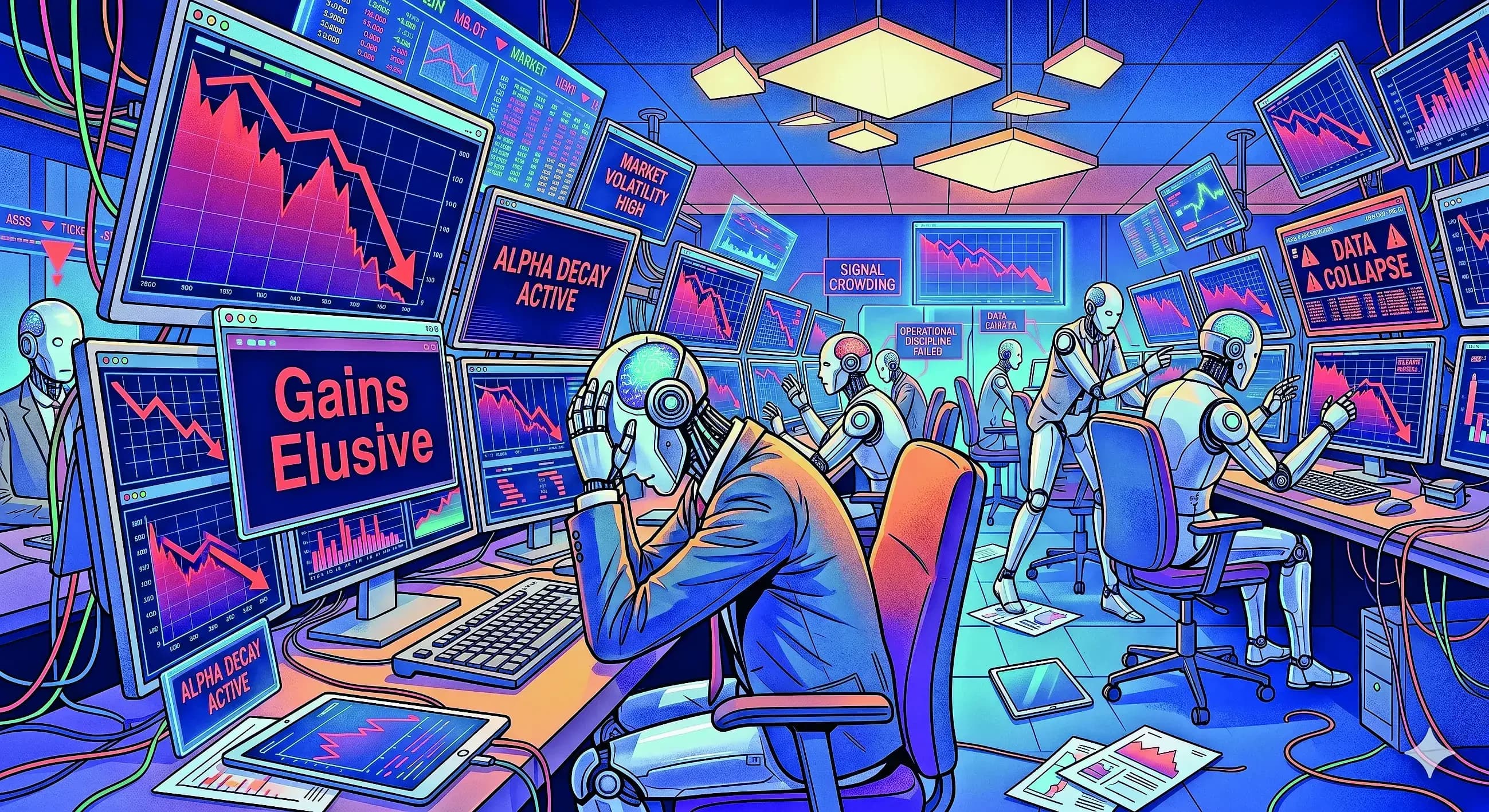
The tools to set up these bots have never been more accessible, with open-source platforms like OpenClaw allowing users to connect AI models through messaging apps like WhatsApp and Telegram. According to The Economic Times, trading platforms themselves are jumping on the trend, with companies like Public Holdings seeking to offer their own AI agents to customers. Crypto-powered exchanges like Polymarket, OKX, Bybit and Kraken have all rolled out interfaces in recent months that make it easier for AI agents to place trades. However, the fundamental challenge remains that AI has yet to make earning money significantly easier for retail traders, and in prediction markets, AI agents may undermine the sector's ethos by recycling existing information rather than adding genuine knowledge to market dynamics.