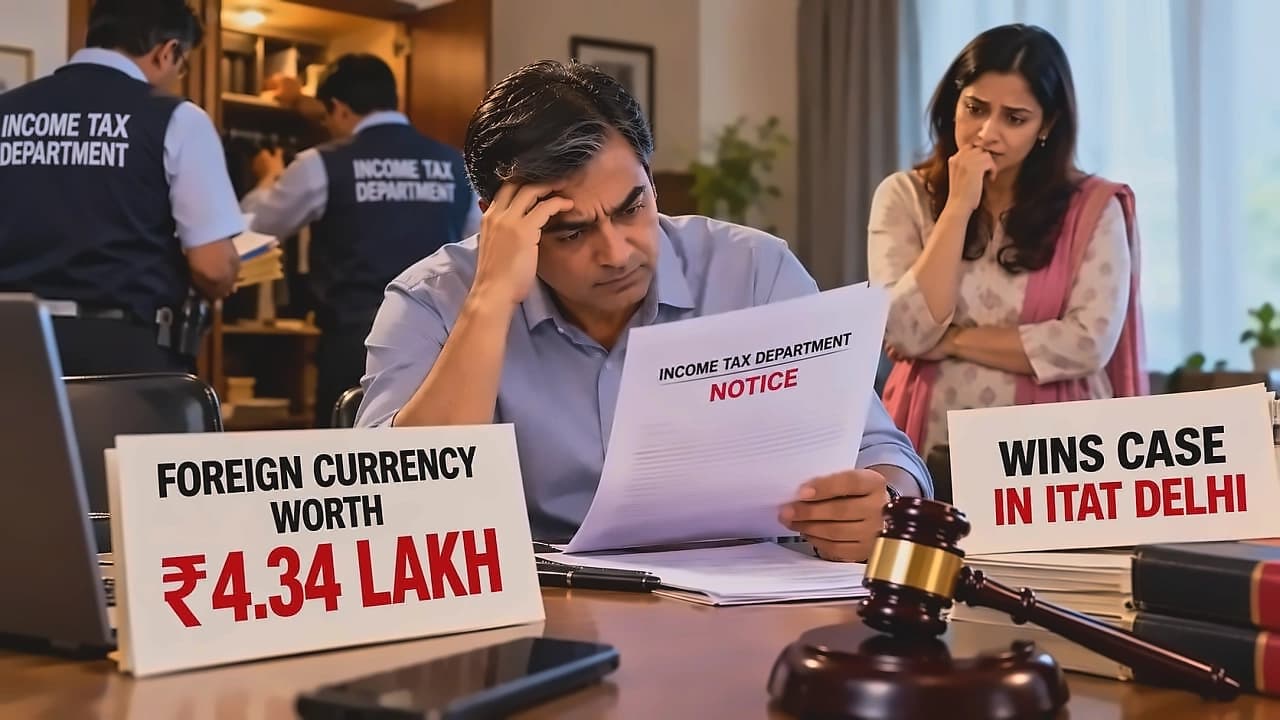
During an income tax raid conducted on March 21, 2017, a few months after demonetisation, officials discovered ₹1.12 crore in Indian currency and foreign currency worth ₹4.34 lakh at a Delhi man's residence in G.K. Enclave-1. According to reports from Mint, the individual was subsequently taken in for questioning by tax authorities. The man explained that he was a company director and the company had withdrawn money from 11 bank accounts due to fears of further action following demonetisation, with the withdrawn cash kept at his residence.
The man's sister-in-law, Kemp, who was employed with Jet Airways and resided with him at the G.K. Enclave-1 residence, provided a written statement confirming she had handed over the foreign currency for safekeeping during the search. As reported by Mint, Kemp explained that her employment with the airline involved frequent international travel, during which she carried substantial amounts of foreign currency, and the unused foreign currency was entrusted to her brother-in-law. The explanation was accepted by the Income Tax Investigation Team during the search, with officials sufficiently satisfied that they did not seize the foreign currency.
The Income Tax investigation team accepted the sister-in-law's explanation and decided against seizing the foreign currency. However, according to reports from Mint, the Assessing Officer took a different view, treating both the Indian cash and foreign currency as unexplained money under Section 69A of the Income Tax Act and subjecting the amount to tax under Section 115BBE, which provides for a higher tax rate on certain types of unexplained income. The man eventually succeeded in his appeal before the ITAT Delhi.
In 2023, the ITAT Delhi concurred with the CIT(A) and sustained relief over the Indian currency, dismissing the AO's objections. However, as reported by Mint, the tribunal did not accept the explanation concerning foreign currency at that time, directing that the amount be added to the man's income and taxed. In 2026, the man filed a fresh appeal before ITAT Delhi regarding the foreign currency dispute, which was decided in his favor. The tribunal observed that the Assessing Officer failed to adequately counter the man's arguments, particularly regarding his sister-in-law's employment with the airline and her written confirmation backing the account.
Shourya Garg, Advocate at Garg & Garg Tax Associates, told ET that the man prevailed because he established ownership through a credible explanation supported by corroborating evidence. According to Garg, a crucial factor was the sister-in-law's written confirmation backing the man's account. He noted that the fact that investigation officers had accepted her explanation during the search and refrained from confiscating the foreign currency supported his case. Garg emphasized that this case demonstrates how possession alone doesn't establish ownership when there's a credible paper trail showing otherwise. The case highlights the importance of establishing ownership and source of cash or foreign currency found during income tax searches through credible and corroborated evidence.