Electric vehicle maker Ultraviolette Automotive is in the process of stitching together over ₹500 crore from new and existing investors including Yali Capital, Speciale Invest, and TDK Ventures as part of its ongoing fundraising round. According to sources familiar with the matter, about half of the capital will come from existing investors - Speciale and TDK Ventures, though the exact deal size may change as discussions with new investors and valuation details are still underway. The development comes months after the company raised $45 million as part of its Series E round from Zoho Corporation and Lingotto in December. An Ultraviolette spokesperson confirmed that "The investments are part of a currently ongoing fundraise; we have nothing further to add at the moment."
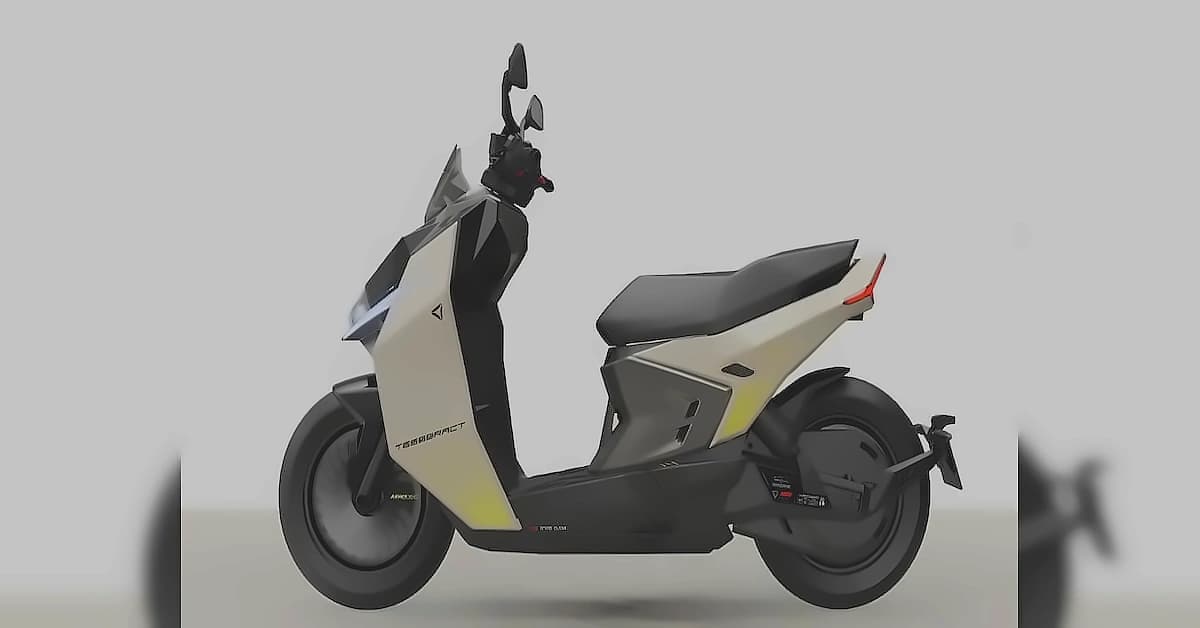
Electric vehicle maker Ultraviolette Automotive is betting on its entry into scooters to drive a sharp increase in volumes from 2027, as the Bengaluru-based company prepares to commission its new Hosur manufacturing facility and expands beyond its performance motorcycle roots. The company's upcoming Tesseract electric scooter, scheduled to enter the market in the first quarter of calendar 2027, is expected to quickly scale to around 10,000 units a month, according to co-founder Narayan Subramaniam. At scale, Ultraviolette expects scooters and motorcycles to contribute 50 per cent each of its volumes. Production of the Tesseract will initially begin at Ultraviolette's existing manufacturing facility in Karnataka, which has the capability to support the launch, before shifting to the new Hosur facility once it's commissioned.
Bengaluru-based electric two-wheeler maker Ultraviolette Automotive has announced plans to invest ₹1,000 crore to expand its manufacturing footprint across Karnataka and Tamil Nadu. According to latest reports, ₹200 crore will be invested in its existing manufacturing facility in Karnataka's Jigani, while ₹779 crore over five years will be used for a new facility in the Hosur-Krishnagiri industrial belt in Tamil Nadu. The Hosur plant will have an initial annual capacity of 250,000 units, which can be expanded to 500,000 units as demand increases. The investment will be funded through internal reserves, equity, and future cash flows with limited use of debt. The facility is expected to be commissioned in the next six to eight months.
The Hosur facility is expected to generate 2,000-3,000 direct jobs and another 5-7 indirect jobs for every direct employee through suppliers and allied businesses. As reported by Moneycontrol, co-founder and CEO Narayan Subramaniam explained that proximity to Bengaluru and access to an established automotive ecosystem were key factors behind the decision. "We were looking at locations close to our R&D facility. Our current production facility is in the Jigani industrial area, which is quite close to our R&D facility, and that will continue," Subramaniam said. The Hosur facility, located in the SIPCOT industrial area, will benefit from an established supplier base, four-lane highway connectivity, skilled labour and technical training infrastructure. The facility can be reached from Bengaluru in around 1.5 hours or less, with other locations at least four hours away by road.
According to Moneycontrol, Ultraviolette plans to launch its Shockwave motorcycle for under ₹2,00,000 and the Tesseract scooter for below ₹1,50,000. The company expects scooter production to ramp up to around 10,000 units a month and already has bookings running into tens of thousands. Over the next 24 months, the company plans four motorcycle and up to three scooter platforms at scale. At maturity, scooters are expected to account for around 50 percent of volumes. The company sold more than 3,000 electric motorcycles globally in the first half of 2026, compared with about 1,756 units for Zero Motorcycles and about 300 for Harley-Davidson's LiveWire*. Ultraviolette is now well capitalised to fund its product roadmap and the Hosur expansion, with co-founder Narayan Subramaniam stating that "For the immediate future, we are well capitalised."
The new facility, christened as the BIGGA Factory (Big Global Ambition), will operate in addition to Ultraviolette's existing manufacturing facility in Bengaluru. According to BusinessLine, the facility will be located at SIPCOT Industrial Park, Shoolagiri, with Phase I capacity for around 250,000 vehicles and Phase II expected after 2029, doubling capacity to 500,000 units. Co-founder and CEO Narayan Subramaniam revealed that "In the next three to four years, we forecast that the product mix for Ultraviolette would be 50-50 between scooters and motorcycles. The immediate volume ramp-up is more skewed towards the Tesseract and the intent is to scale to about 10,000 units a month as quickly as possible through the new facility." The facility will feature advanced automation including collaborative robots for sorting, welding and assembly, automated assembly fool-proofing and vision-based inspection systems. Direct employment is expected to scale to 2,000 people in Phase 1 and possibly double to 4,000 to 5,000 in Phase 2.
In FY25, Ultraviolette's operating revenue jumped to ₹32.3 crore from ₹15 crore a year earlier, while losses widened to ₹116 crore from a loss of ₹61.6 crore in FY24, according to documents sourced by Tofler from the Ministry of Corporate Affairs. The company has not filed its FY26 audited results. Last year, co-founder Narayan Subramaniam told Mint that the company expected to break even over the next 18 months based on bookings for the two new motorcycles it launched. The company has expanded to over 100 Indian cities by the end of 2026 with a global presence across 14 countries, and its fast-charging network with Bolt Earth has seen great adoption across the country. The fresh fundraise comes amid a broader flow of capital into India's electric mobility sector, with E3 Electric.AI raising ₹100 crore and River Mobility raising $120 million in recent months.