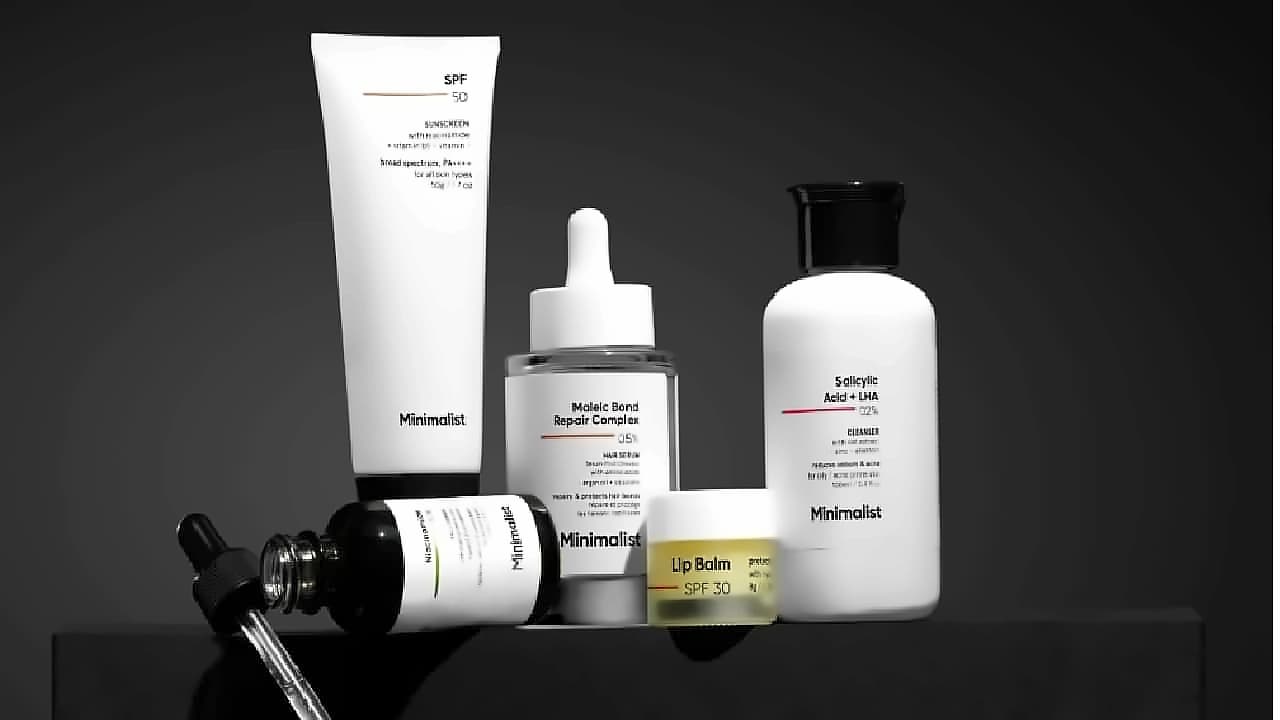
India's beauty brands are fundamentally reshaping how global beauty majors approach product development and market entry. According to Business Standard, the world's largest beauty and consumer goods companies are increasingly buying Indian brands instead of building competing products from scratch. This week, French beauty major L'Oréal acquired Innovist, owner of personal care brands Bare Anatomy, Chemist At Play, and Sunscoop, while Hindustan Unilever acquired personal care brand Minimalist in one of the largest such deals in India's packaged consumer industry. The shift represents a fundamental change from traditional beauty industry models where large companies invested heavily in research and internal development to a new approach where startups identify trends, build communities, and test products quickly online.
India is producing more 'insurgent' consumer brands than ever, but only a handful are growing into large-scale businesses. According to the fourth edition of the annual India Insurgent Brand Report by consulting firm Bain and venture capital fund DSG Consumer Partners, the number of insurgent brands in the report's Insurgex Index—defined as brands with at least ₹100 crore in annual revenue, over 30% CAGR growth in a three-year period, and more than 1.5x capital efficiency—grew from 29 in FY24 to 39 in FY25. Newer entrants include packaged food and beverage brands such as healthy snacking and staples brands Farmley and The Health Factory, and travel and hospitality startups including budget hotel chain FabHotels and restaurant chains The Belgian Waffle Co and Burma Burma. DSG and Bain covered the travel and hospitality sector in the report for the first time this year, with Bare Anatomy being one of the new entrants in the Insurgex Index this year.
The beauty and personal care sector has emerged as the largest contributor by revenue to the Insurgex Index, with the sector growing from only two brands in the first year to nine brands currently. As reported by Mint, Hariharan Premkumar, managing director and head of DSG Consumer Partners India, attributed this success to the rise of quick commerce, explaining that before quick commerce emerged, packaged F&B was largely an offline business where platforms like Flipkart and Amazon didn't work effectively due to small ticket sizes in grocery. The net unit economics for beauty and personal care and F&B are similar, with gross margins higher in BPC but advertising spends also elevated. Margins in packaged staples and snacks tend to be lower at 10-20% while in the beauty and personal care business, they can start much higher, at over 25% for mass market brands. However, the principles of scaling and winning models are similar across both sectors. According to Business Standard, these brands have led the industry in content-driven marketing, channel innovation and data-led consumer engagement, with many creating entirely new beauty categories such as active-ingredient serums while accelerating adoption of products like sunscreens and moisturisers.
Despite growth in numbers and expansion to new categories, only a few insurgent brands are able to scale past ₹100-250 crore in annual revenue. According to the report data, of the 56 insurgent brands founded before 2015, only one-third are at over ₹500 crore revenue, while one-third continue to operate at ₹250 crore revenue or below. Among the 65 insurgent brands founded between 2015-2020, arguably the height of India's VC-funded consumer brands wave, only seven have crossed the ₹500 crore revenue mark, while more than half remain below ₹250 crore. However, Rohit Shankar from Bain & Co India noted that total revenue generated by insurgent brands has crossed $7.5 billion, outperforming the scale and growth rates of many major, listed consumer-facing companies. "The number of insurgent brands crossing ₹500 crore is higher now," Shankar said. "This isn't as much a natural ceiling, as it is typically a place where their playbook needs to evolve for the next wave of growth—across audience, brand building, pack price and channel."
The rise of ingredient-led products has been one of the most striking changes in the beauty industry over the past few years. Consumers increasingly search for niacinamide, retinol, ceramides, peptides, and hyaluronic acid rather than simply trusting traditional brand advertising. This has fuelled the growth of brands such as Minimalist, Chemist At Play, Bare Anatomy, Foxtale, and The Derma Co. According to Business Standard, consumer behaviour has evolved rapidly, particularly among younger urban consumers, with beauty and personal care consumption increasingly driven by roughly 10 million affluent, digitally savvy beauty enthusiasts who spend significantly more on beauty products than the average consumer. In certain online categories, more than 50% of sales on certain platforms are products launched within the last 5 years. The shift is evident across India's consumer sector, with large consumer companies acquiring or investing in digital-first brands across nutrition, wellness, snacking and grooming categories, with the common thread being the growing importance of online commerce and digital discovery.