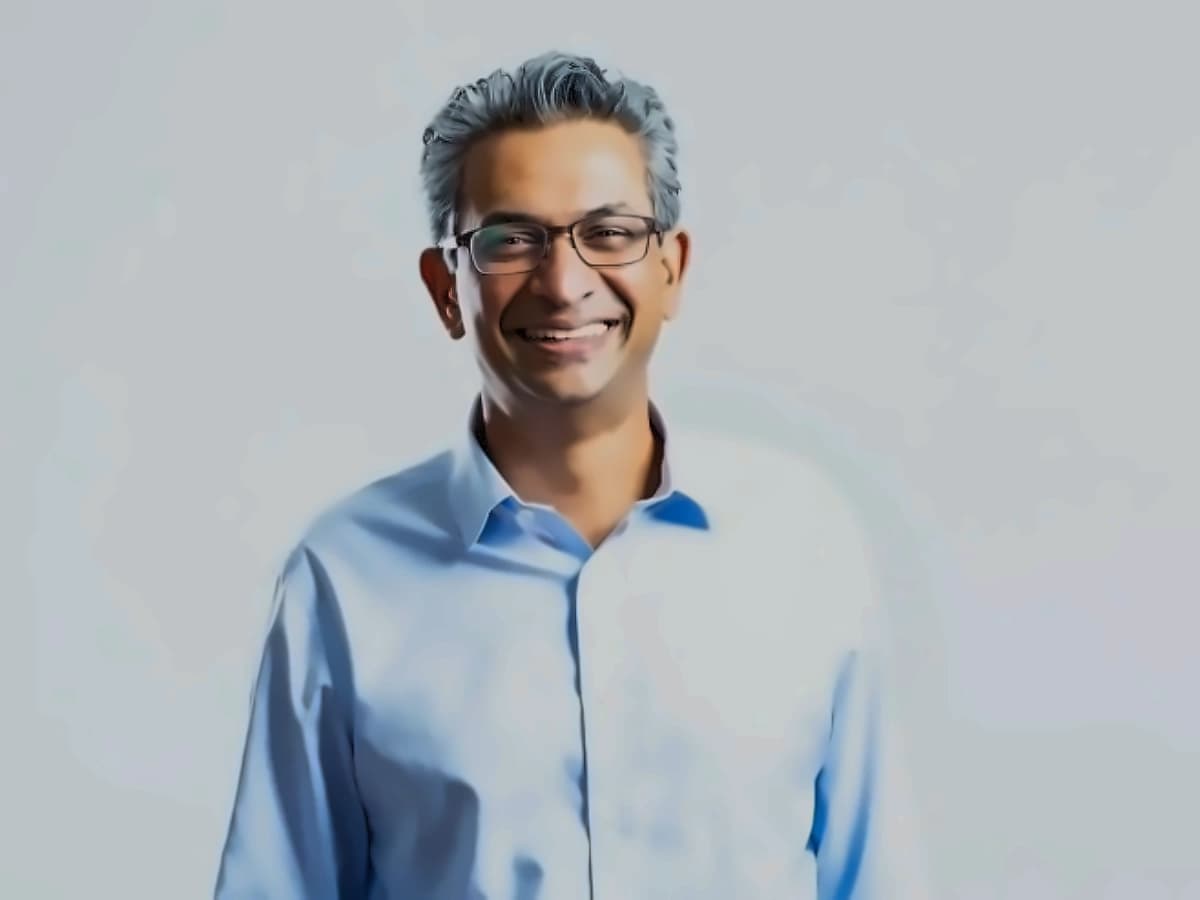
India's startup ecosystem requires pension funds to enter the venture capital market to unlock new domestic capital sources, according to Rajan Anandan, managing director of Peak XV Partners and head of its Surge programme. Speaking at Groww Next '26 in Bengaluru, Anandan noted that India's pension funds currently do not invest in venture capital funds, representing an untapped source of long-term domestic capital. He argued that greater participation from domestic institutional investors could help the country's startup ecosystem attract more capital and increase its share of global venture funding. The country currently accounts for around 3 per cent of global startup activity despite being the world's third-largest startup ecosystem, with Anandan advocating for raising that share to 10 per cent.
Indian startups are reaching significant scale much faster than previously, with Groww, founded in 2016, having a market capitalisation of around ₹1.4 trillion, while Meesho, founded in 2015 and listed last year, is valued at approximately ₹1.2 trillion. According to Anandan, more than 40 venture-backed listed startups now have market capitalisations exceeding $1 billion, with another five companies expected to enter the ₹1 trillion market-capitalisation club within the next two years. Such valuations would have been difficult to imagine four years ago, as reported by Business Standard.
India's active graphics processing unit (GPU) capacity has experienced dramatic growth, increasing from fewer than 10,000 at the end of 2025 to nearly 100,000 and potentially reaching one million within two years. This expansion is attributed to multi-year investments by Reliance Industries, Tata Group, Adani Group, Amazon Web Services, Google Cloud and domestic neocloud companies. Anandan believes 'India has a real shot at becoming an AI data centre capital of the world, because we have very low-cost energy, and our states are welcoming data centres as opposed to being concerned about it'. He noted that six or seven Indian companies have launched foundational models since the end of 2025, with models containing 30 billion to 100 billion parameters addressing 90-95% of enterprise requirements.
India is expected to attract around USD 14 billion to USD 15 billion in total venture capital this year, but Anandan emphasized that the funding pool needs further expansion. Peak XV's seed-stage platform Surge has increased its maximum investment cheque to USD 5 million from USD 3 million earlier this year, reflecting the need to provide startups with sufficient capital to reach subsequent funding rounds. Anandan warned that 'the bar has gone up', indicating a transition to fewer but larger investment cheques as venture capital investors become more selective. He stated that 'the objective was to capitalise companies adequately from the beginning so that founders could build businesses capable of reaching the next stage without having to raise multiple small funding rounds and face excessive dilution'.
Regarding employment impacts, Anandan stated that work will continue to exist, but several roles will undergo significant changes as AI adoption accelerates. He particularly highlighted the impact on software developers who do not adapt to AI-assisted coding tools, stating that 'coders who are not proficient in using AI tools will not have a job'. Describing an AI-fluent computer science graduate with demonstrable projects, he said such individuals could secure employment extremely quickly. Beyond AI, Anandan identified space technology, semiconductors and biotechnology as sectors with considerable potential for Indian startups, emphasizing that entrepreneurs would need persistence and consistency to build companies capable of capturing these opportunities over the next decade.