Bengaluru-based Ati Robotics, which has raised $37 million from Silicon Valley investors, is planning to establish a manufacturing plant in Michigan to produce physical AI-powered robots for the US market. According to reports from Business Standard, founder Saurabh Chandra announced plans to start production next summer, with the company raising fresh funds in Silicon Valley to support the expansion. The startup is developing an industrial humanoid that can handle tasks like picking up and moving 25 kg bins without teleoperations, targeting factory automation applications.
Reliance Retail Ventures has acquired approximately 55% stake in Addverb Technologies, which is currently testing physical AI robot prototypes for both industrial and defence applications. As reported by Business Standard, CEO Sangeet Kumar revealed that the company is using an open AI platform to train robots with 1,000 hours of data weekly, planning to increase this to 5,000 hours weekly. The startup has established subsidiaries in the US, Europe, Australia, and Singapore for export operations, with commercial launch expected soon after receiving client feedback.
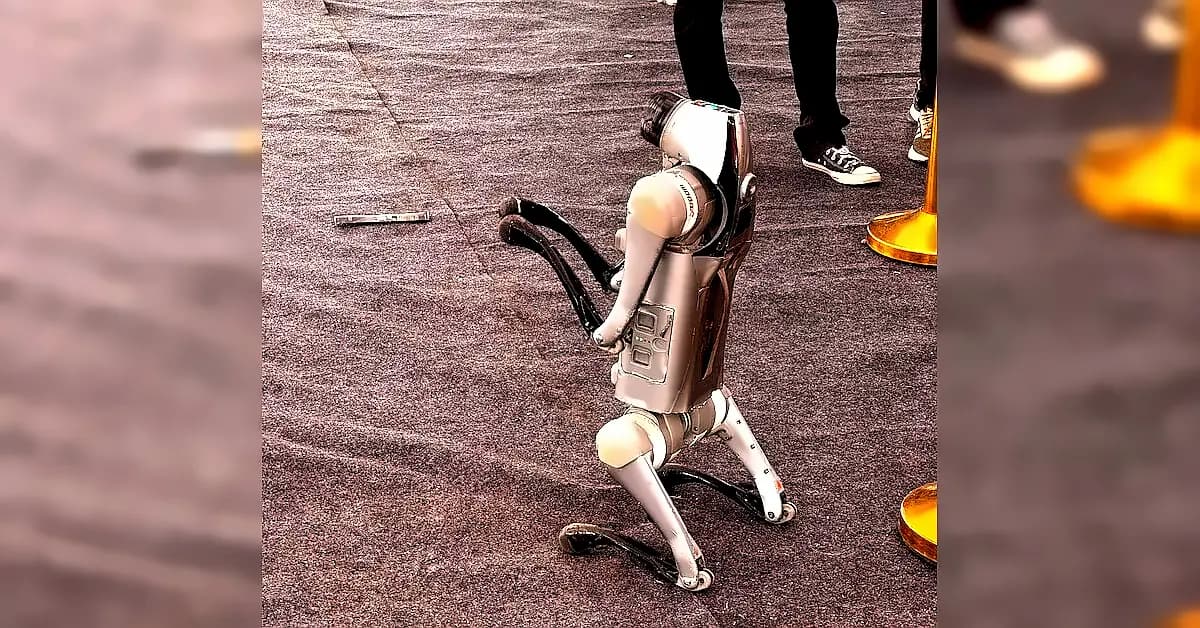
Physical AI-powered robots represent a significant advancement over traditional systems, using machine-learning with real-time sensor data to adapt to dynamic environments. According to Business Standard, these smart machines can negotiate changes in physical environments unlike older systems that require rigid coded rules and precise conditions. Novus Hi-Tech Robotic is developing humanoids and quadrupeds with core software built entirely in India, with founder Anuj Kapuria noting that the real value lies in software development rather than hardware import dependency.
The global humanoid robotics market presents significant opportunities, with Goldman Sachs projecting the market to reach $38 billion by 2035 - a decade away from maturity. As reported by Business Standard, Kumar emphasized that while China might lead in physical AI robot development, it doesn't dominate the market like it does in drones or electric vehicle batteries. Ati Robotics has already begun manufacturing actuators, which account for over 50% of robot bill of materials, in their Indian factory, while Addverb has started manufacturing LiDAR sensors and actuators for defence applications. However, recent analysis suggests that humanoid robots won't solve immediate labor shortages, with Bain's 2025 Technology Report finding most deployments remain early-stage and rely heavily on human supervision.