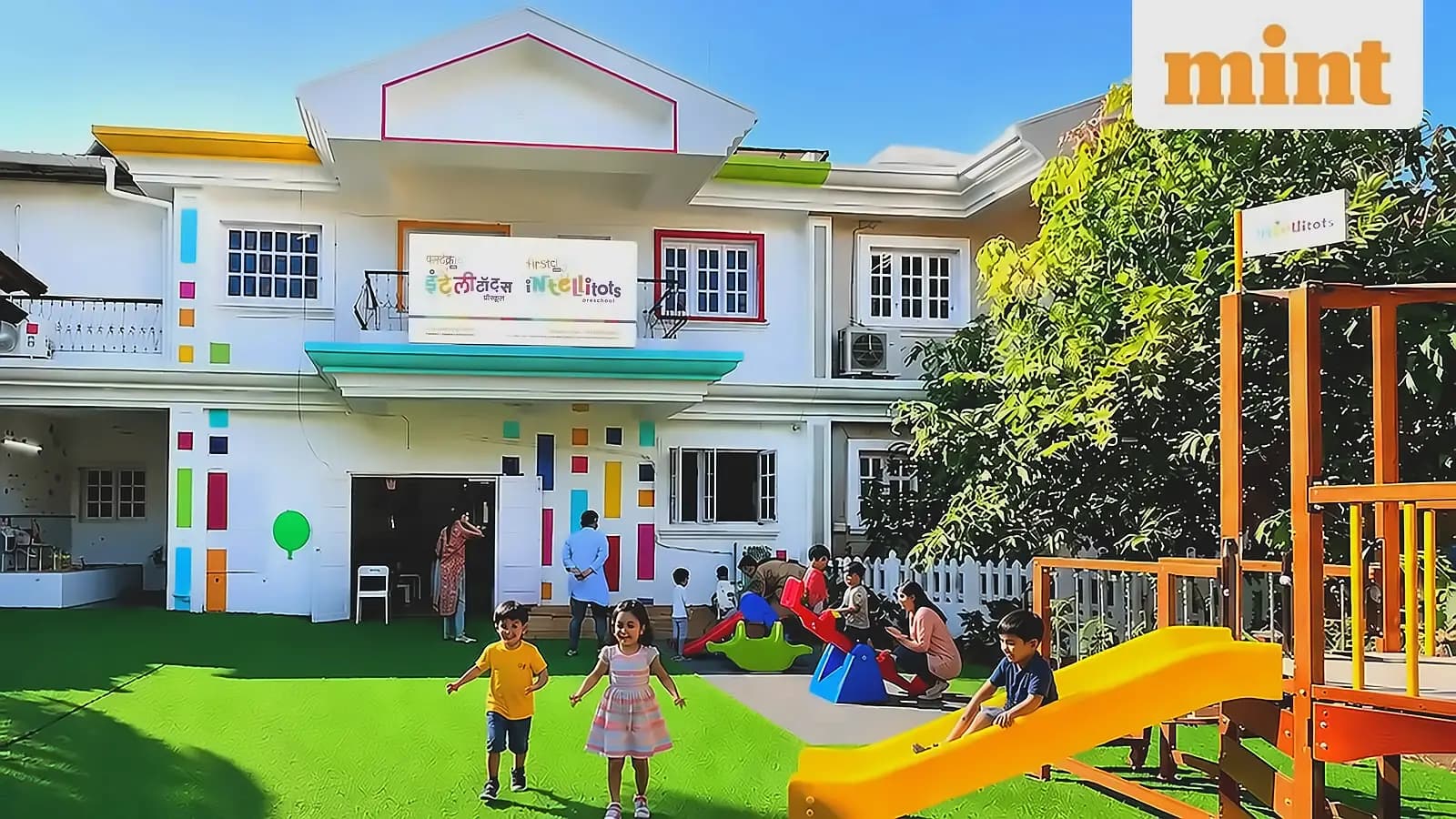
FirstCry's Intellitots preschool business has achieved profitability despite falling short of its ambitious expansion targets. According to reports from Mint, the preschool network currently operates 436 schools across 190 cities, enrolling approximately 23,000 students in FY26 and 55,000 since inception. The business generated ₹47 crore in annual revenue in FY26, representing less than 1% of parent company Brainbees' total revenue of ₹8,500 crore. However, Intellitots demonstrates superior profitability with adjusted EBITDA margins increasing from 24% to 27% in FY26, significantly outperforming the core India multi-channel business which saw margins decline from 9.5% to 8.8% during the same period. The franchise-led model allows the business to remain profitable even at modest scale, with FirstCry providing branding, curriculum, training and operational support while partners bear infrastructure costs.
Despite its growth, Intellitots remains a small player in India's organized preschool market. As reported by Mint, the business trails established chains significantly, with Kidzee having enrolled 1.8 million children since inception and EuroKids enrolling 1 million. The company added 155 schools in FY25 and 73 in FY26, representing steady but modest expansion compared to the original plan of building 1,000 schools within five years. CEO Supam Maheshwari acknowledges that even when Intellitots crosses ₹100 crore in revenue, it will remain small relative to the overall group scale. The preschool business requires significant capital from franchise partners for real estate, infrastructure, furniture and staffing, creating barriers to entry for newer entrants.
The preschool business faces unique challenges that differ from FirstCry's core e-commerce operations. According to Mint reports, franchise partner Sagar Kathiriya from Surat notes that awareness remains low, with many parents unaware that FirstCry operates preschools. Former regional manager Amit Singh highlights that conversion rates from existing customers to school enrollments hover around 15-20% at best, significantly below expectations. Industry experts explain that unlike e-commerce, where customers can be acquired from anywhere, preschool enrollment decisions are primarily determined by location and accessibility, creating a difficult middle ground for newer entrants. The business requires running each centre like a mini operating company with admissions, parent interactions, teachers, safety, and daily operations, unlike standardized internet businesses where customer experience is largely standardized.
FirstCry leverages its extensive parent database to support the preschool business, though conversion rates remain challenging. As reported by Mint, the company delivered 2.6 million FirstCry Boxes in FY26, equivalent to 10% of all newborns in India, building an ecosystem around parenting. The company maintains a database of approximately 11 million unique transacting customers as of Q4 FY26. However, franchise partners report that while FirstCry has significant data on its e-commerce platform, it struggles to utilize this information effectively for preschool admissions, with conversion rates from existing customers remaining modest. The company's biggest edge, its vast parent ecosystem, has not translated into strong admissions support, with partners receiving around 200 leads but hardly anyone walking into centres.
Despite current challenges, FirstCry maintains optimism about the preschool business's long-term potential. According to Mint reports, CEO Supam Maheshwari believes the company will cross 1,000 schools within 3-4 years, citing India's estimated 80,000 preschools of which 80-85% remain unorganized. The business model remains franchise-led, with partners bearing infrastructure costs while FirstCry provides branding, curriculum, and operational support. Maheshwari views the preschool network as creating trust and relationships with young parents, extending the company's ecosystem from shopping to education, though the business currently accounts for only nearly two-thirds of group revenue through core baby products. The company estimates that India has roughly 80,000 preschools, of which nearly 80-85% remain unorganized, creating a long runway for the organized sector to expand.