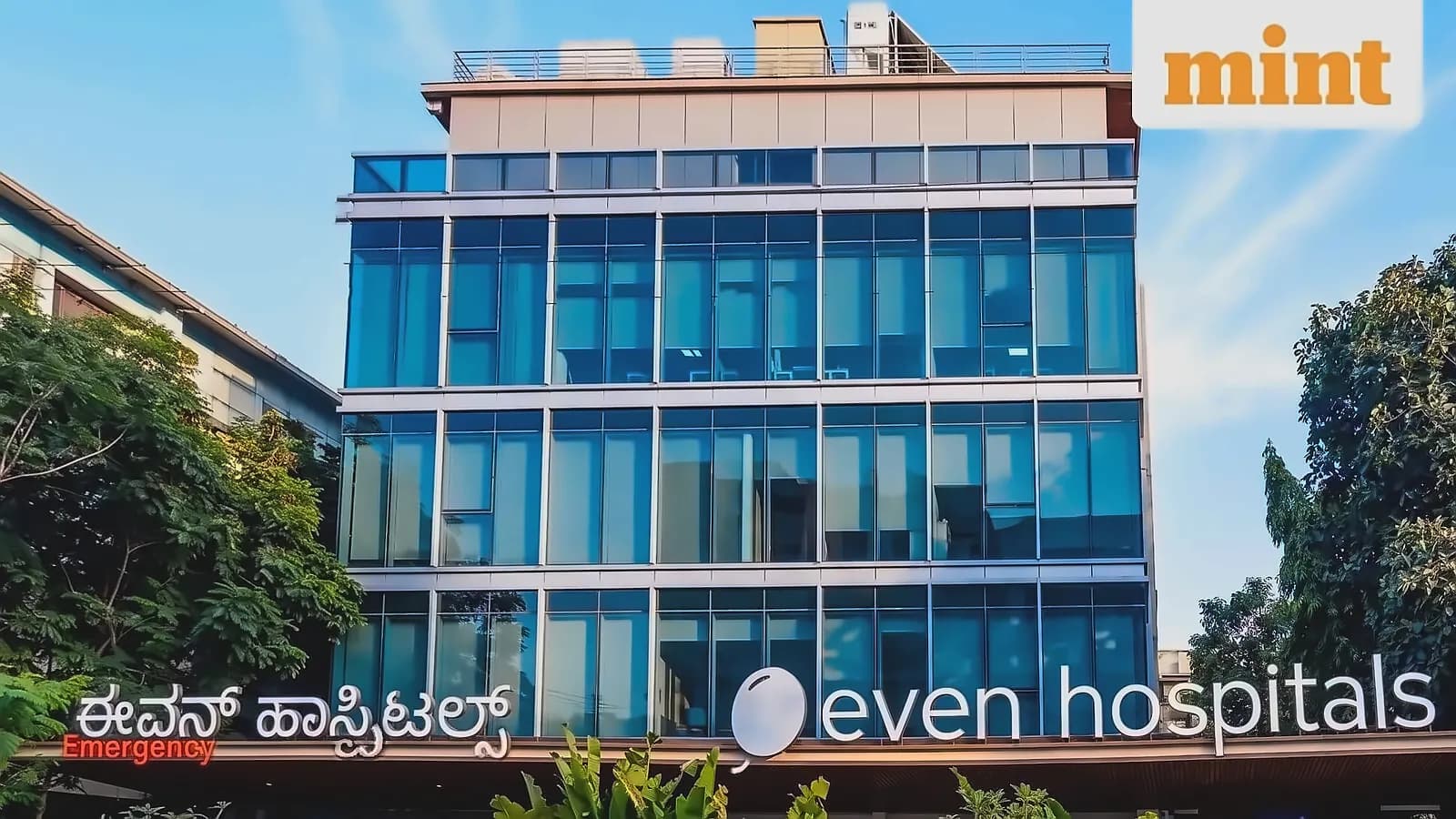
Bengaluru-based managed healthcare startup Even Healthcare has successfully raised $50 million in a Series B funding round led by US-based Khosla Ventures, with participation from Alpha Wave. According to the company, this round values Even Healthcare at $300 million - triple its valuation from its last Series A round. The funding brings the company's total funding to more than $120 million since its inception. Co-founder and CEO Mayank Banerjee confirmed that the company is currently operating two hospitals with a third under construction, with plans to expand to five hospitals by early 2027.
The majority of the funding will be allocated toward hospital expansion in Bengaluru, with five new Even hospitals planned over the next six months, beginning with Indiranagar. Even aims to establish five hospitals by Q1 or Q2 2027, ensuring no resident is more than 5 kilometers from one of their facilities. The company's strategy involves specializing each hospital in specific care types while maintaining the ability to handle 95% of cases. Banerjee explained that while common procedures like angioplasties will be available at all locations, specialized transplants may require patients to visit specific hospitals.
According to Mint reports, Even Healthcare demonstrated strong revenue growth in FY25, reaching $3.2 million compared to $1 million in the previous year. However, losses widened from $8.7 million to $10.7 million during the same period. The company was founded in 2021 by Banerjee alongside Matilde Giglio and Alessandro Ialongo, with Khosla Ventures providing its initial $6.6 million seed funding. Both of its existing hospitals reached operational profitability in record time, with readmissions below 1% compared to the industry range of 8-15%.
Even Healthcare positions itself as the only private hospital chain in India where doctors are not paid on the number of procedures they carry out or the revenue they generate. Instead, doctors are assessed on whether patients improve, how fast they recover, and whether they return to hospital. An AI system reviews each case against clinical protocols as it happens. The company's pitch addresses the criticism of how private healthcare is generally paid for in India, where nobody is clearly responsible for a patient's health between hospital visits and families end up repeating medical history to each new doctor. Members are assigned a care team that follows them over time and contacts them before minor problems turn into admissions, with cashless hospital care and continued contact after discharge until recovery is complete.
The first full year of managed care shows the model delivering measurable results. In programmes run with insurance partners, unplanned readmissions stayed below 1%, against an industry range of 8 to 15%. Average hospital stays were 40% shorter, while proactive care kept more than 200 members out of hospital altogether, saving patients an estimated ₹15-16 crore. Even now serves more than 2.5 lakh members across 10 cities and has tripled its membership over the past year. As per Vinod Khosla, founder of Khosla Ventures, "Most healthcare companies optimise one piece of a fragmented system. Even is attempting something much more ambitious: integrating the financing, technology and delivery of care so that the system is rewarded for better health outcomes rather than greater utilisation."
Even Healthcare is part of a broader trend in the managed healthcare sector, as reported by Mint. Narayana Health began offering insurance in 2024 and reported Q1 FY27 losses of ₹20 crore compared to ₹6 crore in the previous quarter. PB Health, backed by PB Fintech, plans to invest approximately ₹10,000 crore to build a network of 500 hospitals across 50 cities. The sector is moving away from fee-for-service models toward preventive care, with companies leveraging relationships with insurers to create aligned financial incentives.