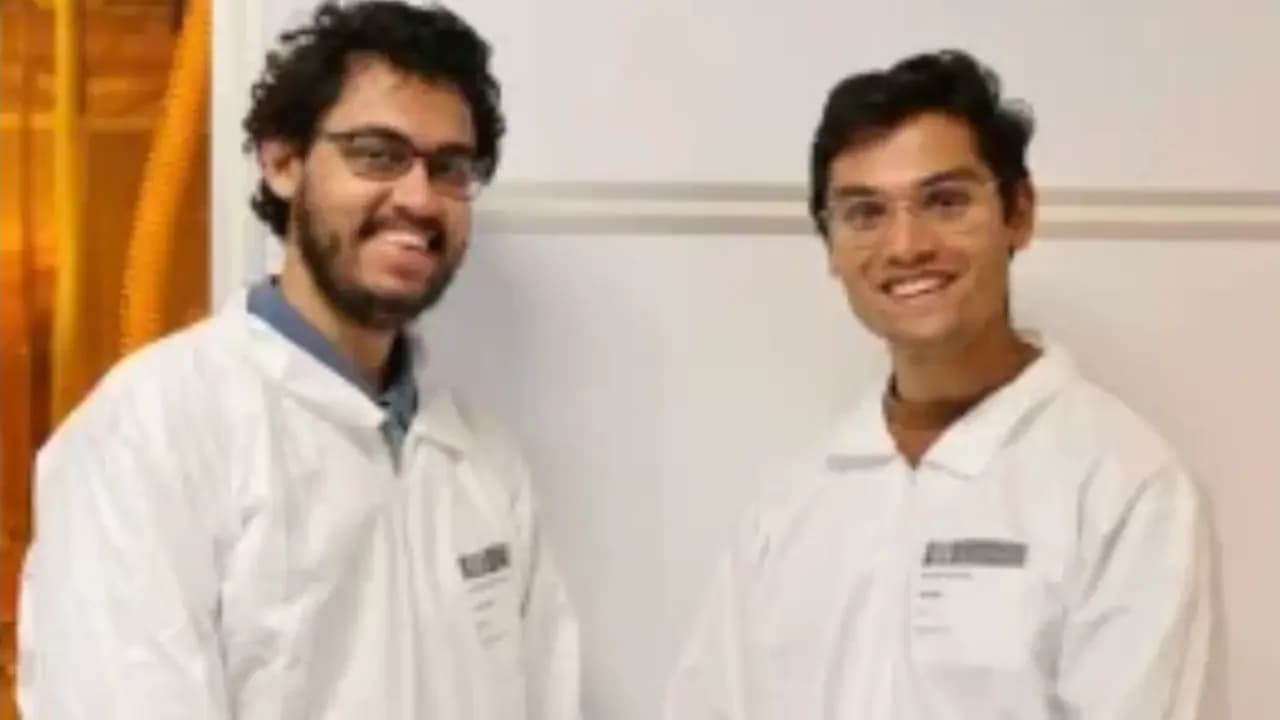
Discovered Materials, an IIT Madras alumni-founded startup, has successfully raised $9 million (approximately ₹85 crore) in seed funding to develop AI agents for accelerating semiconductor material discovery. According to reports from TechCrunch, the funding round was led by Lightspeed India Partners with participation from Peak XV Partners and angel investors including Y Combinator co-founder Paul Graham, Gokul Rajaram, and Thariq Shihipar. The company was built during Y Combinator's Spring 2026 batch in San Francisco, where co-founders Akash Ramdas and Advaith Sridhar first met over a decade ago as students at IIT Madras.
The company's AI agents are designed to compress months of interdisciplinary research into days, enabling faster breakthroughs in chip performance while reducing power consumption and heat generation. As reported by TechCrunch, Discovered Materials runs swarms of AI agents built on Anthropic models to generate thousands of material candidates per day, versus roughly 20 per day by a human PhD researcher. The startup has already developed new thermal materials that match the performance of products that world's largest chemical companies took years to develop within just three months. The company released examples of hundreds of newly identified materials on August 10, along with a 'Material Discovery Bench' tool designed to measure how well frontier AI models handle the discovery task. Co-founder Advaith Sridhar hopes to have new materials worth patenting within the next year, as reported by TechCrunch.
Co-founders Advaith Sridhar and Akash Ramdas met over a decade ago as students at IIT Madras. According to TechCrunch, Sridhar holds a PhD in Materials Science from Stanford University and has spent the last 11 years researching new materials for semiconductor chips, with his work on new nanoscale interconnects being Stanford Engineering's most popular story of 2025. The materials he discovered have been adopted into the technology roadmaps of Intel and TSMC. Ramdas studied AI at Carnegie Mellon and was a research engineer building video models and agents at Persona AI (acquired) and Luma Labs. The company has built a two-stage pipeline: Anthropic-based AI agents generate candidate material leads, and separately trained foundational physics models run simulations to check whether those candidates hold real promise. During their three-month Y Combinator batch, the company simulated, synthesized, and tested thermal interface materials that match commercial products guarded as trade secrets for over 20 years. Sridhar explained that while he was doing maybe 20 guesses a day during his PhD, the company's AI agents now run thousands of guesses a day by having these agents run 24/7 on the cloud.
The funding will be used to expand the team and lab, and scale the company's AI research agents across simulation, synthesis and experimental validation. As reported by TechCrunch, Hemant Mohapatra from Lightspeed India Partners highlighted that while AI creates unprecedented demand for better chips, progress is increasingly constrained by how slowly new materials reach production. The company also released Material Discovery Bench, an open-source benchmark built with experts from IBM, IMEC, Stanford, and Cambridge to measure how well AI models perform on real-world semiconductor materials problems. The broader market for AI in materials discovery was valued at $2 billion in 2025 and is projected to grow quickly over the next decade as computational tools and materials databases improve. The global market for thermal management products for semiconductor chips was valued at around $10.5 billion in 2025 and is expected to nearly double by 2034.
The company's commercial plan is to patent either the use of promising materials in GPUs or the fabrication process for making chips out of them, then license those patents to chipmakers. According to TechCrunch, Discovered Materials has discovered materials matching the thermal properties of substances major chipmakers currently use, though it has not disclosed technical details. The startup is differentiating by staying narrow — the thermal properties of semiconductor materials, and specifically materials that could reduce heat in GPUs and other AI accelerators, which is where the electricity bill in a data center actually lands. Companies like MatNex, SandboxAQ, and CuspAI have launched similar efforts, but Discovered Materials is betting that a laser-focus on the thermal problems of semiconductor materials is the path to success. However, as noted by TechCrunch, AI-discovered materials and drugs have yet to produce a commercial hit at scale, with Insilico Medicine's Renterosib becoming the first drug discovered with generative AI to reach a Phase II clinical trial.