Databricks has achieved a $190 billion valuation following the closure of a $5 billion funding round, as reported by Forbes. The company's annualised revenue run rate has crossed $7 billion, with revenue growing more than 80% year-on-year in the second quarter. The funding round was led by Coatue and included participation from Blackstone, MGX, T. Rowe Price, and new investor Sixth Street Growth. This valuation represents an increase from the $188 billion figure announced in July, demonstrating continued investor confidence in the data and AI company.
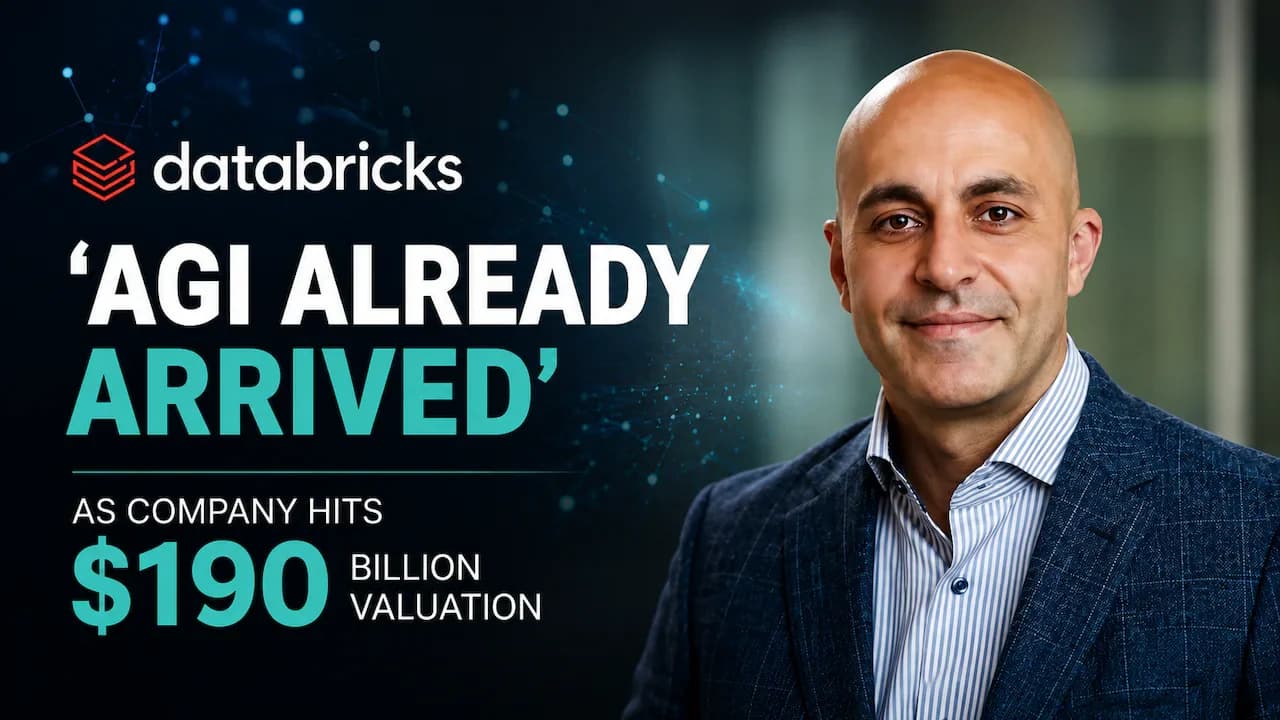
CEO Ali Ghodsi has claimed that artificial general intelligence (AGI) has already arrived, according to the definition the technology industry used before 2022. According to Forbes, Ghodsi's definition is narrower than the increasingly ambitious interpretation now used across the AI industry. He argues that AI effectively meets the older definition of AGI if it can perform intellectual tasks humans perform and is smarter than most people most of the time. Ghodsi distinguishes this from a more extreme vision of superintelligence, stating that if that is the definition, then of course it is not here.
The new capital will accelerate Databricks' AI strategy, including investments in Unity AI Gateway, Genie, and Lakebase, as reported by Forbes. Unity AI Gateway is designed to help businesses route AI workloads across different models while controlling costs. Genie aims to connect AI with enterprise data and context, while Lakebase provides a serverless Postgres database designed for AI-agent applications. The strategy reflects growing enterprise concerns about the cost of running AI at scale, as companies increasingly seek cost-effective solutions rather than automatically using the most powerful models.
Despite its soaring valuation, Databricks is unlikely to rush toward an IPO, with CEO Ali Ghodsi stating the company is 'very unlikely' to go public before Anthropic or OpenAI, according to Forbes. Ghodsi cited market volatility and the changing technology landscape as factors influencing this decision. The $190 billion valuation underscores investors' confidence that the next phase of enterprise AI will depend not only on smarter models but also on the data and infrastructure needed to deploy them inside businesses.