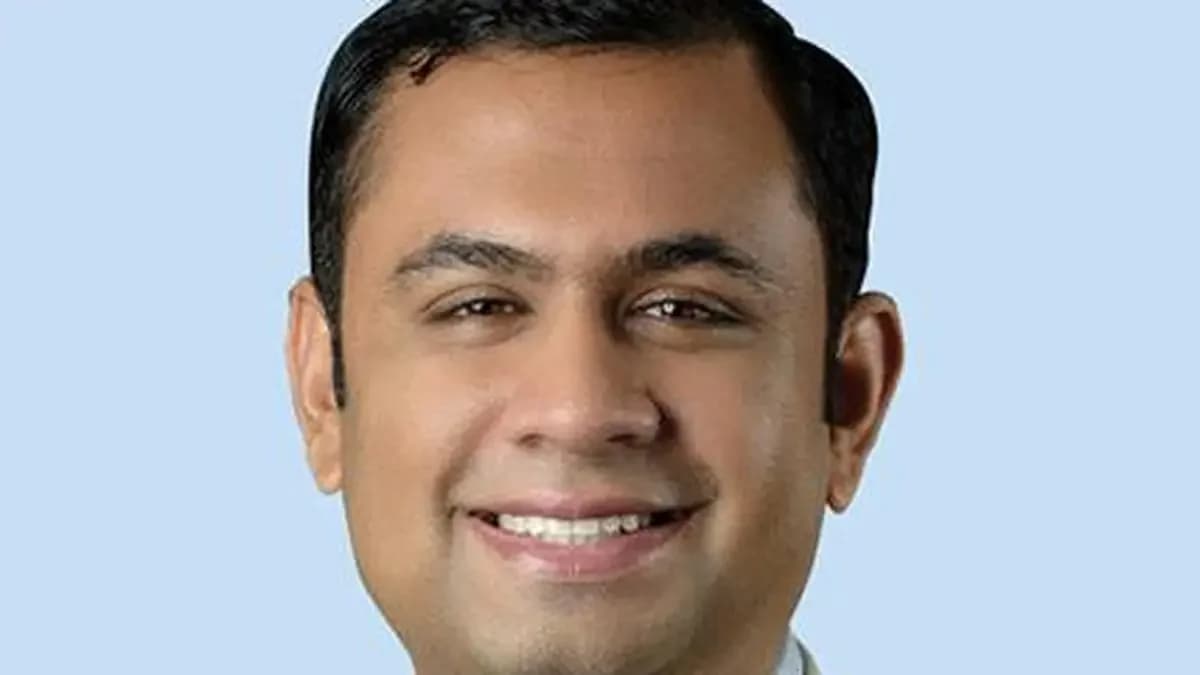
Razorpay CEO Harshil Mathur envisions India's fintech ecosystem producing multiple $100 billion companies by leveraging its expertise in real-time payments for global markets. Speaking at the Global Fintech Fest 2026 in Mumbai, Mathur emphasized that India's leadership in real-time payments has given its fintech companies a significant head start as emerging markets build their own instant payment ecosystems. He noted that 49% of all real-time payments globally are happening through India, but stressed that the scale of global opportunity is substantially larger than what can be captured by focusing exclusively on India. According to Mathur, companies that have solved complex use cases and built deep product complexity required to serve India's market complexity are well-positioned to serve similar markets globally, particularly in Southeast Asia, Malaysia, Singapore and Thailand.
Razorpay CEO Harshil Mathur highlighted that artificial intelligence will significantly reduce personalisation costs within the financial technology sector, creating new market opportunities for startups. According to reports from Rediff Money, Mathur explained that AI technology enables companies to create applications in 20 languages on day one, eliminating the previous high engineering costs and effort required for multilingual platforms. The CEO identified specific market niches where AI-led personalisation could drive innovation, including Gen Z payments, high net-worth individual (HNI) wealth management, and multilingual platforms. Mathur noted that any new technology creates both opportunities and risks, emphasizing that the outcome should not be to slow down deployment but to accelerate defensive measures as well.

Mathur highlighted Razorpay's Vulkan AI model as a major opportunity for fintech, trained using around 4 billion transactions with transformer technology applied to payment data. Early testing has shown impressive results with 8-10% increase in payment success rates, a fourfold reduction in fraud, and a 40% increase in personalised checkouts. The model could eventually be used across multiple payments use cases, including fraud detection, transaction success and personalisation. As per ETBFSI, Mathur stressed that rapid AI adoption is forcing companies to rethink cybersecurity, noting that companies can now deploy AI models across infrastructure to identify vulnerabilities before exploitation.
Perfios Group CEO Nitin Chugh envisions a future where bank accounts themselves become AI agents that understand finances and offer recommendations. Speaking at the Global Fintech Fest 2026 in Mumbai, Chugh explained that agentic AI could potentially prevent customers from making poor financial decisions through advanced learning capabilities. The technology promises to transform processes like home loans, with 15-20 AI agents coordinating together to complete what currently takes two days in just 5-10 minutes. Under this model, relationship managers would handle customer conversations while AI agents work in the background on operational and decisioning tasks. Chugh noted that banks will need to evolve controls and cybersecurity measures to handle AI systems that can learn, adapt and behave independently, creating an AI-versus-AI security race where financial institutions must defend against sophisticated AI-powered attackers.
Mathur pointed to Brazil's Pix as an example of another market where real-time payments have scaled rapidly by addressing problems similar to those faced by India. He argued that Western companies that have historically specialised in card payments may not necessarily have the same advantage in emerging markets moving towards real-time payment architectures. The opportunity will depend not only on technology but also on policy and regulatory support and collaboration among private players. Mathur noted that several emerging economies are now building instant payment systems while card penetration remains relatively limited, creating conditions similar to those that helped UPI take off in India. He emphasized that Indian fintechs have an advantage because they have already operated in one of the world's most complex payment markets, where multiple instruments, languages, customer segments and use cases coexist at scale.