Freehand, an AI startup that manages supply-chain spending for major companies including Meta, Unilever, Johnson & Johnson, Dunkin', Pfizer and Cardinal Health, has raised $75 million in a Series B funding round co-led by Battery Ventures and NewRoad Capital Partners. The round includes participation from PSP Growth, chaired by former U.S. Commerce Secretary Penny Pritzker, and Nexus Venture Partners, bringing the company's total funding to $100 million since its February 2024 founding. The funding follows Freehand's recent emergence from stealth with global deployments at these Fortune 500 companies. According to reports from Business Standard, this represents a significant increase from the company's $25 million Series A raised in March 2024, marking substantial growth in investor confidence. The company does not disclose its valuation, but CEO and co-founder Nitin Jayakrishnan says the latest round marks a significant step up from the startup's previous funding round. Battery Ventures general partner Dharmesh Thakker will join the startup's board as part of the transaction.
American companies spend more than $20 trillion annually on raw materials, logistics, data centers and services that power the US economy, according to the Bureau of Economic Analysis. As reported by Business Standard, enterprises currently spend $16 billion annually on supply-chain software and another $348 billion hiring people to perform tasks that software cannot handle. Freehand's AI agents replace legacy software and outsourced labor with autonomous teams that negotiate rates, enforce contracts, manage suppliers, process payments and reconcile data within enterprise systems. The platform verifies bills, tracks operational milestones and handles vendor negotiations, with the aim of reducing dependence on third-party offshore outsourcing and freeing internal staff for higher-value work. The fundraising comes as tariffs, taxes and immigration policy put pressure on outsourcing models that have supported supply chains for decades. According to Jayakrishnan, technology spending represents a rounding error at just over $20 billion, indicating AI has enormous room to drive efficiency in mission-critical but repetitive workflows like freight audits and payments.
Across early deployments, customers have achieved significant improvements in operational efficiency. According to Business Standard, organizations have recovered 5-10% of spending in complex categories, completed workflows 5-7 times faster, and reduced procure-to-pay cycles by more than 70%. These improvements have enabled companies to redeploy employees to higher-value work while reducing traditional outsourcing and business process outsourcing contracts. Freehand currently serves approximately 50 customers, including Meta, Johnson & Johnson, Pfizer and Cardinal Health, and autonomously processes billions of dollars in payments across 60-70 countries and hundreds of currencies. The platform's autonomous approach is particularly valuable as tariffs, taxes and immigration policy create additional pressure on traditional outsourcing models. Jayakrishnan notes that Freehand represents the first global rollout of AI deployments at scale that impacts daily transactions and daily operations at global scale.
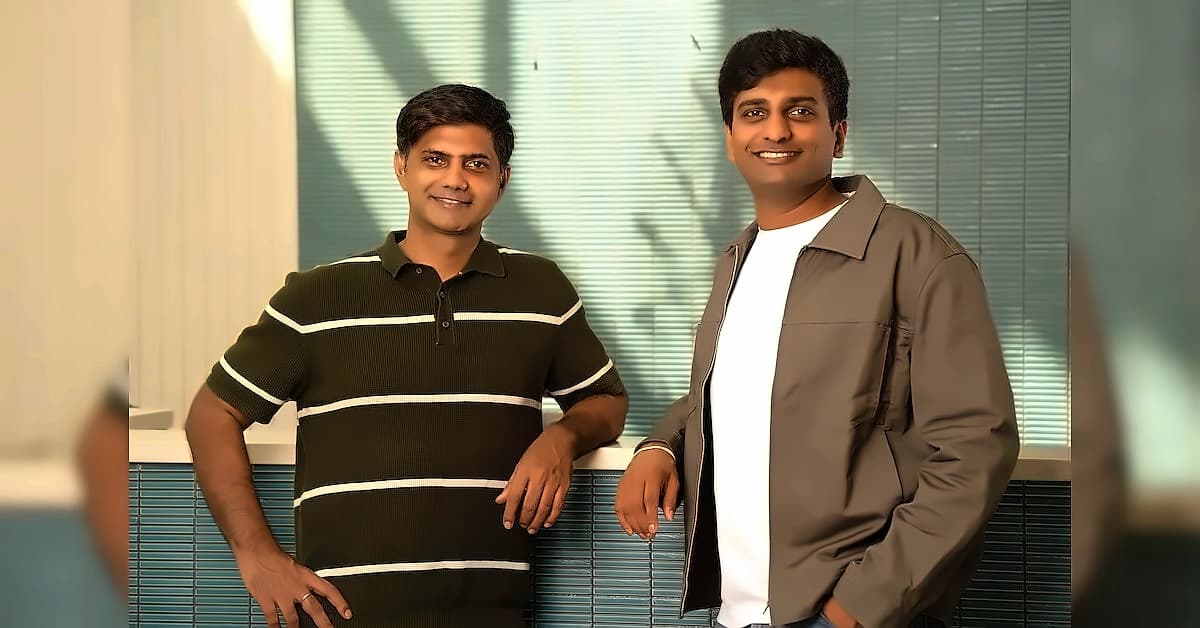
Freehand's central intellectual property is its Category Context Graph, which captures every decision, transaction and exception across a spending category. As reported by Business Standard, this technology unifies unstructured data from documents and communication channels with structured data in enterprise systems, providing agents with situational knowledge equivalent to a tenured supply-chain expert. The graph creates a compounding intelligence effect where each decision improves accuracy, context and autonomy for subsequent decisions. The company, founded by Nitin Jayakrishnan and Abhijeet Manohar in February 2024, is focused entirely on agentic AI for enterprise supply chain operations, building on their previous experience co-founding Pando, a SaaS transportation management system. In early 2024, they stepped away from operating roles at Pando and moved to board positions to launch Freehand as an independent business. In early 2026, Pando was sold to a strategic buyer, marking a complete shareholder exit for the founders.
According to Business Standard, Freehand's co-founder and CEO Nitin Jayakrishnan previously built and sold Pando, an enterprise software-as-a-service platform for logistics. The company's approach focuses on replacing outsourced labor and legacy software used for auditing and paying invoices across supply chains. Battery Ventures general partner Dharmesh Thakker noted that Freehand represents a fundamental shift from software that assists people to autonomous teams that own outcomes, positioning the company to reshape hundreds of billions in software and labor spending. The fundraising comes during a broader recovery in funding for supply chain and logistics startups, with Crunchbase data showing the sector has raised $6.2 billion in the first half of 2024 across 350 deals. This strong sector recovery puts 2026 on track to be the strongest year since 2022 for supply chain and logistics funding. Thakker's firm did deep research on supply chain AI across global offices and found Freehand to stand out on multiple fronts, including founder market-fit, focus on Fortune 500 shippers rather than intermediaries, and clear measurable business outcomes. As per The Financial Times, Freehand sits in a crowded field of startups building agents that do enterprise work, with competitors like Harvey raising $200 million at an $11 billion valuation, Norm AI securing $120 million at a $1.2 billion valuation, and Abridge raising $300 million at a $5.3 billion valuation.