Union Minister for Information & Broadcasting and Electronics & Information Ashwini Vaishnaw revealed that nearly 80% of new startups are now providing AI-based solutions. Speaking to Morgan Stanley's Head of India Research and Chief India Equity Strategist Ridham Desai, Vaishnaw emphasized that India's strength lies in applying AI technology across industries rather than just developing the technology itself. According to reports from NDTV Profit, the minister highlighted how the country's IT industry excels at understanding enterprise operating systems and providing customized AI solutions based on specific business requirements. "Our biggest strength is in the applications layer. The biggest strength of our IT industry is to go into any enterprise, understand the enterprise, understand the operating system of the enterprise and provide a solution based on that operating system," Vaishnaw stated, rejecting suggestions that India is falling behind in the AI race.
India has emerged as a significant player in the global semiconductor industry, with the country now accounting for 20% of the global chip-design workforce. As reported by NDTV Profit, Vaishnaw noted that this success follows the same methodical approach used in electronics manufacturing, starting with finished product assembly and progressing through modules, submodules, and now reaching component levels. The government is further strengthening this capability by providing advanced chip-design tools to students across 318 universities, enabling them to design chips using tools from companies like Synopsys and Cadence, and see their designs fabricated, assembled, and tested at semiconductor laboratories. "In the case of chip manufacturing, we focused a lot on the design capabilities, where we are very strong already," Vaishnaw emphasized, highlighting how engineers from India are designing products for nearly the entire world.
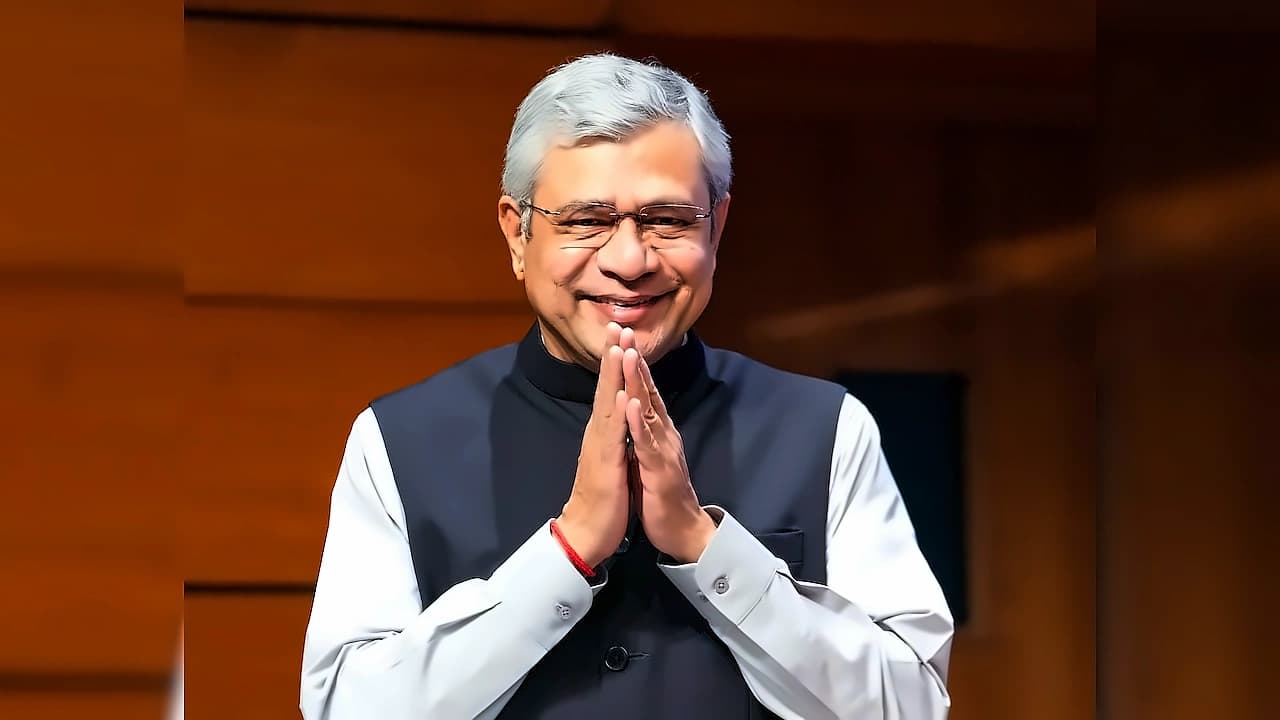
India's data center capabilities provide a significant competitive advantage, with the country having more than half of its power generation capacity from clean power sources. According to reports from NDTV Profit, approximately 250 gigawatts comes from renewable energy sources, positioning India favorably for large-scale data center operations. Vaishnaw highlighted that this clean energy infrastructure, combined with the country's strong copyright and IP protection system, creates a robust foundation for technology-intensive industries. "The second layer in which we are playing well is the data center. We are one of those few countries which have more than half the power generation capacities from clean power," he noted.
India's electronics manufacturing sector has experienced remarkable transformation, with mobile phones rising from 168th position on India's export list a decade ago to number one today. As reported by NDTV Profit, Vaishnaw attributed this success to a methodical approach that started with finished product assembly and progressed through modules, submodules, and now components. The minister emphasized that this same strategy is being applied to semiconductors, with India's design capabilities extending to products for nearly the entire world, providing templates for multiple sectors including chip manufacturing. "Because of this strategy, in a period of last decade, we have been able to establish ourselves as an important electronics manufacturing destination," Vaishnaw explained, noting that the same model is now being applied to semiconductors.
Vaishnaw rejected suggestions that India is falling behind in the AI race, emphasizing the country's comprehensive approach to technology adoption. According to reports from NDTV Profit, he noted that India's strength lies in its ability to apply AI across industries, expand data-center capacity, and utilize its pool of chip-design talent. The minister expressed confidence in India's positioning for investors seeking supply chain diversification away from China, highlighting the country as one of the most significant manufacturing stories in the emerging world for semiconductor development. "For investors watching supply chain diversification away from China, this is one of the most significant manufacturing stories in the emerging world," Vaishnaw concluded, emphasizing India's strong copyright and IP right protection system that has earned global trust.