An 18-year-old entrepreneur from Ahmedabad has launched Micronex, a startup targeting Gujarat's massive ₹1.4 lakh crore semiconductor ecosystem. According to reports from ANI, Rehan Mansuri, who hails from a business family involved in plastic waste recycling with seven recycling units across India, has chosen the hardware-intensive semiconductor sector over AI and digital technology opportunities. The startup will manufacture lead frames using copper alloy from the Sanand Industrial Estate with an initial investment of ₹80 crore. As Gujarat's semiconductor ecosystem gains momentum under Chief Minister Bhupendra Patel's leadership, the sector is creating new opportunities for the state's youth to enter and contribute to this emerging industry.
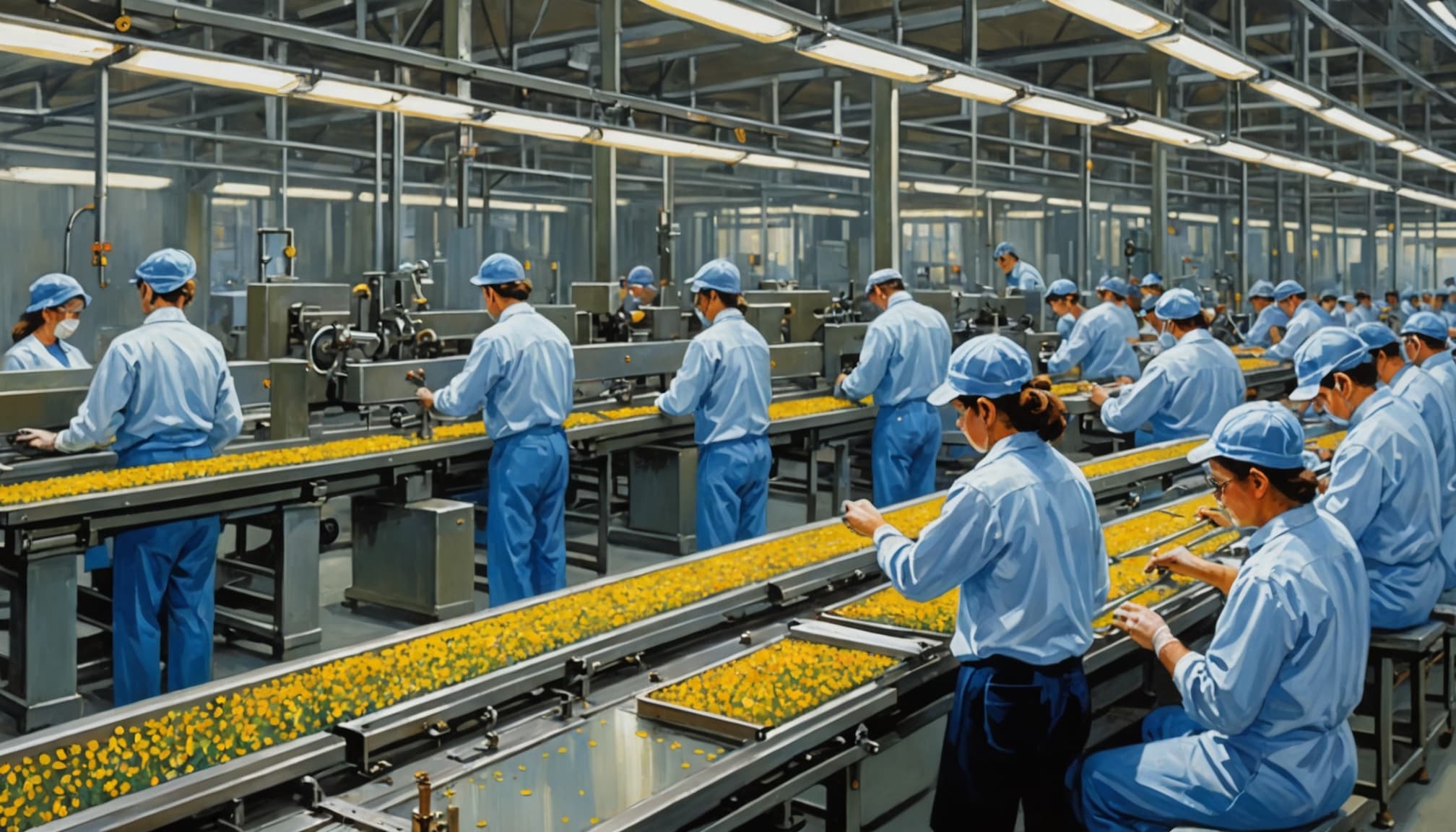
As reported by ANI, lead frames are ultra-thin metal frames ranging from 0.1 mm to 0.25 mm thick - approximately the thickness of an A4 sheet. These critical components serve as the structural backbone for semiconductor chips, providing robust support, heat dissipation, and protection during manufacturing. Crucially, semiconductor chips cannot connect to circuit boards without being mounted on lead frames, which are linked using gold and copper wires thinner than a human hair. Construction work on the Micronex factory has already begun, with production targeted to commence by May 2027.
According to ANI reports, the first phase of the Micronex factory will have an annual production capacity of 50 crore lead frame units. Once operational, the facility is expected to provide direct employment to around 250 young people. Initially, the startup will focus on supplying the power electronics and automotive sectors, with plans to expand into consumer electronics and telecommunications as production scales. The startup has already secured early industry backing, signing a business partnership MoU with Kaynes Semicon during 'SEMICON India 2026' held in New Delhi from September 17 to 19. As per the latest government statement, construction of the manufacturing facility has already begun and the project is expected to generate direct employment for around 250 people once operational.
As reported by ANI, Rehan outlined a pragmatic approach to competing with low-cost Chinese products and established international companies. He emphasized focusing on establishing technical and quality standards rather than direct competition at this stage. "Right now, we are not looking at competing with global companies. At this time, we are focusing on establishing the necessary technical and quality standards," Rehan stated. The startup's location in Sanand provides advantages including faster logistics, direct collaboration with manufacturers on tooling and design modifications, and reduced import dependency. Micronex plans to submit a formal proposal under the India Semiconductor Mission 2.0 and aims to supply products of global quality locally, thereby boosting local manufacturing.
According to ANI reports, Gujarat has attracted approximately ₹1.4 lakh crore in semiconductor investments, hosting 6 of the 12 semiconductor projects currently approved by the Government of India. The state is heavily developing its skilled workforce to support startups like Micronex, including an ATMP training centre developed by PDEU in collaboration with Micron Technology, a ChipIN extension and Centre of Excellence at GTU for VLSI design, India's first UHP welding training programme at Dholera ITI, and a SAMARTH Centre at IIT Gandhinagar for advanced semiconductor manufacturing research and training. Under the leadership of Chief Minister Bhupendra Patel, Gujarat's semiconductor push has extended beyond attracting investments to developing the skilled workforce and research ecosystem needed to support the sector.