
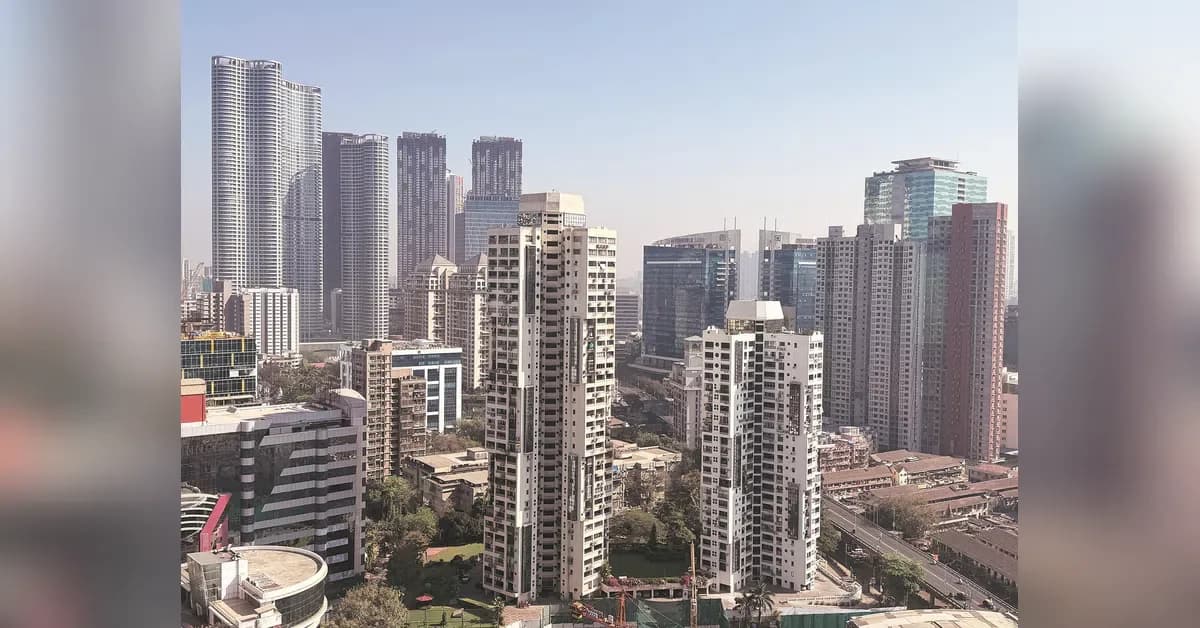
India's rental housing market showed early signs of cooling in the January–March 2026 quarter as a sharp rise in fresh housing supply began easing pressure on rents across several major cities. According to the latest Magicbricks Rental Index Report, rental supply across India jumped 9% quarter-on-quarter and 12% year-on-year, significantly outpacing the modest 0.6% QoQ rise in tenant demand. While average rents still climbed 14% annually, the report indicates that several high-growth markets such as Gurugram and Mumbai are beginning to see slower rental appreciation as new inventory enters the market. This supply-demand imbalance comes as India's $4 trillion consumer-led economy experiences broader economic slowdown, with firms already laying off staff and hiring slowing across sectors.
Bengaluru emerged as the strongest-performing rental market during the quarter, recording a 5.2% QoQ increase in demand and an 8.6% QoQ rise in rents, supported by strong activity across key IT corridors. As reported by Magicbricks, Bengaluru continued to outperform with an 8.6% quarterly jump in rents driven by strong IT-led demand, while Hyderabad also witnessed healthy growth with rents increasing 15% YoY, backed by sustained employment growth and infrastructure expansion. The Knight Frank Wealth Report 2026 adds that Bengaluru recorded 9.4% growth in luxury house prices, securing a spot in the top 10 fastest-growing markets globally, driven by rapid expansion of local ultra-high-net-worth individuals.
East Bangalore has emerged as a standout performer in the city's real estate market over the past five years (2019-2024), consistently outperforming other regions due to its transformation from a purely IT-centric hub into a self-sustaining residential and commercial ecosystem. The average annual growth rate for real estate investment in this corridor has ranged between 8% to 12%, with specific micro-markets seeing much higher spikes. Whitefield & ITPL recorded 45-55% cumulative growth, while Varthur/Gunjur achieved 60-70% cumulative growth due to proximity to the Outer Ring Road and relatively lower entry prices. Sarjapur Road saw 50-60% cumulative growth, and Budigere Cross recorded 40-50% cumulative growth driven by improved connectivity to the Airport and Hoskote.
The ₹10,000–20,000 rental segment continued to dominate demand nationally with a 36% share, followed by ₹20,000–30,000 at 22%. According to the Magicbricks report, 2 BHK homes remained the most preferred configuration among tenants, accounting for 45% of overall demand, while semi-furnished homes dominated both demand and supply. Mumbai continued to remain India's most expensive rental market, while Greater Noida, Ahmedabad, and Noida remained among the most affordable rental destinations.
In contrast, several NCR and MMR markets witnessed softer rental momentum as inventory additions outpaced incremental demand. Gurugram recorded a 10.4% QoQ increase in supply while rents declined by 1.1% QoQ, and Mumbai witnessed an 11% QoQ rise in supply even as demand moderated by 1.8% QoQ. Peripheral corridors across major cities emerged as key supply growth hubs, with Gurugram seeing fresh inventory additions on Southern Peripheral Road, Dwarka Expressway, and New Gurgaon, while MMR recorded strong supply growth in Taloja, Kharghar, Mira-Bhayandar, and Panvel.
The report highlighted strong rental yield performance across major cities, with Chennai recording 4.87%, Kolkata 4.81%, Bengaluru 4.19%, and Hyderabad 4.06%, indicating healthy investor returns and sustained tenant demand. According to Prasun Kumar, CMO of Magicbricks, India's rental market is transitioning towards a more stable and balanced phase after a prolonged period of demand-led growth, with cities such as Bengaluru and Hyderabad continuing to witness strong rental momentum backed by employment growth and sustained absorption.