Gautam Adani and family have emerged as India's richest real estate entrepreneurs for the first time, overtaking long-time leader Rajiv Singh and family, the owners of DLF, according to the latest GROHE-Hurun India Real Estate 150 List 2026. The ranking reflects a changing balance of power in India's property sector, where diversified conglomerates are increasingly challenging traditional real estate developers. The Adani family secured the top position with an estimated real estate wealth of around ₹90,400 crore, up 73% year-on-year, while Singh and family slipped to second position with wealth of ₹90,200 crore, suffering a 29% wealth erosion due to a broader market correction. As per Hurun India, the report noted that "the fact that newcomers, not incumbents, held the line shows where the sector's momentum has moved". The gains propelled Gautam Adani and family to the top of the GROHE-Hurun India Real Estate Rich List for the first time, with a wealth of ₹90,400 crore, up 73% YoY. As reported by Business Standard, the family has full ownership of the real estate business, with the Adani Group's move to consolidate real estate activities under one entity being a key factor in this achievement.
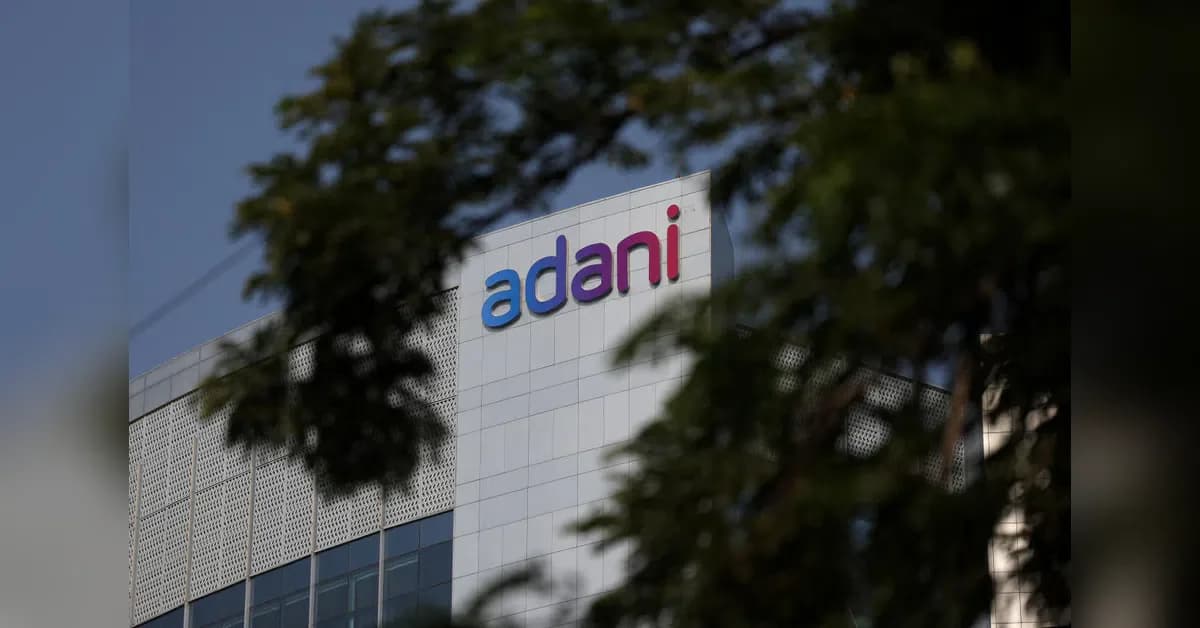
Adani Properties emerged as the largest value creator in the 2026 GROHE-Hurun India Real Estate 150, adding ₹38,000 crore in valuation to climb four places and become India's fourth-most valuable real estate company. According to reports from The Times of India, the Ahmedabad-headquartered firm is India's most valuable unlisted developer, led by Pranav Adani and Rajesh Adani. The company continues to be the most valuable unlisted real estate company in India, with experts at Hurun attributing the jump mainly to the Adani Group's move to consolidate its real estate activities under one entity — Adani Properties. While DLF continues to dominate India's listed residential real estate sector by market capitalisation, Adani's rise reflects the increasing scale of its real-estate portfolio spread across residential, commercial, mixed-use developments and large urban infrastructure projects. Adani Properties was the biggest value creator during the year, adding ₹38,000 crore to reach a valuation of ₹90,400 crore. As per Hurun India, "India's richest (person), Gautam Adani, could be building India's largest real estate business".
The gains propelled Gautam Adani and family to the top of the GROHE-Hurun India Real Estate Rich List for the first time, with a wealth of ₹90,400 crore, up 73% YoY. As reported by Business Standard, the family has full ownership of the real estate business, with the Adani Group's move to consolidate real estate activities under one entity being a key factor in this achievement. Meanwhile, Gurugram-based DLF, however, retained the top spot with a valuation of just under ₹1.5 lakh crore, despite a 29.3% decline over the year. It was followed by Mumbai-based Lodha Developers, led by Abhishek Lodha, with a valuation of ₹93,700 crore, 32.2% lower than previous year. Mangal Prabhat Lodha and family hold the third rank with ₹67,700 crore in wealth, a 27 percent decrease over the year and a drop of one place. Based in Mumbai, they lead Lodha Developers, which has maintained sales growth and national expansion despite the broader market correction.
The combined valuation of the 151 companies rose just 2% YoY to ₹16.5 trillion, the slowest growth since the list's inception nine years ago. As reported by Business Standard, this compares with 14% growth in 2025. The subdued performance coincided with a 20% decline in the BSE Realty Index due to geopolitical tensions and concerns around artificial intelligence, particularly affecting the residential segment. Only 31 of the 151 companies gained value this year, while 74 declined. Despite a 29% decline in valuation to ₹1.47 lakh crore, DLF retained its position as India's most valuable real estate company. As per Hurun India, "the GROHE-Hurun India Real Estate 150 tells the story of a year that cooled rather than cracked". Lodha Developers ranked second with a valuation of ₹93,700 crore, followed by Indian Hotels Company at ₹93,300 crore.
Residential real estate dominated the 2026 GROHE-Hurun India Real Estate 150, accounting for 65% of the companies, down 2% YoY. According to Business Standard, hospitality accounted for 16% of the list, up 1% YoY, and commercial at 13%, down 1% YoY. The cumulative value added by the companies on the list stood at ₹34,300 crore, a sharp decline from ₹1.4 trillion added in the 2025 edition. Among existing companies, Adani Properties and Prism (OYO) accounted for roughly two-thirds of all value gained, with Prism (OYO) entering the top five after more than doubling its valuation to ₹67,200 crore. Phoenix Mills secured sixth place at ₹63,300 crore, Oberoi Realty seventh at ₹62,700 crore, and K Raheja Corp eighth at ₹61,700 crore. Prism (OYO) was the second-largest gainer, adding ₹34,700 crore to ₹67,200 crore, while K Raheja Corp also broke into the top 10 after climbing five places to eighth.
The combined valuation of the 151 companies is equivalent to Kuwait's gross domestic product and more than the combined GDP of Luxembourg and Bahrain. As reported by Business Standard, listed firms accounted for 71% of the list's value. Mumbai remains India's real estate capital, with 50 companies worth ₹7.32 trillion, followed by New Delhi (19), and Gurugram and Bengaluru (18 each). Only three companies on the list are led by women — Jyotsna Suri of The Lalit (₹3,000 crore), Priya Paul of Apeejay Surrendra Park Hotels (₹2,500 crore), and Uma Agarwal of Agarwal Associates Group (₹1,700 crore). The assessment also highlighted the increasing institutionalisation of India's real estate sector. Listed companies now account for 73 of the 151 companies on the list, up from 48 two years ago, contributing 71% of the cumulative value. Five REITs featured in the rankings, led by debutant Knowledge Realty Trust, while companies led by professional CEOs rather than promoter families increased to 46 from 11 in 2021, accounting for ₹8.9 lakh crore, or 54% of the list's value. The latest ranking underscores the growing convergence between infrastructure and real estate, with large conglomerates leveraging integrated townships, commercial developments, logistics parks and urban infrastructure projects to create long-term value.