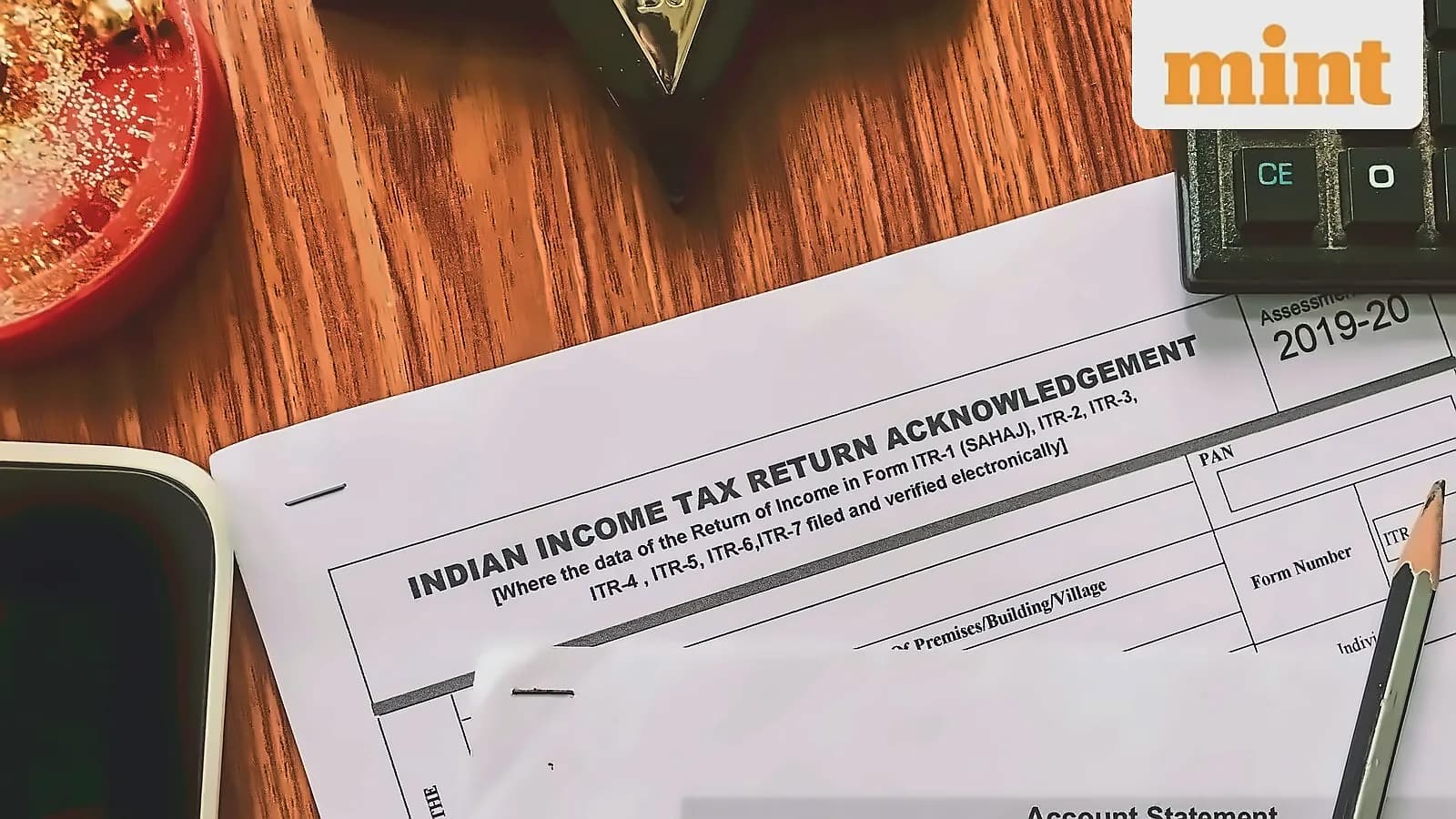
While the last date to file income tax returns for FY 2025-26 (AY 2026-27) is July 31, 2026, tax experts recommend waiting until mid-June to file ITR for several crucial reasons. According to OP Yadav, former Principal Commissioner of Income Tax, income-tax filing has become increasingly dependent on data reconciliation over the years. Tax returns are no longer assessed solely on what taxpayers report, but are cross-verified against data submitted by employers, banks, mutual funds, brokers, registrars, financial institutions and other reporting entities through TDS filings and Statement of Financial Transactions (SFT) reporting. This cross-verification process ensures accurate tax assessment and reduces the risk of data mismatches that could lead to complications during the filing process. Important tax documents like Form 16, Form 26AS, and the annual information statement (AIS) are not always fully updated in the first few weeks of the assessment cycle, making early filing particularly risky for taxpayers who rush to submit returns before these documents are completely populated. The tax department has now released the ITR-1, ITR-2 and ITR-4 utilities, but filing too soon can trigger mismatches, revised returns and refund delays as financial information continues updating from multiple external sources.
Form 16 is a certificate issued by employers that contains details of the Tax Deducted at Source (TDS) from an employee's salary during a financial year. It is one of the most important documents for salaried taxpayers as it helps verify the TDS deducted by the employer and enables accurate filing of income tax returns. Form 16 consists of two parts: Part A contains basic information including names and addresses of employer and employee, PAN details, and TDS deposited with the government, while Part B provides detailed salary and tax computation including gross salary, exempt allowances, taxable income, and estimated tax liability. Under income tax rules, employers are required to issue Form 16 by 15 June following the end of the financial year, making this the critical date for salaried taxpayers to file their returns accurately. Financial institutions continue updating interest income, dividend earnings, and tax deducted at source (TDS) details into AIS and Form 26AS through May, with the last date for financial institutions to file their annual specified financial statement return being May 31. This data is auto-populated into AIS but may take some days to reflect correctly, while certain income adjustments, such as capital gains statements from brokers or corrected bank interest certificates may arrive only after early June.
For most salaried employees, filing an Income Tax Return (ITR) is no longer as complicated as it once was. With pre-filled forms, automatic AIS/TDS data, and user-friendly e-filing portals, many taxpayers can successfully file their returns themselves in less than an hour. According to recent analysis, DIY filing is suitable for salaried employees with a single employer who have Form 16 available, no major investments beyond standard deductions, and basic bank interest income. The key advantage is that most information is already available in Form 16 and pre-filled in the ITR portal, making the chances of making costly mistakes relatively low. Typical profiles include employees with one salary income, Form 16 available, no major investments beyond standard deductions, interest income from savings account or FD, and no capital gains. Potential savings can reach ₹500-₹3,000 in professional fees for returns that may take only 20-30 minutes to complete. However, submitting returns too early, especially before June 15, can backfire for some taxpayers, especially salaried and pensioners, as they may miss out on key details that can later trigger income tax notices. Even in such cases, blindly relying on pre-filled data is not wise, as pre-filled information is a convenience feature, not a guarantee of completeness.

While House Rent Allowance (HRA) is generally available only to salaried employees who receive it as part of their salary package, non-salaried individuals such as self-employed professionals, freelancers, and business owners can claim tax relief on rent paid under Section 80GG of the Income Tax Act. To qualify, individuals must not have earned HRA, pay rent for residential accommodation, and neither they nor their spouse, minor child, or HUF should own a residential house in the city where they reside or work. The deduction is capped at ₹60,000 per annum under the formula of the lowest between ₹5,000 per month, 25% of total income before deduction, or actual rent less 10% of income. Form 10BA filing is mandatory for claiming this deduction, which contains a declaration confirming satisfaction of prescribed conditions and must be filed online before or along with the income-tax return. Taxpayers should maintain adequate documentary evidence including rent agreement, receipts, bank transfer proof, and landlord PAN where annual rent exceeds ₹1 lakh.
There are several situations where paying a Chartered Accountant (CA) can save far more money than the professional fee. When income comes from multiple sources such as salary plus freelance work, rental income, or consulting assignments, a professional can ensure all income is reported correctly and prevent notices arising from mismatches. Active trading in stocks, F&O, or cryptocurrencies presents significant complications including short-term capital gains, tax-loss harvesting, and futures calculations. Real estate taxation becomes complicated when owning multiple properties with issues like self-occupied versus let-out properties, housing loan interest deductions, and capital gains from property sales. Freelancers and business owners benefit from professional help with business expense classification, depreciation calculations, and GST reconciliation. Foreign income or overseas assets require extensive disclosure requirements, and changing jobs during the year can create complications with dual Form 16s and different HRA calculations. Filing a revised return can be cumbersome, as a revision would require another round of careful tracking of changes, making accurate initial filing even more crucial. A surprisingly large number of tax notices arise not because of tax evasion, but because of small mismatches and omissions - an unreported savings account interest entry of a few thousand rupees, a missed FD interest figure, an incorrect TDS credit, or a brokerage transaction that appears later in AIS.
Skipping ITR when required invites significant penalties under Section 234F, with late filing attracting a fee of up to ₹10,000. In cases of serious tax evasion, Section 276CC provides for imprisonment of three months to seven years, along with fines, with the threshold for more severe penalties being tax evasion above ₹25 lakh. As reported by tax experts, TDS reduces your tax burden but does not replace the legal obligation to file a return, giving you a chance to correct gaps and claim deductions your employer may not have accounted for. The Income Tax Act is clear that filing an ITR is mandatory even if TDS is being deducted correctly, as it provides the legal framework for tax compliance and allows for proper reconciliation of all income sources. Many taxpayers face a common problem of mismatched TDS claims, where returns include TDS credits that are not yet reflected in Form 26AS, which can lead to lower refunds or worse, tax demand notices. Correcting any data mismatch later may require filing a revised return, which means an extra layer of compliance. Historically, by mid-June or slightly later, reporting for a large section of taxpayers becomes materially more stable, with some entries still updating later depending on the dedctor or institution involved. The people who quietly file later after reconciling everything properly are usually the ones who sleep peacefully afterwards, while the people racing to file first are often the same people logging in again weeks later to file revised returns.