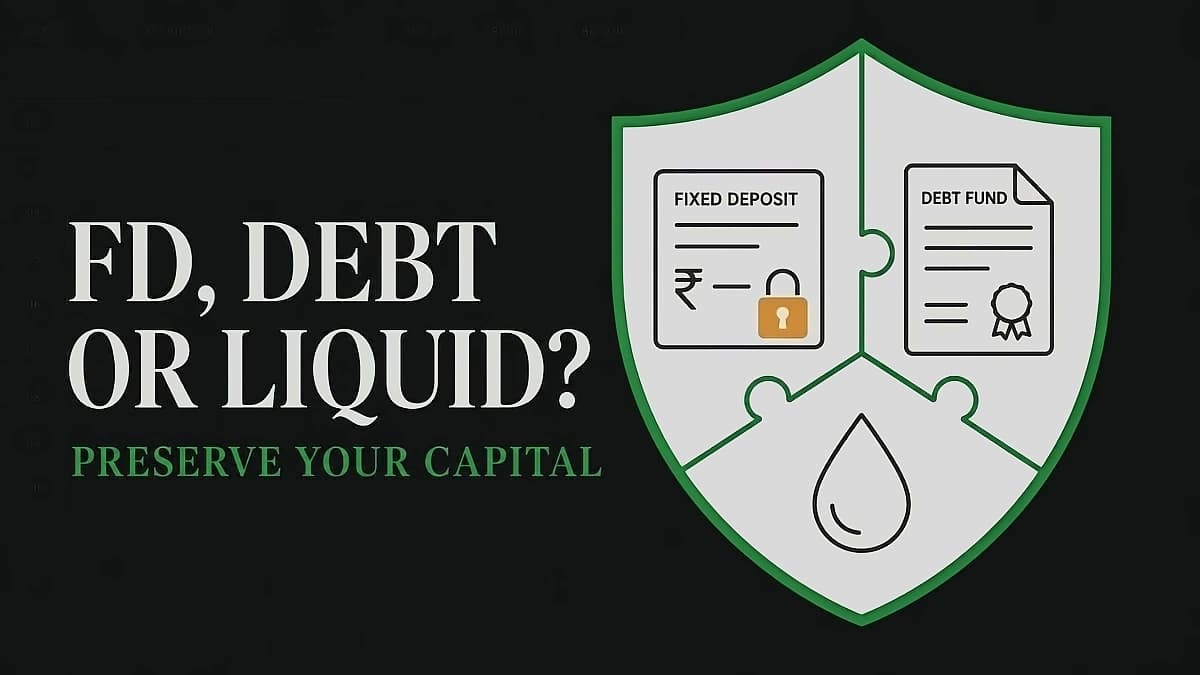
An emergency fund serves as a crucial financial buffer for unexpected expenses including medical treatment, job loss, or accidents. According to reports from Zee News, when individuals start earning, building a contingency fund becomes primary before investing in stocks and other high-risk instruments. The motive behind emergency fund money is to maintain accessibility while earning decent returns without compromising liquidity. As reported by Zee News, when a person has a considerable amount of emergency fund, the choice arises regarding where to park it, emphasizing that returns must not be chased at the cost of liquidity.
A sweep-in FD functions as a link between savings accounts and fixed deposits, automatically transferring surplus funds above a certain limit to FDs. As reported by Zee News, this facility offers immediate access through savings accounts while the buffer continues earning FD interest rates. The system allows partial withdrawals without breaking entire deposits, maintaining liquidity without sacrificing growth potential. The sweep-in facility acts as a link between the savings account and the Fixed Deposit, with the money automatically transferred to the FD when the balance crosses a certain limit. When the person needs money and the balance in the savings account is inadequate, the bank transfers the money from the FD back into the account, making this method efficient since the buffer keeps getting the FD's interest while being accessible without having to break the whole FD.
Liquid funds are market-linked mutual funds investing in short-term, low-risk debt instruments including treasury bills, commercial papers, and certificates of deposit. According to Zee News, while offering high liquidity and low risk, returns remain market-linked and not guaranteed. Redemption periods vary by scheme, with some providing instant access capped at certain amounts and others requiring next-day processing, though restrictions may apply to instant withdrawals. People choose liquid funds to park their money for the short term instead of wealth generation over a long tenure, making them suitable for those who need quick access to funds.

For urgent medical bills or emergencies requiring immediate access, sweep-in FDs provide quick access with pre-defined interest rates while liquid funds may require redemption requests and graded exit fees up to 7 days. As reported by Zee News, investors with shorter time horizons may find sweep-in FDs more attractive due to high liquidity and certain returns. For those who need instant money for an urgent medical bill or other emergencies, a sweep-in FD would provide quick access as and when needed, along with a certain pre-defined interest rate. Redeeming money from a liquid fund might be slightly lengthy as one may have to put in a request and wait for the proceeds, making the choice between these options crucial for emergency preparedness.
Both investment options are taxed as income at applicable slab rates, with sweep-in FD interest taxed as it accrues and TDS applying when thresholds are exceeded. According to Zee News, liquid funds attract debt mutual fund taxation on gains upon redemption, allowing compounding while invested. The taxation differences should factor into investment decisions beyond just interest rates and fund performance. One may divide the buffer into both options, with FDs working best for money which is required at short notice, while Liquid Funds work for the portion kept aside for longer-term growth while still being accessible.