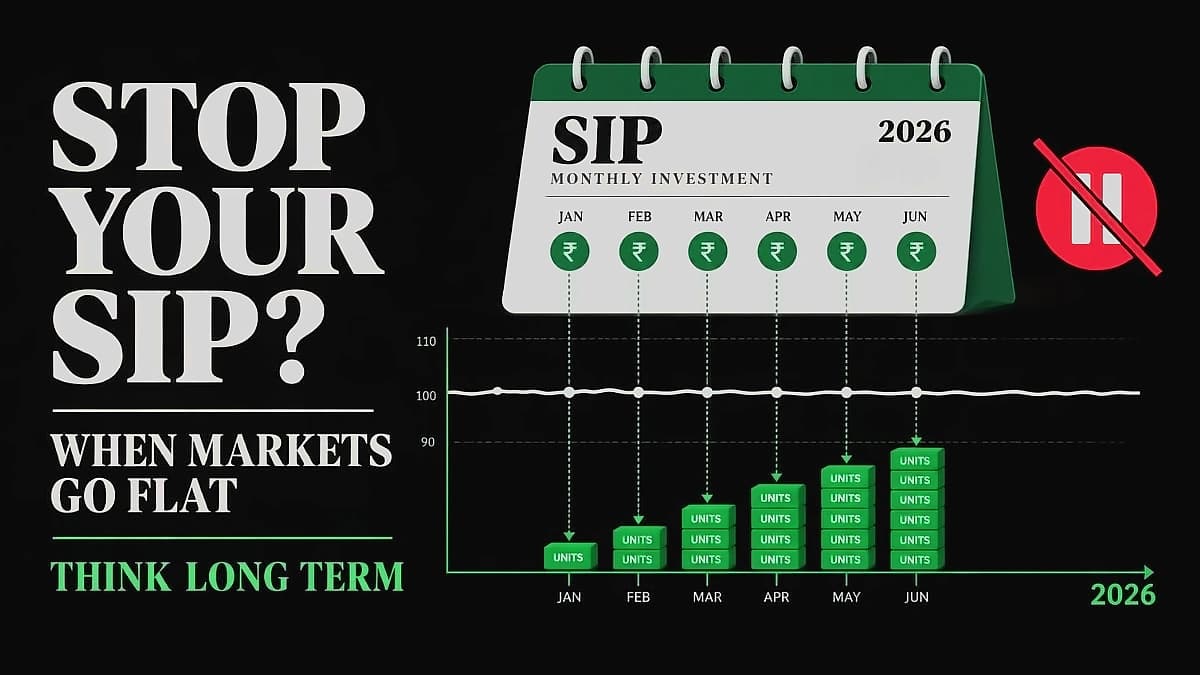
Regular Systematic Investment Plan (SIP) investors can accumulate significantly more mutual fund units during market declines compared to when markets are at peak levels. According to market analysis, a ₹25,000 monthly SIP can purchase approximately 50% more units at an NAV of ₹65 compared to ₹100. This mathematical advantage occurs because the same fixed investment amount buys more units when the Net Asset Value (NAV) is lower. For example, at an NAV of ₹100, ₹25,000 buys 250 units, but at ₹80 NAV, the same amount can purchase 312.50 units, and at ₹65 NAV, approximately 384.62 units can be acquired.

The SIP structure automatically implements rupee cost averaging through its fixed investment schedule. As reported by market experts, since SIPs invest a fixed amount at regular intervals, investors automatically purchase more units when prices or NAVs are lower and fewer units when they are higher. The basic calculation involves dividing the SIP amount by the current NAV to determine the number of units purchased. This systematic approach helps average out the cost at which mutual fund units are purchased over time, regardless of market conditions.
While SIPs can accumulate more units during market falls, recovery scenarios present mixed outcomes. According to market analysis, if the market recovers later and NAV rises, units purchased at lower prices may increase in value. However, returns are not guaranteed as mutual fund investments remain subject to market risks, and prices may not always recover from their low levels. Rupee cost averaging can help spread investments across different market levels, but it cannot prevent losses or guarantee profits for investors.
Despite market volatility, financial experts recommend continuing SIP investments during market declines rather than pausing them. As reported by market analysis, rupee cost averaging means that a fixed SIP amount can buy more units when the NAV is lower, helping investors stay consistent and invest across different market conditions. This approach eliminates the need for investors to predict optimal entry or exit times, allowing systematic accumulation of units regardless of short-term market fluctuations.