Recent judicial precedent has established that multiple independent units within a single residential building can constitute a qualifying 'residential house' for Section 54 exemption purposes. As per the Karnataka High Court in CIT & Anr. Vs. Smt. K.G. Rukminiamma (ITA No.783 of 2008), the court held that 'a residential house' should be understood as 'a building of residential nature' rather than 'one residential house'. The court emphasized that Section 54/54F requires the assessee to acquire a 'residential house' and not 'a residential unit', with the only requirement being that it should be for residential use and not commercial use. This ruling provides significant flexibility for taxpayers constructing multi-unit residential properties that can be independently used as separate residences.
Section 54 is a tax-saving provision that helps reduce or avoid capital gains tax on the sale of a residential property, provided it was held for more than 24 months. According to Mint reports, the exemption can be claimed by constructing a residential house within three years after the sale. Varad Kale, Partner at V.V. Kale & Company, stated that the exemption is generally the lower of the LTCG or the amount invested, subject to the ₹10 crore cap. Where the LTCG does not exceed ₹2 crore, the taxpayer has a one-time lifetime option to invest in two residential houses in India instead of one. The latest judicial interpretation confirms that the physical structuring of the new residential house, whether it is lateral or vertical, cannot come in the way of considering the building as a residential house.
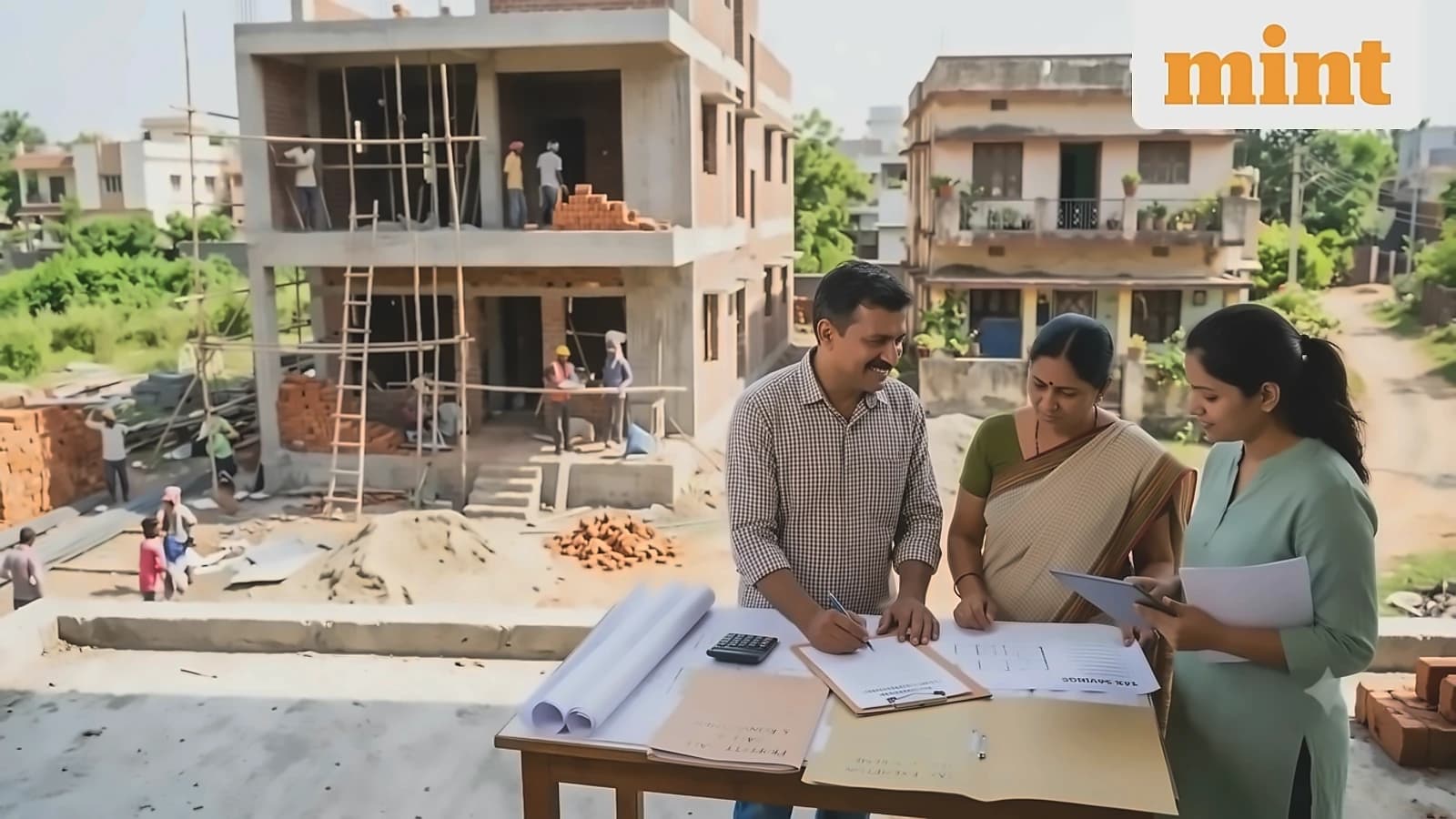
Starting construction before selling the old house does not automatically rule out the Section 54 exemption. As reported by Mint, Section 54 does not prescribe a specific period for starting construction before the sale, though Kale noted construction should not begin more than one year before the sale to avoid litigation. Saurabh Kumar, Managing Partner at SK Attorneys, explained that there is no time limit on how early the construction may begin, with courts focusing on the completion date rather than the commencement date. If construction starts before the sale but is completed within three years after the sale, the exemption can still apply, provided the house was completed and ready for use within the three-year period. The recent court ruling confirms that the fact that the residential house consists of several independent units cannot be permitted to act as an impediment to the allowance of the deduction u/s 54/54F.
According to Mint reports, several conditions can deny the Section 54 exemption. Kale highlighted key risks including the new house being fully completed before the sale of the old house, construction not being completed within the prescribed three-year period, the property not qualifying as a residential house in India, required investment not being properly evidenced, and unutilised capital gains not being deposited in the Capital Gains Account Scheme (CGAS) by the ITR filing due date. Kumar added that exemption can also be denied if the seller is not an individual or HUF and the new house is sold within three years. The latest judicial interpretation confirms that there is nothing in Section 54/54F which specify that the residential house should be constructed in a particular manner, allowing taxpayers flexibility in construction arrangements.
Taxpayers should maintain a clear evidentiary trail including the sale deed establishing the transfer date, construction agreement and approved building plan, land-title documents, contractor invoices and payment receipts, bank statements tracing construction payments, and completion certificate showing completion within three years. As reported by Mint, any unutilised capital gain by the Section 139(1) return-filing due date should be deposited in CGAS and subsequently used for eligible construction within three years. Kumar explained that eligible construction payments already made from the taxpayer's own funds before the CGAS requirement arises can potentially count as utilisation, depending on the facts and supporting evidence. The recent court ruling emphasizes that eligible construction payments already made from the taxpayer's own funds before the CGAS requirement arises can potentially count as utilisation.
If construction is fully completed before the sale, the three-year construction rule does not apply, and it must qualify as a purchase within one year before the sale. According to Mint reports, finishing construction more than one year prior makes it an existing asset, which can disqualify the taxpayer if they own other properties. If the new house is not completed within three years, any unutilised CGAS balance is treated as LTCG in the year the three-year period expires under Section 54(2), which is a statutory tax consequence, not a penalty. The latest judicial interpretation confirms that if there is nothing in the section which requires that the residential house should be built in a particular manner, it seems to us that the income tax authorities cannot insist upon that requirement.