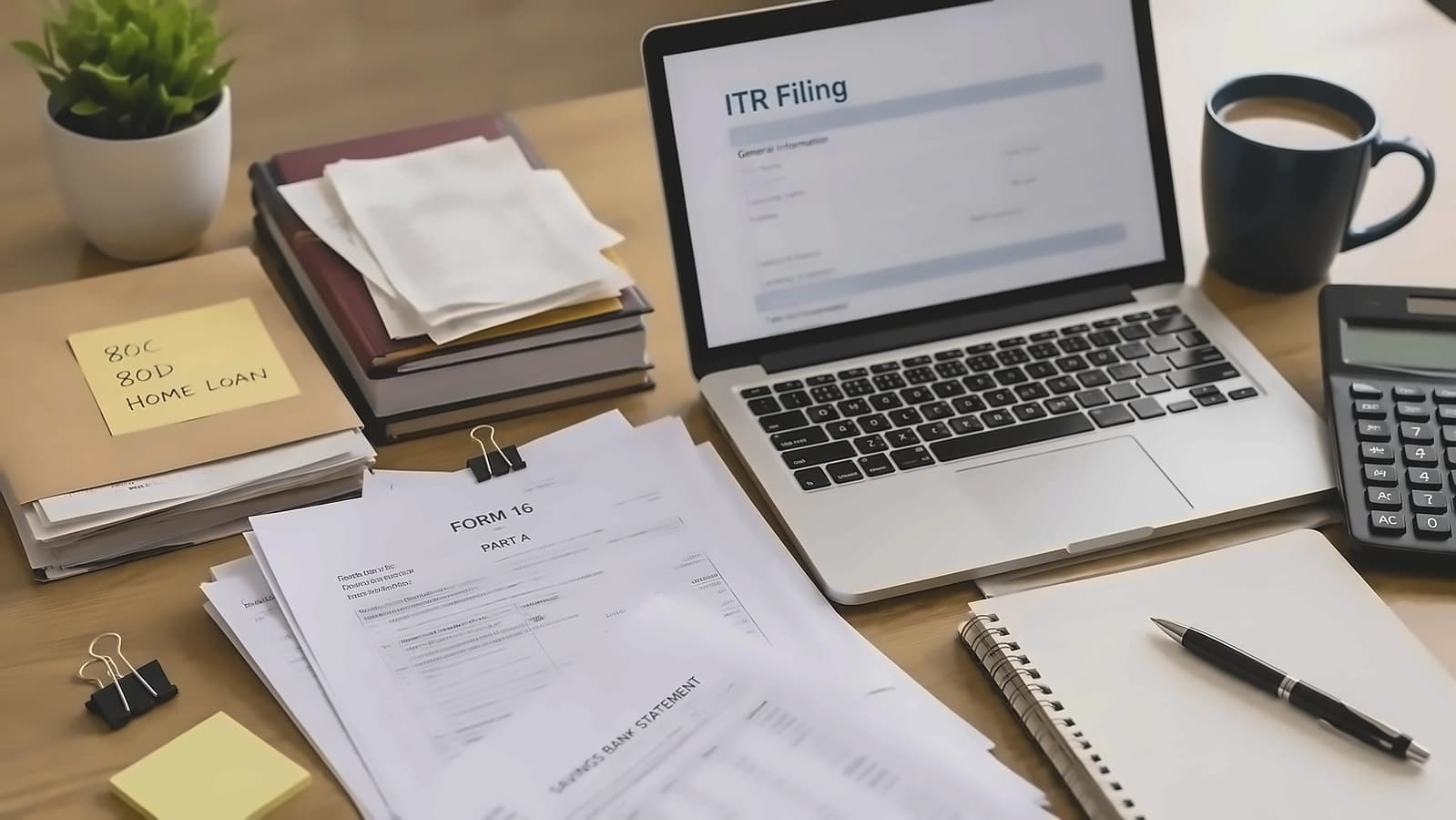
Managing taxes as a salaried employee involves more than just saving money at year-end. According to reports from Business Standard, the process requires making the right declarations, keeping records, and staying organized. At the start of the financial year (April/May), companies ask employees to fill out tax declaration forms, primarily for those choosing the old tax regime. Based on these declarations, HR estimates tax and deducts tax deducted at source (TDS) from salary each month throughout the year. The financial year 2026-27 runs from April 1, 2026 to March 31, 2027, with the ITR filing deadline set for July 31, 2027 for salaried employees. Form 16, the TDS certificate issued by employers, serves as crucial documentation for this process, containing detailed information about salary income, TDS deductions, and taxable amounts.
The key to avoiding TDS surprises is declaring realistic amounts that match actual investments. As reported by Business Standard, many employees face problems when they declare ₹1.5 lakh under Section 80C but invest only ₹80,000 in ELSS and ₹40,000 in LIC premium, falling short by ₹30,000. To prevent this, experts recommend declaring less than expected investments and planning regular investments through auto-debits such as monthly SIPs or LIC premium payments. According to recent guidance, Section 80C deductions are capped at ₹1.5 lakh for life insurance, PPF, and ELSS mutual funds, while Section 80D covers health insurance premiums with higher limits for senior citizens (up to ₹50,000).
Form 16 is a TDS certificate issued by employers that shows the tax deducted from salary and detailed breakup of income, exemptions, deductions, and taxable amounts for the financial year. As per the Income Tax Department, employers must issue Form 16 by 15th June of the financial year immediately following the salary payment period. For FY 2025-26, employers must issue Form 16 to employees on or before June 15, 2026. The document is divided into Part A and Part B: Part A contains summary of TDS deductions, PAN and TAN details, while Part B provides detailed breakup of salary, exemptions, and deductions. To download Form 16 from the TRACES portal, employers must log in using their PAN as User ID and password, navigate to the 'Downloads' tab, select 'Form 16', choose the relevant financial year, and verify PAN and TDS details. If employers miss the deadline, a penalty of ₹500 per day applies until the failure continues, with the penalty not exceeding the total amount of tax deductible for that period.

Several common mistakes can lead to higher TDS deductions and missed exemptions. As reported by Business Standard, these include not declaring investments, missing HRA claims due to forgotten rent receipts, not collecting home loan interest certificates, ignoring Form 26AS tax credit statements, and not filing Income Tax Return (ITR) even when TDS was deducted. Recent guidance highlights additional errors such as not matching Form 16 details with ITR, forgetting to report income from all sources including savings account interest, claiming deductions without proper paperwork, submitting ITR without verification, and filing with wrong PAN or Aadhaar details. The most common mistakes involve last-minute investing, wrong declarations, and missing proofs, particularly forgetting to declare HRA because many rent-paying employees never submit rent receipts on time.
A structured approach helps manage the tax declaration process effectively. According to Business Standard, the action checklist includes filling the declaration form in April with realistic numbers, setting up auto-debits for investments, collecting all proofs by December, submitting proofs before company deadlines (usually January–February), checking salary slips after submission to confirm TDS corrections, downloading Form 16 from employers in May–June, and filing ITR before July 31. For ITR filing specifically, experts recommend filing by June 2027 for faster refunds, avoiding last-minute server crashes, and having time to correct mistakes if needed. The process requires regular investment reviews at least once before March 31st and preferably every three to six months to maintain discipline and avoid last-minute tax surprises. When receiving Form 16, employees should verify all details including income amounts, TDS deductions, and ensure all deductions are correctly claimed against total income.