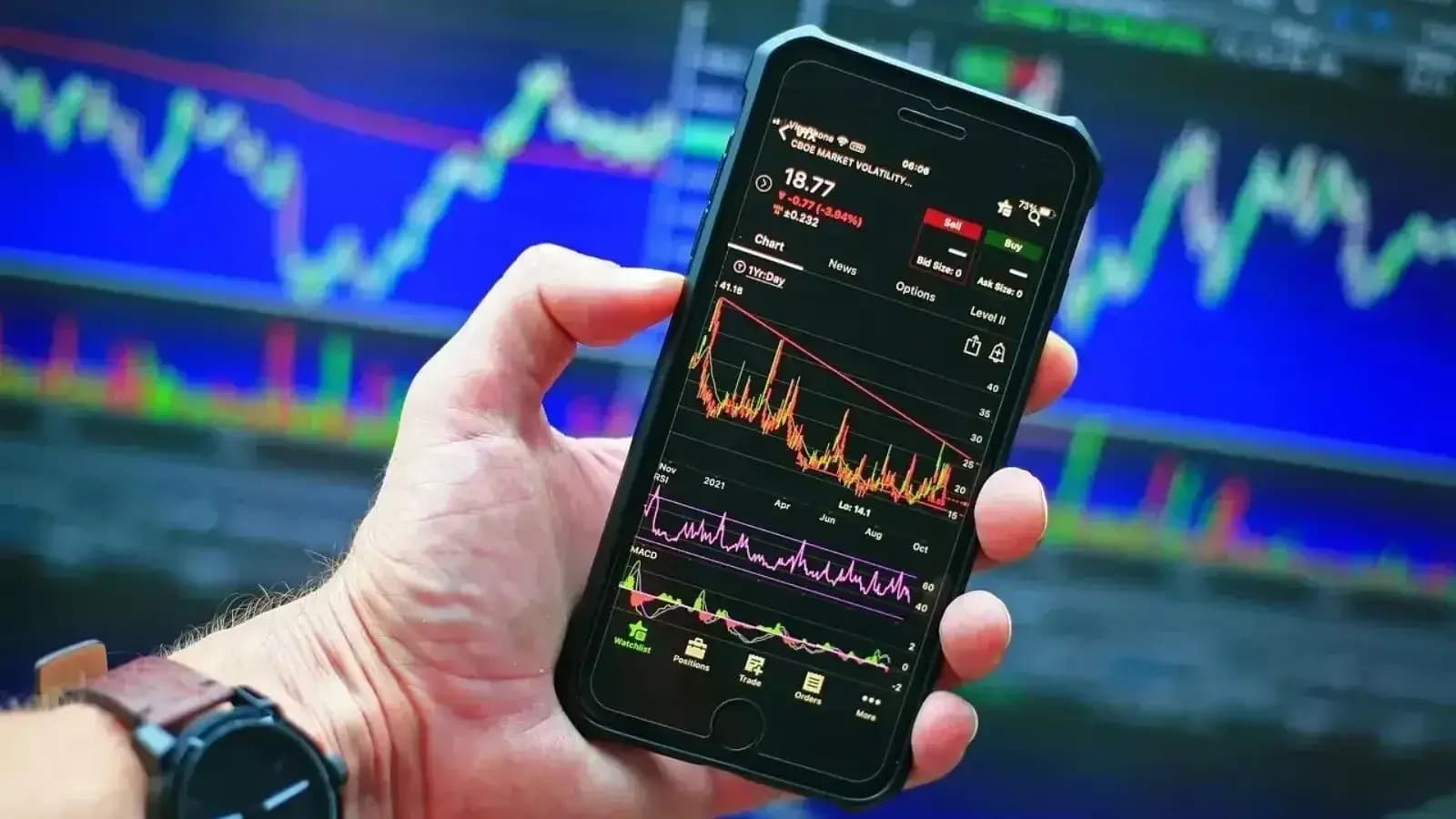
According to the DALBAR 2025 report covering 2024 returns, the average equity investor earned 16.54% while the S&P 500 returned 25.02%, creating an 848-basis-point shortfall - the second-largest investor performance gap of the past decade. As reported by Investing.com India, retail traders have now underperformed the S&P 500 for 15 consecutive years, with DALBAR's "Guess Right Ratio" falling to just 25% in 2024, meaning investors correctly timed market entries and exits only once out of four attempts. The average household in the study, turning over 75% of its portfolio every year, still earned 1.5 percentage points less than a simple buy-and-hold strategy, with all destruction happening after transaction costs and accumulated impact of poorly timed decisions.
The compounding consequences of frequent trading are substantial, as reported by Investing.com India. A hypothetical buy-and-hold investor starting 2024 with ₹100,000 in the S&P 500 would have finished with ₹125,020, while the "average" investor mimicking behavioral cash flows ended with ₹112,774, losing over ₹12,000 in a single year from poor timing. Extended over twenty years, the same ₹100,000 would have grown to ₹717,503 for the buy-and-hold investor, compared to ₹345,614 for the average behavioral investor, forfeiting more than half their potential wealth. The landmark 2000 study by Professors Brad Barber and Terrance Odean found that retail traders who traded most aggressively earned an annual return of just 11.4% while the market returned 17.9%, creating a 6.5 percentage point annual performance drag attributable entirely to excessive trading.
According to the landmark 2000 study by Professors Brad Barber and Terrance Odean, retail traders who traded most aggressively earned an annual return of just 11.4% while the market returned 17.9%, creating a 6.5 percentage point annual performance drag attributable entirely to excessive trading. A study of the Colombian Stock Exchange covering 5.38 million trades by over 42,000 individual investors from 2006 to 2016 found that retail investors generated negative abnormal returns of 4% to 4.4% per year before transaction costs, with the most active traders performing the worst even on a gross basis. The most comprehensive single market study, a 2020 examination of Brazilian equity index futures traders who persisted for more than 300 trading days, found that 97% lost money, with only 1.1% earning more than Brazil's minimum wage, and all of them experiencing substantial volatility. Research shows that poor market timing, which cost investors roughly 0.53% per year before 2020, nearly doubled to 1.01% per year since the COVID pandemic.
According to FINRA data from 2020, 72% of day traders ended the year with financial losses, while among proprietary traders, only 16% were profitable and only 3% earned more than $50,000 for the year. The survival statistics are equally grim, with 80% of day traders quitting within the first two years and nearly 40% abandoning it within one month. After three years, only 13% remain active, and only 1% of day traders maintain consistent profitability over a five-year horizon. In options trading, retail traders incur average gross monthly losses of 1.81%, with research showing retail traders lost approximately $3 billion in options trades from January 2010 through February 2021, primarily benefiting market makers. The mechanics of losses fall into three repeating behavioral traps: retail traders systematically overpay for options relative to realized volatility, incur bid-ask spreads averaging roughly 8% of the option's value on a round trip, and hold losing positions well past catalysts when price decay accelerates.
Across all studies, the behavioral driver remains consistent: overconfidence, as reported by Investing.com India. Retail traders consistently overestimate their ability to predict short-term price movements, trading more after strong recent performance and selling winners 50% faster than losers. The research shows that poor market timing, which cost investors roughly 0.53% per year before 2020, nearly doubled to 1.01% per year since the COVID pandemic. The explosion in retail participation, fueled by social media and zero-commission apps, has not produced better outcomes but has produced worse ones. Retail traders confuse activity with skill, with short-term trading being largely a zero-sum game where for every retail trader who profits, a more sophisticated counterparty sits on the other side. The house advantage embedded in options markets alone, via bid-ask spreads and market maker flow, is the financial equivalent of playing blackjack at a table where the dealer wins on ties. The antidote requires discipline, lower turnover, longer time horizons, and ruthless focus on what can be controlled, including cost, diversification, and behavior.