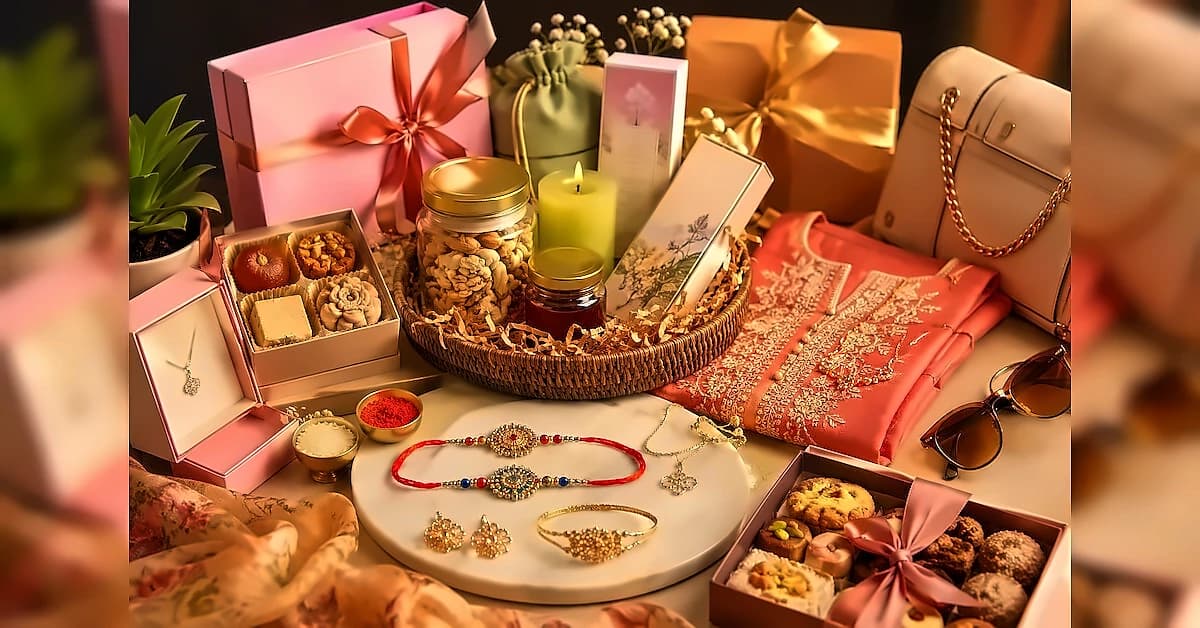
The traditional rakhi is undergoing a significant transformation as jewellery brands elevate it from a simple festive purchase to a collectible keepsake. Tribe Amrapali offers handcrafted rakhis incorporating gold-plated and silver-plated elements, enamel work, beads, pearls and Indian design motifs, with prices ranging from ₹618 for a gold-plated enamelled square bead rakhi to ₹1,133 for its Mayoori Rakhi. Theaa similarly provides rakhis using gold, silver and semi-precious stones with personalisation options and premium packaging. According to Business Standard, this shift mirrors a wider trend where consumers are willing to pay more for products that combine tradition with design, craftsmanship and longevity.
Jewellery brands are increasingly positioning fine jewellery as a Raksha Bandhan purchase rather than something reserved for weddings or milestone celebrations. CaratLane is marketing jewellery as a gift that carries the memory of sibling relationships long after the festival ends. As reported by Business Standard, the company has expanded international shipping to more than 30 countries, including Germany, Ireland, Saudi Arabia, France, Japan, New Zealand and Switzerland, to accommodate siblings living in different cities and countries. Shaifali Gautam, CMO at CaratLane, emphasises that Raksha Bandhan is a celebration of love, nostalgia and the bond shared by siblings.
Consumers are increasingly paying for personalised gifts that reflect their siblings' specific interests and lifestyles. According to Avi Kumar, CMO at FNP, personalisation, premiumisation and convenience are becoming important forces in festive gifting. As reported by Business Standard, a fitness enthusiast might receive activewear starting at ₹1,500, while a fashion-conscious sister could get designer accessories. Anamika Singh, a 45-year-old homemaker from Gurugram, explains that she spends ₹10,000 to ₹20,000 on gifts that reflect her brother's fitness and travel interests rather than generic Rakhi gifts. The gifting landscape now includes options from ₹699 for festive hampers to ₹17,500 for designer Anarkali sets.
The premium gifting trend extends to experiential purchases, with siblings spending on shared experiences rather than traditional gifts. According to Business Standard, this year's Raksha Bandhan falling on a Friday creates a three-day weekend, making short-haul travel another potential form of sibling gifting. Abu Dhabi, approximately 3-4 hours from major Indian hubs like Delhi and Mumbai, offers opportunities for siblings to spend time together at Yas Marina Circuit, Ferrari World, Louvre Abu Dhabi or beach destinations. Closer options include weekend stays at resorts near Delhi, Mumbai or Bengaluru, with the conceptual shift focusing on time spent together rather than material gifts.
The expanding Raksha Bandhan marketplace now offers distinct spending bands across different price points. According to Business Standard, spending categories include under ₹1,000 for artisanal rakhis and smaller wellness gifts, ₹1,000-₹5,000 for premium rakhis, beauty products, activewear and curated hampers, ₹5,000-₹20,000 for designer fashion, subscriptions and premium lifestyle gifts, and ₹20,000 and above for fine jewellery, luxury accessories and travel experiences. The smartest purchase isn't necessarily the most expensive, with handcrafted rakhis that become keepsakes potentially carrying more meaning than expensive but generic gifts. At the accessible end, MasterChow's Rakhi gift box is priced at ₹699 and includes Sichuan chilli oil, garlic chilli crisp, Schezwan chutney and sweet-and-spicy cup noodles, while a wellness-oriented Rakhi hamper from The Ayurveda Company is offered at ₹839.