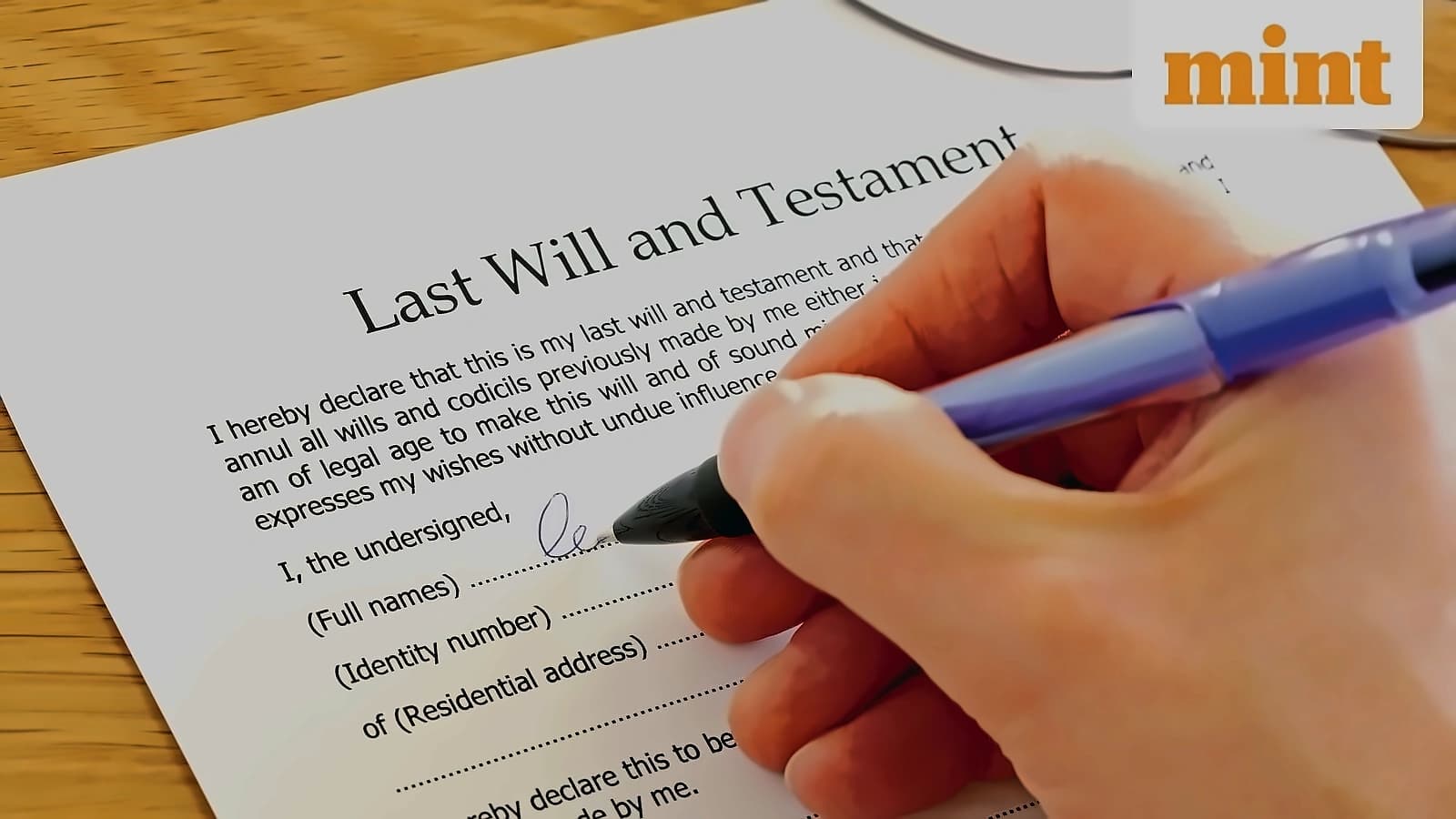
According to reports from Mint, a probate of a Will in India is a legal certification issued by a competent court confirming the authenticity of a deceased person's Will and recognising the authority of the executor appointed under it. Under Section 2(f) of the Indian Succession Act, 1925, probate means a copy of the Will certified under the seal of a court, along with the grant of administration of the testator's estate. As explained by Sachin Bhandawat, Partner at Khaitan & Co, the process involves the executor named in the Will applying to the competent court under Section 222, following which notices may be issued and objections and evidence considered.
According to Mint reports, probate provides legal certainty regarding the authenticity of the Will and the executor's authority to administer and distribute the estate. In Chiranjilal Shrilal Goenka v. Jasjit Singh, (1993) 2 SCC 507, the Supreme Court held that probate courts have the jurisdiction to determine the validity of a Will and that a probate grant operates as a judgment in rem, binding not merely on the parties but on the world at large. The Supreme Court has repeatedly clarified that the right to apply for probate is a continuing right and does not automatically become barred merely because three years have passed from the death of the testator.
As reported by Mint, earlier, Section 213 of the Indian Succession Act imposed a mandatory probate requirement on certain communities and properties in former presidency towns such as Mumbai, Kolkata, and Chennai. However, legislative changes introduced through the Repealing and Amending Act, 2025, removed this compulsory requirement, making probate generally voluntary across the country. Despite this change, probate remains an important legal safeguard where disputes, legal doubts or administrative difficulties are likely.
According to Mint reports, probate is particularly beneficial when family members dispute the Will or raise legitimate questions, substantial immovable property or financial assets are involved, banks, housing societies or authorities require stronger proof, or the executor needs unquestionable legal authority. The process is initiated when the executor files a petition before the appropriate court, containing the original Will, death certificate of the testator, details of legal heirs, and other vital facts regarding the deceased's assets. The court then issues notices to interested parties, permitting them to object if they believe the Will is invalid, and examines attesting witnesses to establish proper execution.

As reported by Mint, the common documents required for probate include the original Will, death certificate, identity proofs, asset documents and witness details. The process involves the executor applying to the competent court under Section 222, following which notices may be issued and objections and evidence considered. In H Venkatachala Iyengar v. BN Thimmajamma, 1958, the Supreme Court held that the person relying upon a Will must prove its proper execution and remove any suspicious circumstances surrounding it, while in Krishna Kumar Sharma v. Rajesh Kumar Sharma, 2009, the court clarified that the limitation generally begins when the need to seek probate arises.