The most significant difference between these schemes lies in their investment limits and tenure structure. PPF allows maximum investments of ₹1.5 lakh per year with a minimum of ₹500, while SCSS permits deposits up to ₹30 lakh in a single financial year. PPF operates with a 15-year tenure while SCSS has a five-year normal tenure, making it more suitable for immediate retirement planning needs. According to reports from The Economic Times, for a 60-year-old with ₹10 lakh available as a lump sum, the entire amount cannot be invested in PPF immediately due to the annual investment cap. SCSS is available to people aged 60 and above (55 for voluntary retirees, 50 for defence personnel) and runs for five years, extendable in three-year blocks. A couple can hold separate SCSS accounts with ₹30 lakh each, allowing a total investment of ₹60 lakh. NSC offers a five-year maturity period with government backing and annual compounding, making it suitable for conservative investors seeking government-backed security.
For the July-September 2026 quarter, PPF offers an interest rate of 7.1 per cent per annum, while SCSS provides 8.2 per cent. As reported by The Economic Times, at the current 8.2 per cent SCSS rate, a ₹10 lakh investment would generate approximately ₹82,000 in annual interest. Since SCSS interest is paid quarterly, this translates to around ₹20,500 every three months, which can be particularly beneficial for retirees requiring regular cash flow for household expenses, medicines, and monthly needs. NSC currently offers 7.7 per cent interest rate, as reported by The Economic Times, with India Post's maturity table showing that ₹1,000 grows to around ₹1,449 over five years. An investment of ₹5 lakh would grow to approximately ₹7,24,500 at maturity, earning around ₹2,24,500 over the five-year period. The SCSS rate is fixed on the day of investment and stays the same for the full five-year term, even if the government cuts rates later. Interest is taxable, so in higher tax slabs, the post-tax return is lower than the headline rate.

Tax implications differ significantly between the schemes. PPF offers tax-free interest and tax-exempt maturity proceeds, making it attractive for long-term wealth creation without tax obligations. In contrast, SCSS interest is taxable according to applicable tax rules, though senior citizens may be eligible for certain deductions. Under the old tax regime, senior citizens can claim a deduction of up to ₹50,000 on interest income from SCSS deposits. Regarding accessibility, PPF allows partial withdrawals from the seventh financial year subject to scheme rules, while SCSS permits premature closure with prescribed conditions and penalties. Early closure of SCSS attracts penalties of 1.5% before 2 years and 1% after, making it less suitable for short-term liquidity needs. NSC qualifies for deduction under Section 80C for taxpayers using the old tax regime, though the interest earned is taxable. Bank FD interest is added to the investor's taxable income and taxed according to applicable slab rates.
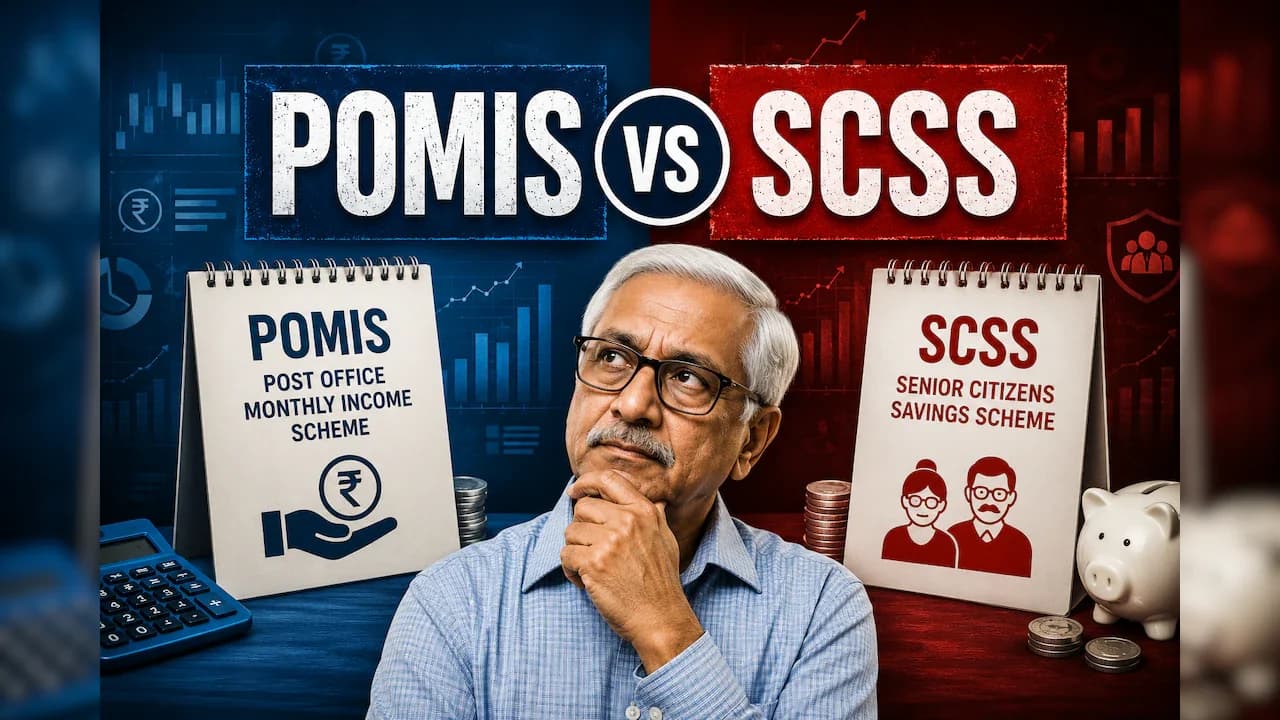
The choice between PPF, SCSS, NSC, and POMIS depends on specific retirement goals and financial needs. SCSS is more suitable for regular income generation due to its quarterly payout structure and ability to accommodate larger lump-sum investments, making it a common first building block of retiree income. However, PPF remains attractive for long-term tax-free wealth creation with no immediate withdrawal requirements. NSC offers government backing and annual compounding with a 7.7% rate, though it's less flexible for early withdrawal. A ₹30 lakh SCSS earns ₹61,500 per quarter, while a ₹9 lakh POMIS earns ₹5,550 per month. As reported by The Economic Times, many retirees may not need to choose between the two schemes - a portion of savings can be allocated for regular income through SCSS while another portion can be invested in PPF for longer-term growth. A common combination includes SCSS for up to ₹30 lakh each, the Post Office Monthly Income Scheme for monthly cash flow, and a small SWP from a balanced fund to beat inflation over time. Before making investment decisions, retirees should first assess monthly expenses, emergency funds, health insurance requirements, and the timeline for accessing the funds.