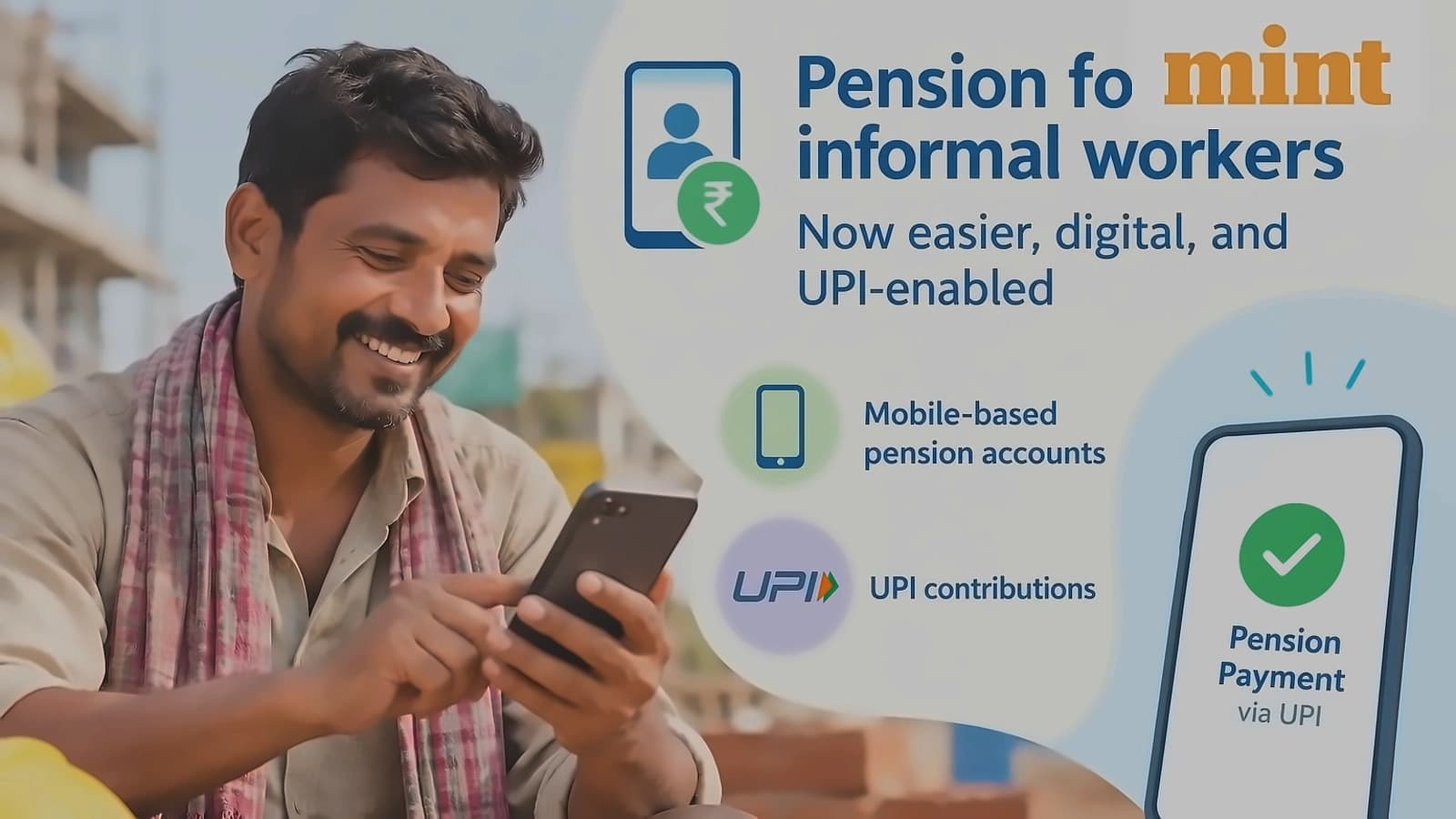
The Pension Fund Regulatory and Development Authority (PFRDA) has officially launched its new health-focused pension product, NPS Swasthya, on Thursday, October 1, 2026, marking NPS Diwas. According to reports from Mint, Business Standard, and ETHRWorld, Finance Minister Nirmala Sitharaman is expected to launch the scheme, with PFRDA Chairman Sivasubramanian Ramann having previously announced at a Mumbai event on 10 September that the product would launch within 30 days, targeting mid-October. The scheme has been developed through a proof of concept (PoC) testing phase that received an encouraging response, leading to final product development. As per ETHRWorld, the initiative represents a unique blend of healthcare services with retirement savings, aiming to enhance financial security for individuals as they age. PFRDA issued operational guidelines for NPS Swasthya on September 18, 2026, providing detailed framework for the product's implementation.
As reported by Mint, Business Standard, and ETHRWorld, NPS Swasthya operates as two legally distinct products sold together: a separate NPS investment account where money is invested like existing NPS, and a compulsory super top-up family floater health policy. The money in the NPS Swasthya account can be withdrawn up to 25% to pay medical costs with no waiting period and no cap on withdrawals. The renewal premium can also be paid from the NPS Swasthya corpus, with the pension fund sending reminders 90, 60, and 30 days before renewal. If premiums remain unpaid after the grace period, the account closes and the corpus moves to the All Citizen NPS account. The payment mechanism works directly between the pension account, insurer, and hospital, with the health benefit administrator releasing top-up insurance through the insurance company. While the two components remain distinct, subscribers will be able to access both through an integrated service framework. Subscribers must buy the super top-up policy to enrol, with their contributions following the investment pattern prescribed for the central government NPS scheme, so they do not get the wider investment choice available under the All Citizen Model.
According to Mint reports, any individual eligible to join the NPS can enroll in NPS Swasthya, subject to scheme conditions. The entry age for insurance coverage ranges from 18 to 70 years, with renewal available up to age 85 subject to policy terms. To enroll, an individual must first open an NPS Swasthya Investment Account and deposit ₹1,000 towards investment, pay an annual Health Benefit Administrator (HBA) maintenance charge of ₹200 plus taxes, and pay the first-year health insurance premium. The PFRDA has appointed Medi Assist as the first HBA. The minimum subsequent contribution is ₹10, with insurance premiums determined by insurers based on applicable insurance framework and subscriber age groups. Enrolment is on a Good Health Declaration with no pre-policy medical tests required. Premiums will be priced in three age cohorts: 18 to 40, above 40 up to 60, and above 60 up to 70. The policy is a super top-up, which means the insurer starts paying only after the specified deductible is met. For instance, a ₹30 lakh sum insured with a ₹3 lakh deductible costs ₹1,732 for those aged 18-40 years, ₹2,523 for those aged 41-60 years and ₹4,953 for those aged 61-70 years, according to PFRDA data. Currently, Aditya Birla Health Insurance offers it through the Axis Pension Fund. PFRDA Chairperson S. Ramann stated that premiums are 30-40% cheaper than competing plans available in the market.
As detailed in Mint, Business Standard, and ETHRWorld reports, the NPS Swasthya health insurance comes in four fixed pairings with super top-up sum insured ranging from ₹1 lakh to ₹30 lakh and annual family deductibles from ₹1 lakh to ₹3 lakh. The standard super top-up policy offers family-floater coverage covering the subscriber, spouse, and up to two dependent children under one family floater, with parents not covered - a limitation that will disappoint many hoping to use this for elderly parents. The super top-up deductible is counted across all claims in the year, not per hospitalisation, which is why premiums for super top-ups tend to be much lower for the same sum insured. The standard wording includes single private room and ICU charges at actuals, pre-hospitalisation expenses for 30 days and post-hospitalisation for 60 days, ambulance up to ₹2,500 per hospitalisation, no co-payment and no disease-wise sub-limits. Waiting periods include an initial 30-day waiting period (accidents covered from day one), 12 months for pre-existing diseases and specified illnesses, and controlled type 2 diabetes and hypertension covered after 12 months. The standard sums insured are ₹1 lakh, ₹5 lakh, ₹10 lakh and ₹30 lakh, with corresponding annual aggregate deductibles of ₹10,000, ₹50,000, ₹1 lakh and ₹3 lakh. The deductible applies cumulatively to eligible insurance expenses during the policy year, rather than separately to each claim. Around 15 diseases, such as cancer and heart attack, have been identified, which will either be excluded or get coverage on paying an extra premium, subject to insurers' underwriting guidelines.

One of the key provisions of NPS Swasthya is the facility to make partial withdrawals for eligible healthcare expenses, including specified outpatient and inpatient expenses. As reported by Mint, the withdrawal cannot exceed 25% of the subscriber's contributions to the NPS Swasthya account, with no restriction on the number of healthcare-related partial withdrawals and no minimum waiting period for the first or subsequent withdrawal. The amount is settled with the hospital, healthcare provider or other eligible entity against the healthcare expense rather than being paid directly to the subscriber. Subscribers can also transfer money from an existing NPS All Citizen Model account into NPS Swasthya, but only to the extent required to meet the applicable insurance deductible. The scheme also offers two AIFs approved under the Bharat Fund of Funds initiative, providing NPS subscribers with additional investment avenues through the alternative investment fund route, subject to applicable regulatory framework. When a single eligible inpatient healthcare expense exceeds the partial withdrawal limit, subscribers can opt for premature exit. The accumulated NPS Swasthya corpus first pays the eligible inpatient expense, any balance moves to an NPS scheme under the All Citizen Model, while the insurance policy continues for the remaining policy period. The NPS Swasthya account closes, and the subscriber loses its special healthcare withdrawal facility.
Financial experts emphasize the importance of comparing costs before choosing NPS Swasthya. "Investors should compare the premiums under NPS Swasthya with those of the standalone super top-ups offered by insurance companies," says Vishal Dhawan, founder and CEO of Plan Ahead Wealth Advisors. "An apples-to-apples comparison is necessary because pricing varies by age, cover, deductible and insurer," notes Arun Ramamurthy, co-founder of Staywell.Health. "It is too premature to compare the cost with standalone super top-ups," cautions Vishwajeet Goel, head of Pensionbazaar. "The 25 per cent withdrawal facility provides liquidity in healthcare emergencies without requiring a subscriber to exit the scheme altogether," says Goel. However, experts warn about the impact on retirement savings. "The 25 per cent withdrawal ceiling applies to contributions, not the accumulated corpus," explains Dhawan. "A large medical expense may therefore exceed the amount available through partial withdrawal." "Do not depend on this product completely for all your health insurance needs," advises Dhawan. "Healthcare withdrawals also draw on money intended for retirement." "The combination of retirement savings and health cover can simplify financial management, but may reduce flexibility," notes Dhawan. "Ideally, NPS and a super top-up should be kept apart because each product can be chosen independently," he concludes. "NPS Swasthya can add protection against large medical expenses for subscribers who already have a base health cover," says Ramamurthy. "Those who want comprehensive cover from the first rupee or insurance for elderly parents will need separate arrangements."