The National Pension Scheme (NPS) for Traders offers eligible shopkeepers and self-employed persons an assured ₹3,000 monthly pension after 60 years. According to reports from Mint, this voluntary scheme covers various categories including shop owners, retail traders, rice and oil mill owners, workshop owners, commission agents, real estate brokers, and owners of small hotels and restaurants, with an annual turnover of up to ₹1.5 crore. The scheme provides no lump-sum payout at 60, and if the beneficiary dies, the spouse receives 50% of the pension as family pension, equivalent to ₹1,500 monthly. Children are not covered under this scheme. The Union Ministry of Labour and Employment has encouraged eligible traders and shopkeepers to enrol in this voluntary and contributory pension programme aimed at providing income support during old age.
Financial experts strongly caution against relying solely on the ₹3,000 pension for retirement planning. As reported by Mint, Vijay Kuppa, CEO of InCred Money, stated that the pension is inadequate because it is a fixed amount with no inflation adjustment and barely covers essential retirement expenses including groceries, utilities, rent, healthcare and emergencies. Manish P. Hingar, Founder and CEO of Fintoo, explained that at 6% inflation, ₹3,000 received 25 years from now would be worth only about ₹700 in today's money. The scheme operates on a co-contribution model, with the subscriber and the Central Government making contributions, where the government contributes an amount equal to the subscriber's contribution. The monthly contribution depends on the subscriber's age at the time of joining, ranging from ₹55 to ₹200 monthly, making the scheme accessible to eligible small traders and self-employed workers.
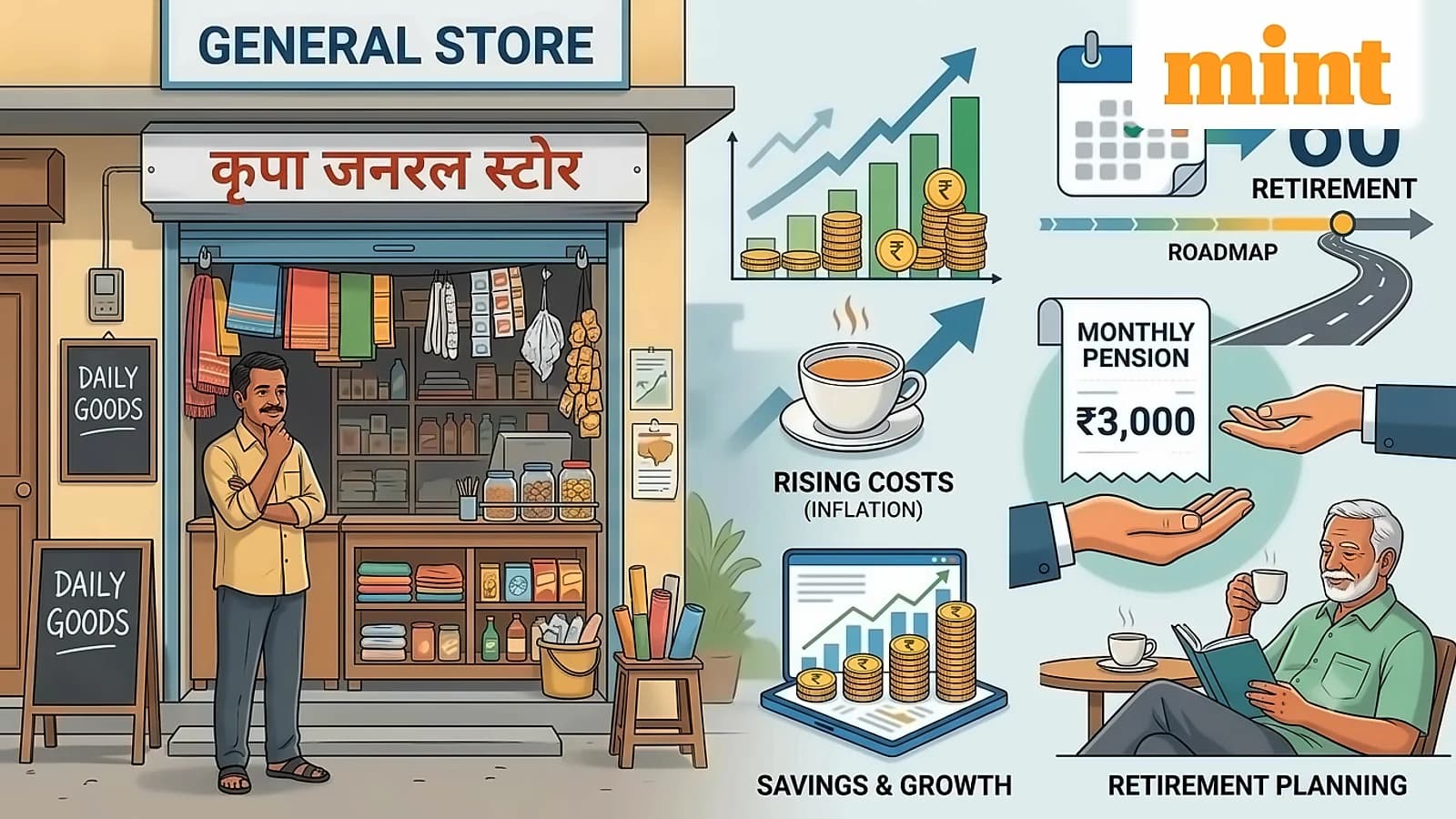
Experts recommend a comprehensive approach to retirement planning beyond the NPS scheme. According to Mint reports, Hingar suggests calculating retirement expenses by adjusting current spending for inflation - for example, ₹20,000 monthly now becomes ₹86,000 monthly in 25 years at 6% inflation. The recommended savings target is approximately 25-30 times yearly expenses at retirement, which for ₹86,000 monthly would require about ₹2.6 crore. For long-term growth, equity mutual funds through SIPs and PPF are suggested, with gradual shift towards safer investments as retirement approaches. Hingar emphasizes keeping retirement money separate from business operations and maintaining emergency funds of 6-12 months' expenses.
The NPS for Traders scheme has specific eligibility criteria and exclusions. As reported by Mint, the scheme is available to small traders, shopkeepers and self-employed people between 18 and 40 years with annual turnover of up to ₹1.5 crore, who have no pension or PF from a job. Those above 40, income-tax payers, and members of EPFO, ESIC, government-funded NPS or PM-SYM are not eligible. Eligible individuals can enrol through various channels, with the scheme specifically designed for small traders, shopkeepers and self-employed individuals who are outside formal pension arrangements such as the Employees' Provident Fund Organisation (EPFO). For those with limited financial literacy, experts suggest maintaining familiar savings options like banks or post offices, buying health insurance, and checking eligibility for government schemes such as Ayushman Bharat.