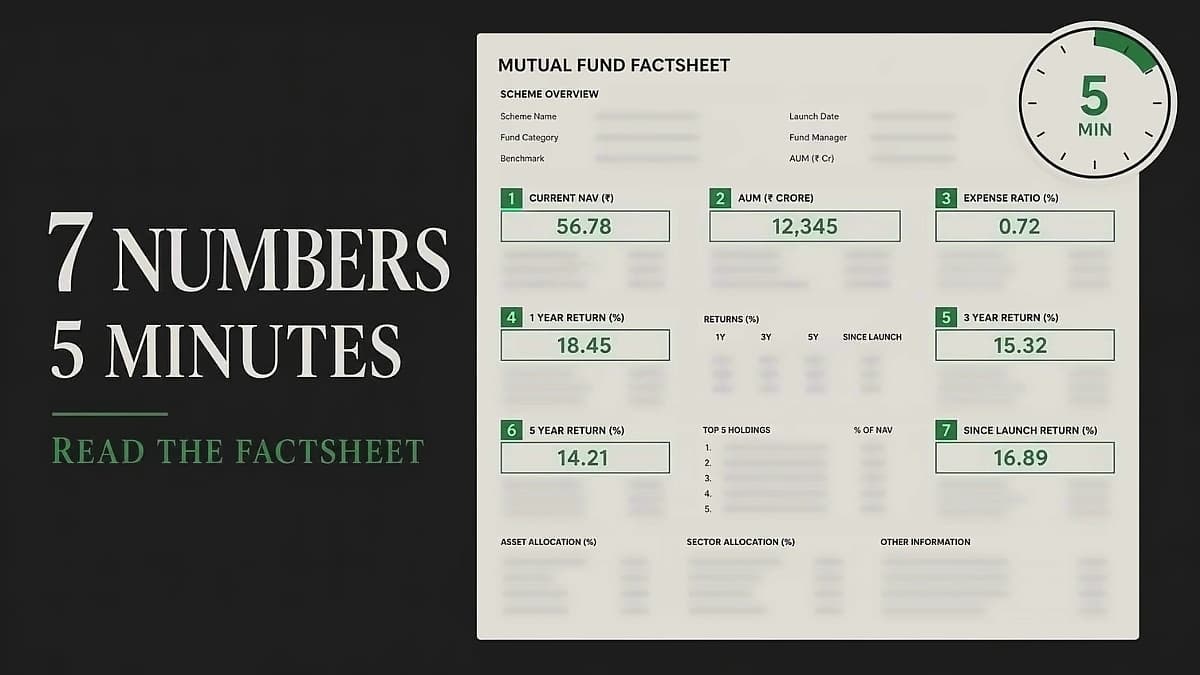
A mutual fund factsheet is published by an Asset Management Company (AMC) every month and serves as a comprehensive report card for the fund. According to reports from Mint, this document provides a snapshot of a scheme's performance, portfolio, and risk metrics, helping investors understand how the fund is managed and how it has performed over time. The factsheet typically includes the fund's investment objective, portfolio holdings, asset allocation, returns, risk measures, fund manager details, and Assets Under Management (AUM).
The scheme details section provides fundamental information including the investment objective, benchmark index, launch date, fund manager details, AUM, Net Asset Value (NAV), expense ratio, exit load, and minimum SIP investment requirements. As reported by Mint, the riskometer indicates the risk level of both the scheme and its benchmark, categorized as low, low to moderate, moderate, moderately high, high, and very high. The portfolio composition reveals where fund managers have invested money through top holdings, sector-wise allocation, and credit quality for debt funds. The performance summary shows returns across 1-year, 3-year, 5-year, since inception, and SIP periods, with benchmark comparisons.
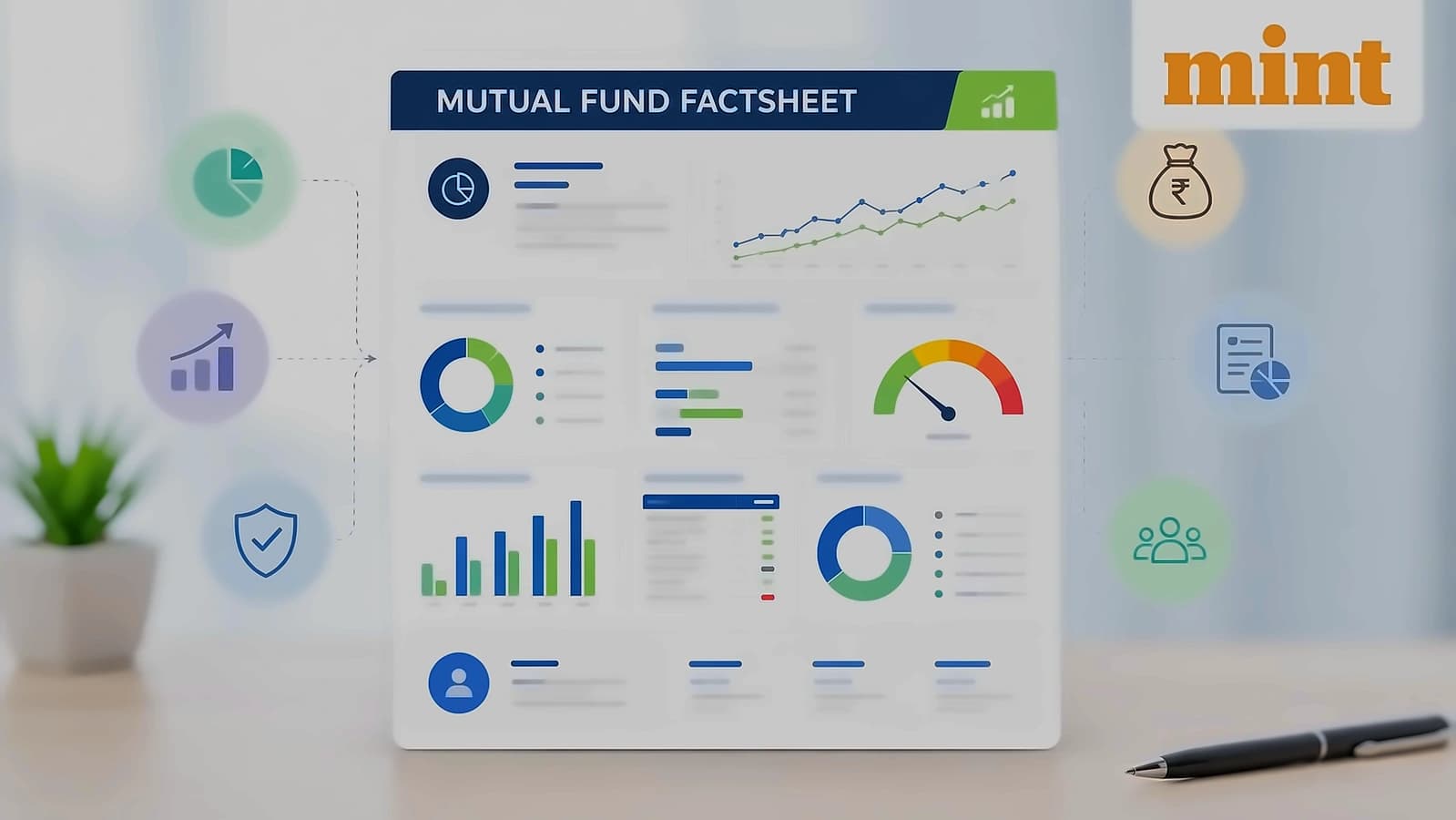
According to Mint, quantitative indicators help investors understand the risk taken by the fund to generate returns. Standard deviation measures volatility of mutual fund returns, while beta indicates sensitivity to broader market movements. The Sharpe ratio measures risk-adjusted performance by comparing returns over the risk-free rate against risk taken. Portfolio turnover ratio indicates how frequently fund managers buy and sell securities, and tracking error measures deviation from benchmark index returns. For debt funds, modified duration measures sensitivity to interest rate changes, and average maturity represents the weighted average time until bonds mature.
As reported by Mint, fund manager success heavily depends on investment decisions, and the factsheet provides details on experience, tenure with the scheme, and other schemes managed by the same fund manager. A manager with long track record across market cycles may provide greater confidence than someone recently taking charge. Investors should evaluate both manager experience and fund performance consistency when making investment decisions.
According to Mint, a mutual fund factsheet helps investors monitor changes in portfolio allocation, evaluate risk levels, compare performance with benchmarks, and understand whether schemes continue meeting investment objectives. Whether investing in equity, debt, hybrid, or gold funds, spending time reviewing the factsheet monthly can help make informed investment decisions. The analysis should include evaluating whether the fund's risk profile and objectives align with individual financial goals and risk appetite. As reported by recent developments, distributors can now access performance data from centralized dashboards, significantly reducing time required for portfolio reviews and enabling faster identification of underperforming schemes.